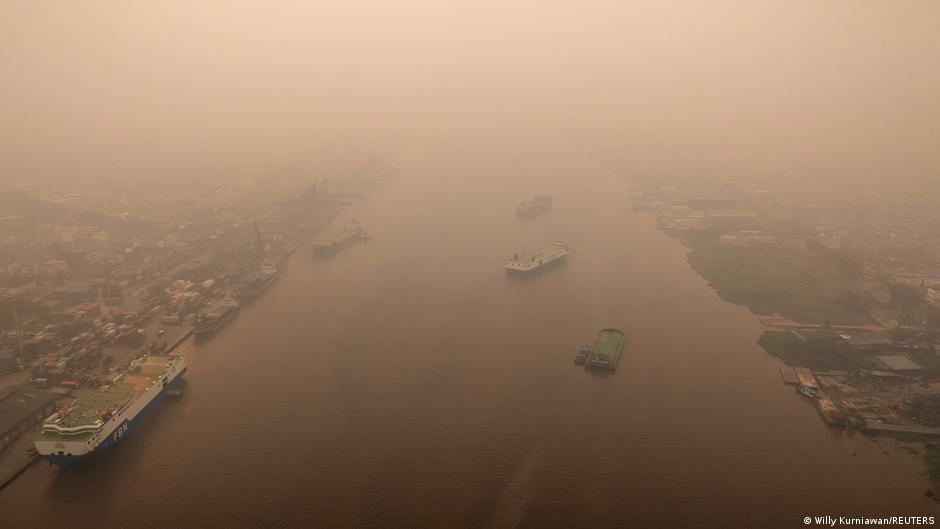
在那场灾难性大火促使各国承诺采取更严厉措施的十一年后,东南亚地区再度被跨境烟雾笼罩,这不禁让人质疑该地区是否真正吸取了2015年的教训。
Eleven years after catastrophic fires prompted promises of tougher action, Southeast Asia is again choking on transboundary haze, raising questions about whether the region has learned the lessons of 2015.
2026年,印度尼西亚经历了漫长的旱季,加之今年厄尔尼诺现象的影响,使得这一几乎每年都会发生的危机愈发严重。该国十余年来最为严重的野火季,恰恰反映出自2015年以来东南亚地区在应对烟雾污染方面取得的进展与存在的不足。
Indonesia's long 2026 dry season, coupled with this year's El Nino, has worsened what has become an almost annual crisis Indonesia's worst wildfire season in more than a decade is exposing how much, and how little, Southeast Asia's response to haze has changed since 2015.
数周以来,苏门答腊岛、加里曼丹岛及巴布亚岛的部分地区持续发生森林与土地火灾,浓烟弥漫至印尼全境,甚至飘到了邻国马来西亚和新加坡。
Forest and land fires have burned across parts of the Indonesian islands of Sumatra, Borneo and Papua for weeks, sending smoke across large areas of the country and into neighboring Malaysia and Singapore.
持续的旱季与厄尔尼诺现象共同加剧了这一几乎年年发生的危机,致使数百万人暴露在含有有害微细颗粒物的有毒烟雾之中。据印尼卫生部统计,8月至9月中旬期间,受烟雾影响的地区共出现超过17万例急性呼吸道感染病例,其中4万余例为儿童患者。
Indonesia's long 2026 dry season, coupled with this year's El Nino has worsened what has become an almost annual crisis, exposing millions of people to hazardous smoke containing harmful microscopic particles. More than 170,000 cases of acute respiratory infection were recorded in haze-affected areas of Indonesia between August and mid-September, according to the country's Health Ministry, including more than 40,000 cases involving young children.
烟雾污染还导致马来西亚数百所学校停课;在印尼,超过140万名学生被迫转为远程学习。不过,此次烟雾事件带来的整体经济损失目前尚无法准确估算。
The haze has forced hundreds of schools to close in Malaysia and pushed more than 1.4 million Indonesian students into remote learning, although the full economic cost is not yet known.
烟雾已蔓延至马来西亚并迫使大量学校停课。今后严重的烟雾污染是否会愈发频繁呢?
The haze has spread to Malaysia and forced hundreds of schools to close Will severe haze become more frequent?
今年出现的极端天气只是原因之一。长期以来,东南亚地区一直将放火视为清理土地用于农业生产的廉价手段;而棕榈油与纸浆木种植园的不断扩张则导致大片泥炭地干涸并遭到破坏。
This year's severe weather is only part of the explanation. Fire has long been used as a cheap way to clear land for agriculture in Southeast Asia, while the expansion of palm oil and pulpwood plantations has drained and degraded large areas of peatland.
2015年的教训历历在目。据世界银行统计,当年发生的火灾烧毁了约260万公顷的土地,导致整个东南亚地区数月笼罩在浓烟之中,给印尼造成的经济损失估计高达160亿美元(约合142亿欧元)。
The echoes of 2015 are hard to ignore. That year's fires burned roughly 2.6 million hectares of land, produced months of severe haze across Southeast Asia and cost Indonesia an estimated $16 billion (€14.2 billion) in economic losses, according to the World Bank.
泰国清迈大学副教授帕瑞迪·恩贵特拉古特告诉DW:随着气候条件恶化,严重雾霾变得更加频繁的风险正在增加。
The risk is growing that severe haze will become more frequent as climate conditions worsen, Paruedee Nguitragool, an associate professor at Chiang Mai University in Thailand, told DW.
她补充说:“雾霾以前主要是东南亚海上国家的问题,但现在已经成为该地区大多数国家的关注问题。”
"Haze, which used to be mainly a problem in maritime Southeast Asia, has become a concern for most countries in the region," she added.
东南亚国家协会(ASEAN)成员国政府“需要彼此更加开放,并密切合作。”恩贵特拉古特说:“农民和公司需要替代的土地清除方法及其激励措施,同时还必须实施土地和森林的恢复工作。”
Governments within the Association of Southeast Asian Nations (ASEAN), the regional bloc, "need to be more open to one another and work closely together." "Farmers and companies need alternative methods of land clearing and incentives to adopt them, while land and forest rehabilitation must also be implemented," Nguitragool said.
她还补充说:“同时,消费者需要更加了解他们购买的产品是否来自可持续的做法,以及生产过程中是否涉及烧烧行为。”
"At the same time, consumers need to be more aware of whether the products they buy come from sustainable practices and whether burning was involved in their production," she added.
火灾长期以来一直被用作东南亚农业开垦土地的便宜方法。2015年之后发生了什么变化?
Fire has long been used as a cheap way to clear land for agriculture in Southeast Asia What changed after 2015? The 2015 disaster triggered major policy changes.
新加坡国立大学热带环境变化教授大卫·马克·泰勒告诉DW:2015年的灾难引发了重大的政策变革。印度尼西亚加强了泥炭地恢复、火灾监测、执法和灭火工作,而ASEAN则扩大了地区间合作。
Indonesia strengthened peatland restoration, fire monitoring, enforcement and firefighting, while ASEAN expanded regional cooperation, David Mark Taylor, a professor of tropical environmental change at the National University of Singapore, told DW.
印度尼西亚于2016年成立泥炭地恢复局,旨在恢复数百万公顷退化的泥炭地。该机构后来将任务扩展到红树林恢复,并更名为泥炭地和红树林恢复局。
Indonesia established the Peatland Restoration Agency in 2016 to restore millions of hectares of degraded peat. Its mandate was later expanded to mangrove rehabilitation, with the agency renamed the Peatland and Mangrove Restoration Agency.
一项永久性禁令也限制了在原始森林和泥炭地上新设特许权的进一步开发。
A permanent moratorium on new concessions in primary forests and peatlands also restricted further development in some vulnerable areas.
当局也越来越多地将公司诉诉到法院。去年,一家上诉法院下令印尼巴努瓦·卡胡里帕·印度尼西亚公司支付约1400万欧元的环境损害赔款,理由是其特许经营区内有超过3300公顷的火灾。其他公司则面临更为严厉的恢复命令。
Authorities have also increasingly pursued companies in court. Last year, an appeals court ordered palm oil company PT Banyu Kahuripan Indonesia to pay around €14 million in environmental damages over fires covering more than 3,300 hectares of its concession. Other companies have faced much tougher restoration orders.
在区域层面,东盟通过了新的泥炭地管理战略以及《2023-2030年无烟雾路线图》。自2002年《东盟跨界烟雾污染协定》签署二十余年后,备受期待的东盟跨界烟雾污染控制协调中心也于今年4月在雅加达设立了秘书处。“但根本问题依然存在,其背后的诱因也并未消除,”泰勒说道。
At the regional level, ASEAN adopted a new Peatland Management Strategy and a second Haze-Free Roadmap for 2023-2030, and the long-awaited ASEAN Coordinating Center for Transboundary Haze Pollution Control opened its secretariat in Jakarta in April, more than two decades after the 2002 ASEAN Agreement on Transboundary Haze Pollution. "But the underlying problem hasn't gone away, and neither has the driver," said Taylor.
目前仍有大片泥炭地处于排水或退化状态,其中一些土地虽已开垦却尚未投入生产使用。泰勒指出,这些管理不善或处于“闲置”状态的泥炭地在长期干旱期间极易引发火灾。
Extensive areas of peat remain drained or degraded, including cleared land that has yet to be put into productive use. Such poorly managed or "idle" peatlands can become highly combustible during prolonged drought, Taylor noted.
此外,关于印度尼西亚实际完成了多少泥炭地修复工作,各方也存在分歧。
There is also disagreement over how much restoration Indonesia has actually achieved.
泥炭地与红树林修复局已于2024年底停止运作,其职责被重新划归其他政府部门及机构。这一变动引发了环保人士的担忧:这些机构能否继续保持原有的工作重心?
The Peatland and Mangrove Restoration Agency ceased operating at the end of 2024, with its responsibilities returned to other government ministries and institutions, raising questions among environmentalists about whether they can maintain the same institutional focus.
东盟自身也面临诸多局限。虽然2002年签署的烟雾污染协定具有法律约束力,但许多目标与实施计划能否落实仍取决于各国政府的行动。该区域组织缺乏强制各国达成目标或惩处违约行为的有效机制。
ASEAN faces its own limitations. Its 2002 haze agreement is legally binding, but many targets and implementation plans depend on national governments acting on them. The regional bloc has few mechanisms to compel governments to meet those targets or punish failure.
不过,泰勒强调:“这一切的根本诱因是全球对廉价种植园农产品的需求,比如棕榈油、纸浆与纸张——而我们所有人都难辞其咎。”
But the ultimate driver for all of this "is the global demand for cheap, plantation-grown commodities, such as palm oil and pulp and paper, which most of us are responsible for," said Taylor.
他补充道:“只要这种需求持续存在,将泥炭地与森林转化为种植园的压力就绝不会消失。”
"So long as that demand persists, so too will the pressure to convert peatlands and forests to plantations," he added.
印度尼西亚与刀耕火种农业的博弈;欲观看此视频,请点击此处;东盟能否阻止下一场危机?
Indonesia's battle with slash and burn farming To view this video , and Can ASEAN stop the next crisis?
今年的火灾事件促使人们的关注点从制定新协议转向:东南亚各国政府该如何切实落实现有机制。
This year's fires have turned attention from creating new agreements to how Southeast Asian governments can make existing mechanisms work.
“为防止情况进一步恶化,东盟各国必须切实共享资源与能力。尽管印度尼西亚付出了诸多努力,但单凭该国之力仍难以应对这一局面,”马来亚大学副教授海伦娜·瓦尔基对德国之声说道。
"To prevent this from worsening further, there needs to be a real pooling of capacity among ASEAN. Indonesia, for all its efforts, does not have the capacity to manage it alone," Helena Varkkey, an associate professor at Universiti Malaya, told DW.
她补充说,东盟现有的联合应急响应机制理应切实发挥作用,但这一切本应在雾霾季节来临前就安排妥当——因为气象报告早已明确指出,今年早些时候将出现“超级厄尔尼诺”现象。
The existing ASEAN mechanisms for joint emergency response should be operationalized, she added, but this should have been arranged before the start of the haze season, as meteorological reports made it clear that a "Super El Nino" was coming earlier this year.
“东南亚各国政府需携手合作,通过实施严格的法律措施来遏制泥炭地和森林火灾的发生。同时,各方还应共同运用一切可用技术来应对干旱天气,”马来西亚国立大学教授莫哈末·塔利布·拉蒂夫对德国之声指出。“对于这一地区而言,雾霾应当被视作一种灾害,”他补充道。编辑:斯里尼瓦斯·马祖姆达鲁
"Southeast Asian governments need to work together to prevent biomass-burning episodes by implementing stringent laws to stop peat and forest fires. They need to use all available technologies together to prepare for dry conditions," Mohd Talib Latif, a professor at Universiti Kebangsaan Malaysia, told DW. "Haze needs to be considered a disaster for this region," he added.