所谓在11月中期选举后召开的国会“跛鸭会期”,可能对清洁能源发展具有里程碑意义,因为议员们即将审议一项期待已久的两党协议,旨在加快大型能源和基础设施项目的许可审批流程。
The so-called lame duck session of Congress after November’s midterm elections could be momentous for clean energy, as lawmakers are set to consider a long-sought bipartisan deal to speed permitting of large energy and infrastructure projects.
清洁能源倡导者和政策专家认为,这项法案是解决清洁能源领域一大障碍——电网接入长期排队问题——的难得机会。但环保倡导者之间很快出现了分歧,一些人认为该措施会削弱州政府和部落政府的权力,并可能让输油管道和其他化石燃料项目利用简化后的审批流程。
Clean energy advocates and policy experts view the bill as a rare opportunity to deal with a major clean energy roadblock—long queues for interconnection to the grid. But division emerged immediately among environmental advocates, with some arguing the measure would weaken state and tribal government authority and allow pipelines and other fossil fuel projects to take advantage of a streamlined process.
这种分歧并不罕见。在2021年《基础设施投资与就业法案》(亦称“两党基础设施法案”)以及2022年乔·拜登总统签署的《通胀削减法案》的辩论过程中,也曾出现过类似的分歧。
This tension is not unusual. A version of it happened during debate over what would become the 2021 Infrastructure Investment and Jobs Act, also known as the Bipartisan Infrastructure Law, and the Inflation Reduction Act in 2022 under President Joe Biden.
“这项法案是一项折中方案。我们相信,这一折中方案将带来一个更光明、更清洁、更经济实惠的未来。”专门研究联邦能源问题的咨询公司Grid Strategies总裁罗布·格拉姆利奇表示:“这些政策法案必须获得参议院60票的支持,因此必须是两党共同推动的,这就不可避免地会出现一些议员喜欢、另一些议员不喜欢的内容。”参议院60票的门槛是克服任一政党通过冗长辩论阻挠立法所需的票数。
“This bill is a compromise. We believe it is a compromise that will result in a brighter, cleaner, more affordable future.”“These policy bills have to get 60 Senate votes, so they have to be bipartisan, and so necessarily you’re going to be in a situation [in which there are] things that members like and things they don’t like,” said Rob Gramlich, president of Grid Strategies, a consulting firm that specializes in federal energy issues. The 60-vote threshold in the Senate is the number needed to overcome either party’s ability to block legislation with a filibuster.
格拉姆利奇认为,由于该法案包含技术中立的条款,“能够支持数十吉瓦的清洁能源项目接入电网,而这些项目原本无法开发”,因此对可再生能源而言是一项重大进步。
Gramlich considers the bill a big step forward for renewable energy because of technology-neutral provisions that would “enable many tens of gigawatts of clean energy to be connected that otherwise are unable to develop,” he said.
环保倡导组织Evergreen Action的政策副总裁皮特·怀科夫也支持这项法案。他在曾为参议员蒂娜·史密斯(明尼苏达州民主党)效力期间,也曾在《通胀削减法案》的制定中发挥关键作用。
Also supporting the bill is Pete Wyckoff, vice president of policy for Evergreen Action, an environmental advocacy group. He also played a key role in developing the Inflation Reduction Act when he worked for Sen. Tina Smith (D-Minn).
“除非我们能加快清洁能源的建设步伐,否则美国既无法应对气候危机,也无法满足日益增长的能源需求——而要做到这一点,就必须改革现有的许可审批机制,”威克夫在一份声明中说道。Evergreen组织的一位发言人补充称,威克夫及该组织支持法案中那些有助于加快州际输电线路及清洁能源项目建设的相关条款,不过目前仍在对整个法案进行审议。
“America can’t confront the climate crisis and meet growing energy demand unless we can build clean energy faster—and that means fixing how we permit it,” Wyckoff said in a statement An Evergreen spokeswoman specified that Wyckoff and the organization support the parts of the bill that would ease construction of interstate power lines and clean energy projects, but are still reviewing the bill as a whole.
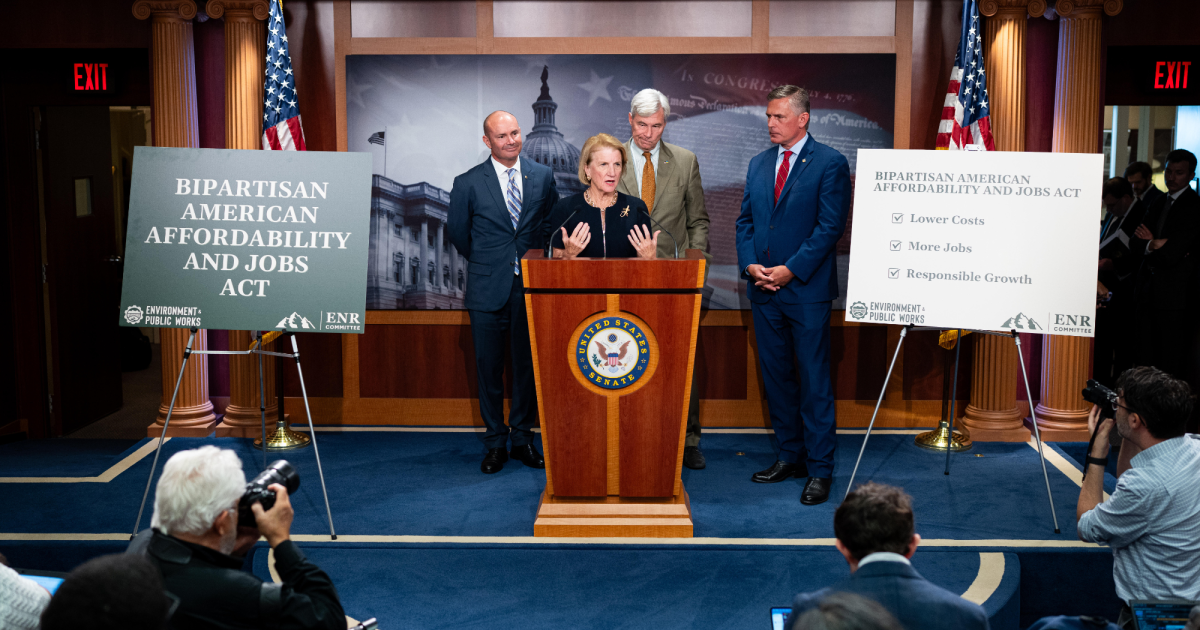
该法案由多位在气候议题上发声积极的参议员共同起草。参议院环境与公共工程委员会资深成员、民主党籍参议员谢尔登·怀特豪斯在声明中表示:“倘若该法案得以通过,我们将向电网输送大量清洁且价格实惠的能源,同时促使数据中心承担其应尽的责任。与所有跨党派立法一样,这份法案也是一种妥协的产物;我们相信这一妥协将带来一个更加光明、清洁且经济实惠的未来。”怀特豪斯及其他共同起草者将该法案命名为《2026年跨党派美国可负担性与就业法案》。
Some of the Senate’s most vocal members on climate change co-wrote the measure. “If we can pass this bill, we will flood the grid with clean, affordable energy and make data centers start paying their fair share,” Sen. Sheldon Whitehouse (D-R.I.), ranking member of the Senate Environment and Public Works Committee, said in a statement. “Like all major pieces of bipartisan legislation, this bill is a compromise. We believe it is a compromise that will result in a brighter, cleaner, more affordable future.”Whitehouse and the bill’s other co-authors are calling it the Bipartisan American Affordability and Jobs Act of 2026 Committee Chair Shelley Moore Capito (R-W.Va.), maintained that the bill would continue to protect land, water and wildlife while transforming the nation’s ability to fuel future growth.
委员会主席、共和党籍参议员谢莉·摩尔·卡皮托强调,该法案在推动国家实现未来发展所需能源供应的同时,也将继续保护土地、水资源及野生动植物。“长期以来,联邦层面那些存在缺陷且过时的环境评估与许可审批流程,一直阻碍着能源供应的稳定性、就业岗位的创造、现代化基础设施的建设以及经济的增长,”卡皮托在声明中说道。
“For far too long, our broken and outdated federal environmental review and permitting processes have stood in the way of energy reliability, secure jobs, modern infrastructure, and economic growth,” Capito said in a statement.
经过数月的磋商与协调,卡皮托、怀特豪斯以及参与谈判的另外两位参议员——共和党籍犹他州参议员迈克·李与民主党籍新墨西哥州参议员马丁·海因里希——均明确表示,如今已没有足够时间在中期选举前推动该法案付诸表决。
After months of working to hammer out their permitting compromise, Capito, Whitehouse and their partners on the deal—Senate Energy Committee leaders Sen. Mike Lee (R-Utah) and Sen. Martin Heinrich (D-N.M.)—made clear they had run out of time to get the package to a vote before the midterm election.
这样一来,该法案的审议工作便被推迟至第119届国会的最后几周;视11月选举结果而定,这甚至可能是共和党在国会占据多数席位期间的最后一次立法机会。
That kicks the legislation to the final weeks of the 119th Congress, and possibly—depending on the November results—the last session of unified Republican control.
这给该法案带来了一些政治风险,清洁能源游说人士、Echo Communications Advisors创始人克里斯·莫耶在发给客户的通讯稿中指出。“对于跛脚鸭国会而言,尤其是对众议院民主党人来说,问题在于我们是否会重演那个熟悉的循环,”莫耶写道。“即将掌权的政党一直拖到新国会开幕,以期拿到一份‘更好’的法案。”莫耶指出,众议院自然资源委员会资深民主党议员、加州众议员贾里德·赫夫曼在社交媒体上的一篇帖子中恰恰表达了这种看法。
“我们不能把各州、部落、受影响社区以及受威胁和濒危的野生动物抛在脑后,”赫夫曼说,他承诺将在新一届国会中为更好的法案而努力。
This creates some political peril for the package, clean energy lobbyist Chris Moyer, founder of Echo Communications Advisors pointed out in a newsletter to his clients. “The question for the lame duck, especially with House Democrats, is whether we experience a repeat of the familiar cycle,” Moyer wrote. “The party on the verge of taking power holds out until the new Congress to get a ‘better’ bill.”Moyer noted that Rep. Jared Huffman (D-Calif.), ranking Democrat on the House Natural Resources Committee, expressed exactly this sentiment in a post on“We can’t throw states, tribes, impacted communities, and threatened and endangered wildlife under the bus,” said Huffman, who pledged to work for a better bill in the next Congress.
但历史表明,跛脚鸭会期能够促成在国会常规会期中无法达成的妥协,部分原因是即将离任的议员不会面临选民的报复。在跛脚鸭会期通过的历史性环境法案中,包括1980年的超级基金有毒废物清理法案,以及1970年职业安全与健康管理局的设立。
But history has shown lame-duck sessions can forge compromises that wouldn’t be possible in regular sessions of Congress, in part because departing members will not face repercussions from voters. Among the historic environmental measures that passed Congress during lame-duck sessions were the Superfund toxic waste clean-up bill in 1980 and the establishment of the Occupational Safety and Health Administration in 1970.
该法案面临的最大挑战,可能是在一些环保人士反对的情况下,能否在参议院争取到足够的民主党支持票。甚至在法案文本公布之前,西部环境法律中心就发布声明,将这项协议称为“五级火警”,称其将允许人工智能数据中心和能源基础设施大规模扩张。
The most significant challenge the legislation faces may be securing enough Democratic votes in the Senate in the face of opposition from some environmentalists. Even before the text of the legislation was released, the Western Environmental Law Center released labeling the deal a “five-alarm fire” that would allow artificial intelligence data centers and energy infrastructure to proliferate.
“我们认为,如果能改革这一程序,如果能提供公平的竞争环境,清洁能源的经济优势就会胜出。”该法案所做的改革之一,是限制州和部落官员利用《清洁水法》赋予的权力来处理与直接水污染无关的问题;特朗普政府今年早些时候曾提出类似的监管改革。
“We think if you can reform that process, if you can provide a level playing field, the economics of clean energy will win out” Among the changes the legislation would make is limiting state and tribal officials from using their authority under the Clean Water Act to address issues unrelated to direct water pollution; the Trump administration proposed a similar regulatory change earlier this year.
“这项许可协议是对公共土地、水资源、野生动植物以及环境正义价值观的背叛。正是这些资源让西部民众得以享受清洁的空气与水源,拥有徒步、狩猎和垂钓的场所,还能感受到这片土地赋予我们的无与伦比的自由感,”该中心执行主任埃里克·施伦克-古德里奇说道。
“The permitting deal is a betrayal of public lands, water and wildlife, and environmental justice values that Westerners depend on for clean air and water, places to hike, hunt, and fish, and the inestimable sense of freedom the West provides us all,” said Erik Schlenker-Goodrich, executive director of the center.
在法案发布仪式上,海因里希特别提到了其中的一项条款:该条款要求人工智能数据中心必须全额承担为其供电所需的电网升级费用,同时仍需承担整个电网维护的其他成本。如果法案得以通过,这将是国会首部旨在防止消费者为数据中心扩张带来的能源成本负担买单的立法。
At the unveiling of the legislation, Heinrich pointed to a provision in the bill that would require AI data centers to fully pay for grid upgrades made to serve them, even as they continue to bear their share of the costs of the rest of the power grid. If passed, it would be the first act of Congress to protect consumers from paying an unfair burden of the energy costs of data center proliferation.
就清洁能源与气候变化而言,该法案最具影响力的条款当属那些旨在加快输电项目选址流程、促进清洁能源接入电网的举措。今年刚刚在新墨西哥州与亚利桑那州之间投入运营的550英里长的“太阳齐亚风电与输电项目”,其审批过程就耗时近18年。环保人士指出,若按此速度推进,太阳能、风能以及增强型地热等新兴低碳技术几乎不可能大幅降低美国对化石燃料的依赖程度。
By far, the most consequential provisions in the legislation for clean energy and climate change are those to speed up the process of siting transmission projects and getting clean energy on the grid. The 550-mile SunZia Wind and Transmission project, which came online this year between New Mexico and Arizona, took nearly 18 years to make its way through the permitting process. At that pace, clean energy advocates argue it will be nearly impossible for solar and wind power, as well as emerging low-carbon technologies like enhanced geothermal, to significantly reduce the nation’s dependence on fossil fuels.
气候与能源解决方案中心(C2ES)与格林莱恩洞察公司共同开展的新模型分析显示:该法案的改革措施有望在所研究的四个区域电网中产生足量清洁能源,使二氧化碳排放量降低9%。分析还表明,从2026年至2040年,这些改革措施有望使全美范围内的电网建设总成本减少1250亿美元,居民电费支出则能减少190亿美元。
New modeling by the Center for Climate and Energy Solutions, or C2ES, and Greenline Insights indicated that the bill’s reforms would produce enough new clean energy to reduce carbon dioxide emissions by 9 percent in the four regional power grids they studied. The analysis showed that nationwide, the reforms could also reduce cumulative grid costs by $125 billion and residential electricity bills by $19 billion between 2026 and 2040.
“我们认为,只要能改革相关流程、营造公平的竞争环境,清洁能源的经济优势就必然会显现出来,”C2ES主席纳特·基奥汉说道。“我们正处在一个关键时刻——这是多年来我们以及众多同仁一直努力期盼的时刻。”
“We think if you can reform that process, if you can provide a level playing field, the economics of clean energy will win out,” said Nat Keohane, president of C2ES. “We’re on the cusp of a moment I think that we and many others have been working toward for years.”