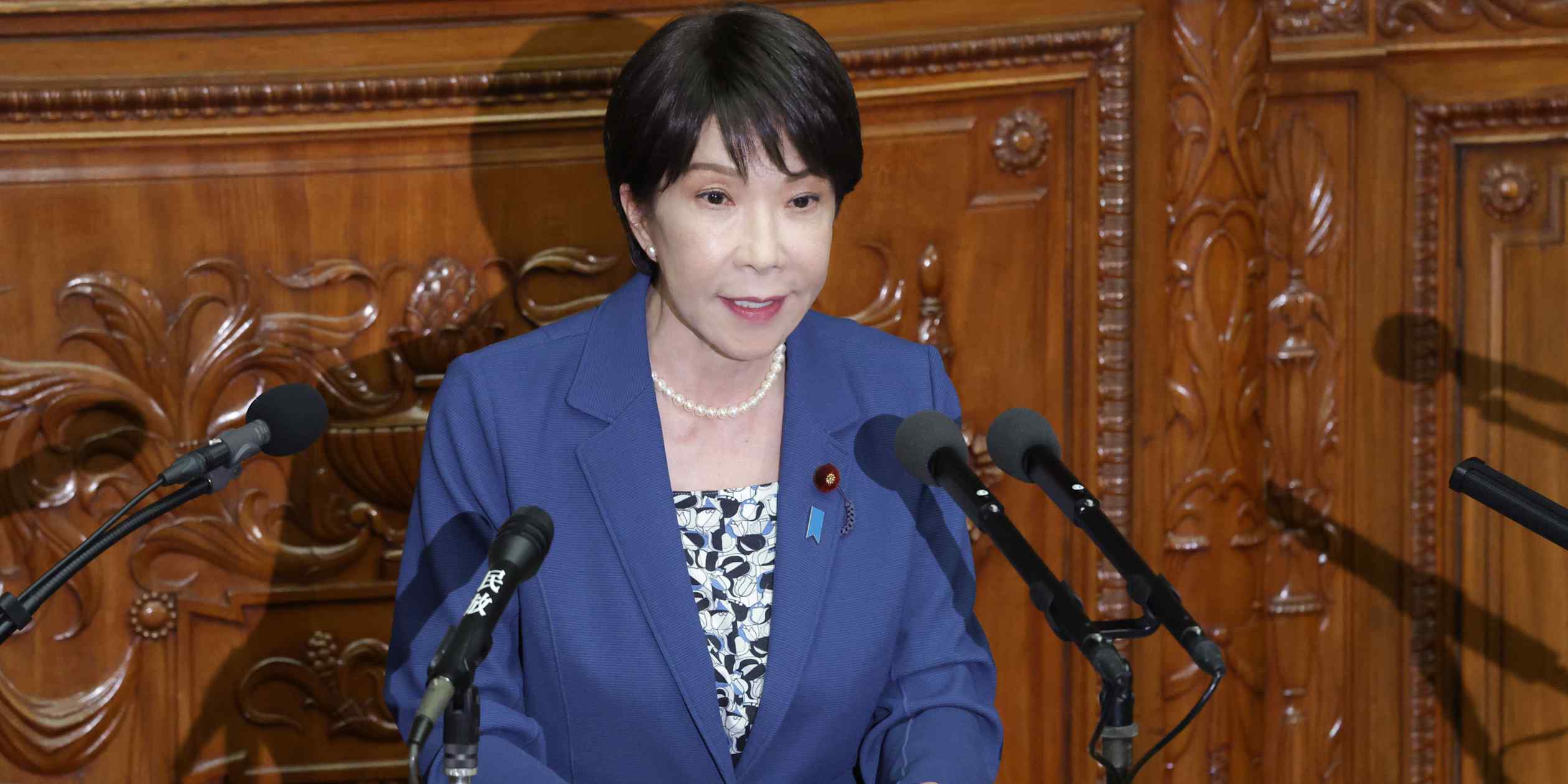
东京讯——日本首相高市早苗继续疏远对再通胀经济政策的支持,此举旨在向市场和特朗普政府释放信号,表明其对加息并非过度谨慎。
TOKYO -- Japanese Prime Minister Sanae Takaichi continues to back away from support for a reflationary economic policy in a move to reassure the markets and the Trump administration that it is not overly cautious about interest rate hikes.
周四在国会会议上,高市强调称“目前并非需要再通胀政策的阶段”,并辩称其战略正在实现就业与收入增加、进而带动税收增加的经济良性循环。她表示,这“与所谓的再通胀政策不同”。
At a parliamentary session Thursday, Takaichi stressed that "this is not a phase in which reflationary policies are necessary," arguing her strategy was achieving a virtuous economic cycle of increasing employment and income, thereby boosting tax revenues. This "differs from so-called reflationary policies," she said.
首相一直将“负责任的积极财政政策”作为标志性主张。政府已推进包括17个战略领域在内、超过370万亿日元(约合2.3万亿美元)的公私投资。在货币政策方面,此前也被视为对日本央行加息持谨慎立场。
The prime minister has promoted "responsible proactive fiscal policy" as a signature platform. The government has advanced policies including more than 370 trillion yen ($2.3 trillion) in public-private investment across 17 strategic sectors. On monetary policy as well, it had been viewed as taking a cautious stance toward interest rate hikes by the Bank of Japan.
如今,上任近一年之际,其政府突然开始拒绝“再通胀政策”这一标签。
Now, nearly a year into office, her government has suddenly begun rejecting the "reflationary policy" label.
尽管如此,美国和金融市场认为日本正在推行再通胀政策的看法,主要源于长期以来的过往表态,高市政府能否轻易扭转这一印象仍不得而知。
Still, perceptions in the U.S. and financial markets that Japan is pursuing reflationary policies stem largely from a long record of past statements, and it remains unclear whether Takaichi's government can easily change that impression.
“据我理解,再通胀政策包含货币宽松。安倍经济学式的再通胀政策阶段已经结束,”经济财政政策担当大臣木内均上月表示。
"My understanding is that reflationary policy includes monetary easing. The phase of Abenomics-style reflationary policy has ended," Minoru Kiuchi, minister of state for economic and fiscal policy, said last month.
9月初,内阁府副长官尾崎诚男称,高市政府“与寻求扩大需求的所谓再通胀政策不同”。木内均表示:再通胀已结束。
Earlier in September, Deputy Chief Cabinet Secretary Masanao Ozaki said the Takaichi government "differs from the so-called reflationary policies that seek to expand demand." Reflation is over, says Minoru Kiuchi, minister of state for economic and fiscal policy.
相反,我们正专注于加强供给能力和提升经济的潜在增长率。表面看来,这些解释构成了对尊重日本银行独立性的明确承诺。在财政政策方面,政府计划维持扩张性财政立场,同时将支出重点从刺激需求转向加强供给能力。一些人认为,这是在金融市场发出一系列警告和华盛顿施压之后的实质性政策调整。
"Instead, we are focusing on strengthening supply capacity and raising the economy's potential growth rate." Taken at face value, those explanations amount to a clear commitment to respect the Bank of Japan's independence. On fiscal policy, the government plans to maintain an expansive budget stance, while shifting spending priorities from stimulating demand to strengthening supply capacity. Some see this as a substantive policy adjustment after a series of warnings from financial markets and pressure from Washington.
美国财政部长斯科特·贝森特上个月表示,他曾“告诉日本应结束通胀性政策”。9月22日的峰会上,美国总统唐纳德·特朗普向高市表达了对日元疲软的担忧,将外汇问题提升至领导人层面。
U.S. Treasury Secretary Scott Bessent said last month that he had "told Japan it should end reflationary policies." At a summit on Sept. 22, U.S. President Donald Trump conveyed concerns about yen weakness to Takaichi, elevating foreign exchange issues to the leaders' level.
就在峰会前几天,日本银行将政策利率上调了0.25个百分点至1.25%。然而,由于九名政策委员会成员中的浅田透一郎和佐藤彩野两人投了反对票,市场对未来加息速度仍存在不确定性。这种持续的不确定性导致日元对美元进一步走弱。
Days before that summit, the Bank of Japan raised its policy rate by 0.25 percentage points to 1.25%. However, uncertainty remained in markets regarding the pace of future rate hikes because two of the nine policy board members, Toichiro Asada and Ayano Sato, voted against the increase. The lingering uncertainty contributed to further yen weakness against the dollar.
“一位日本部长指出:‘当其他主要国家都在加息时,美国认为两名政策委员会成员反对加息是有问题的。’”浅田透一郎和佐藤彩野均由高市任命,一直被视为对进一步紧缩持谨慎态度的鸽派成员。
"While other major countries are raising rates, the U.S. views it as problematic that two policy board members opposed a rate hike," a Japanese minister noted. Both Asada and Sato were appointed by Takaichi and had been regarded as dovish members cautious about further tightening.
只有在9月22日峰会提出担忧之后,高市、财务大臣片山祥子和木内才加强了对通胀性政策的反对。
Takaichi, Finance Minister Satsuki Katayama and Kiuchi stepped up their rejection of reflationary policies only after concerns were raised at the Sept. 22 summit.
自高市和特朗普在9月会面以来,日本财务大臣片山祥子一直更直言不讳地反对通胀主义政策。
Japanese Finance Minister Satsuki Katayama has been more vocal against reflationist policies since Takaichi and Trump met in September.
在内阁改组期间发给片山和木内的书面指示中,首相还强调了“向公众以及国内外市场参与者提供透明且一致的经济和财政管理解释的必要性,以维持市场信心”。自上任以来,首相任命了一些以支持积极财政支出而闻名的人物。
In written instructions issued to Katayama and Kiuchi during a cabinet reshuffle the prime minister also stressed the need to "provide transparent and consistent explanations of economic and fiscal management to the public and to domestic and international market participants in order to maintain market confidence." Since taking office, the prime minister has appointed figures known for favoring aggressive fiscal spending.
在经济财政政策委员会的私营部门成员中,有早稻田大学教授、前日本银行副行长若竹正澄,以及第一生命研究所首席经济学家长滨俊宏。
Among the private-sector members of the Council on Economic and Fiscal Policy are Masazumi Wakatabe, a professor at Waseda University and former deputy governor of the Bank of Japan, and Toshihiro Nagahama, chief economist at Dai-ichi Life Research Institute.
在日本增长战略委员会中,她任命了普华永道咨询的片冈刚以及农业信贷证券的会田拓司。
For the Council for Japan's Growth Strategy, she selected Tsuyoshi Kataoka of PwC Consulting and Takuji Aida of Credit Agricole Securities.
她在2021年首次参加自由民主党总裁选举时,高市将其经济战略的支柱描述为:货币宽松、紧急情况下的灵活财政刺激,以及大胆的危机管理和增长投资。她称之为“三箭·高市经济学”。
When she first ran in the Liberal Democratic Party leadership election in 2021, Takaichi described the pillars of her economic strategy as: monetary easing, flexible fiscal stimulus in emergencies, and bold crisis management and growth investment. She called them the "three arrows of Sanaenomics."
在2024年自由民主党总裁选举中,这是她第二次竞选党首,她就日本银行的货币政策表示:“我认为现在提高利率是愚蠢的。”
In the 2024 LDP leadership race, her second bid for the party presidency, she remarked on the Bank of Japan's monetary policy, "I think raising interest rates right now would be foolish."