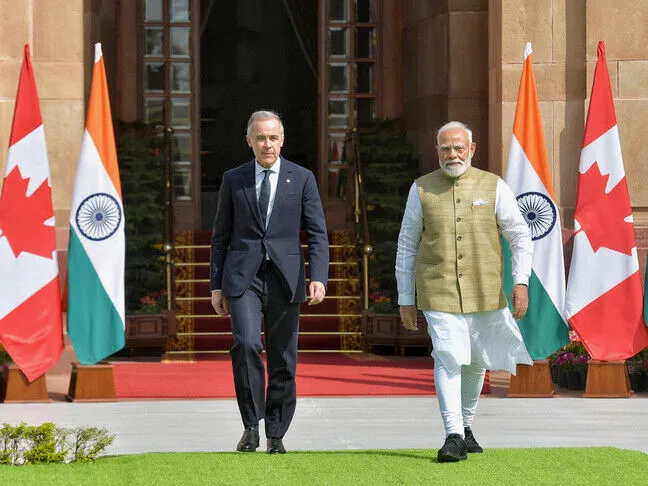
印度总理纳伦德拉·莫迪周二表示,他在与加拿大总理马克·卡尼的通话中讨论了双边关系、能源和技术。
Indian Prime Minister Narendra Modi on Tuesday said he discussed ties, energy, technology in call with his Canadian counterpart Mark Carney.
“与加拿大总理马克·卡尼进行了温暖而富有成效的对话,”莫迪在美国社交媒体平台上表示,两位领导人“同意在印加关系的积极势头基础上继续推进”,并“在我们战略伙伴关系的关键领域,包括贸易、能源、技术、安全和人文交流方面,致力于取得具体成果。”他补充道:“印度和加拿大正共同为一个更加稳定和繁荣的世界作出贡献。”
“Had a warm and productive conversation with Prime Minister Mark Carney,” Modi said on US social media company Modi said the two leaders, “agreed to build on the positive momentum in India-Canada ties,” and “work towards concrete outcomes across key areas of our Strategic Partnership, including trade, energy, technology, security and people-to-people ties.”“Together, India and Canada are contributing towards a more stable and prosperous world,” he added.
此次通话发生在加拿大国际贸易部长曼尼德·西杜率领加拿大“30年来最大规模的对印度贸易代表团”之际。西杜表示:“印度拥有超过14亿人口,是世界上增长最快的主要经济体之一,为加拿大企业开拓新客户提供了重要机遇。”他在印度商务部长皮尤什·戈亚尔表示,他与西杜进行了“富有成效的讨论”。
The conversation came as Canadian International Trade Minister Maninder Sidhu is leading Canada's "largest trade delegation to India in more than 30 years." "India is home to more than 1.4 billion people and is one of the world’s fastest-growing major economies, making it a significant opportunity for Canadian businesses to reach new customers," he said on Indian Commerce Minister Piyush Goyal said he held "a productive discussion" with Sidhu.
戈亚尔表示,双方“讨论了推进印加全面经济伙伴关系协定(CEPA)谈判,重点是达成一项平衡、互惠的协定,以扩大市场准入并释放新的贸易和投资机遇。”
"Discussed advancing the India-Canada Comprehensive Economic Partnership Agreement (CEPA) negotiations, with a focus on a balanced, mutually beneficial agreement that enhances market access & unlocks new trade and investment opportunities," he said.
戈亚尔还说:“我有信心,CEPA将为双边贸易注入新动力,并为共同繁荣加强我们的经济伙伴关系。”印度和加拿大在经历一些紧张后正改善关系,双方今年同意将货物和服务双边贸易额在2030年前翻倍至500亿美元。
Goyal said he is "confident that the CEPA will provide fresh momentum to bilateral trade and strengthen our economic partnership for shared prosperity." India and Canada, which are improving ties after some tensions, agreed this year to double bilateral trade in goods and services to $50 billion by 2030.