一位共和党议员正请求五角大楼将58所中国大学及62家科技实验室列入“国家安全威胁”黑名单。北京方面称此举属于冷战思维下的过度行为;批评者则警告说,这一举措可能使中美间的科学合作陷入停滞,最终损害美国自身的创新能力。
A Republican lawmaker is requesting the Pentagon blacklist 58 Chinese universities and 62 technology labs as national security threats, a move Beijing calls Cold War-style overreach and critics warn could freeze US-China scientific collaboration and ultimately undermine American innovation itself.
在致美国国防部长皮特·赫格塞斯的信中,众议院中国问题特别委员会主席约翰·穆莱纳尔敦促五角大楼把多家中国知名院校——其中一些与英伟达、苹果公司及超微半导体公司存在合作关系——列入第1286条规定的黑名单。
In a letter to US Secretary of Defence Pete Hegseth, House Select Committee on China Chairman John Moolenaar urged the Pentagon to add several prestigious Chinese institutions – some linked to Nvidia, Apple and Advanced Micro Devices (AMD) – to the Section 1286 list.
该特别委员会在随信发布的10月14日新闻稿中写道:“委员会已确认,一些中国研究机构与中国的国防科研体系及工业基础存在明确的隶属关系、正式合作协议、监管联系或其他重要纽带。”这封信的落款日期为10月1日,但直到本周才对外公布。
“The Select Committee has identified PRC [People’s Republic of China] research institutions with documented affiliations, formal agreements, oversight relationships, or other significant ties to China’s defence research and industrial base,” the select committee wrote in an October 14 press release, accompanying the letter. The letter was dated October 1, but was made public this week.
针对此信,中国驻美使馆发言人刘昌表示,中国一贯反对过度扩大国家安全概念范畴,反对将正常的科学、教育及学术交流政治化或工具化。
In response to the letter, Chinese embassy spokesperson Liu Chang said that China consistently opposes the overstretching of the concept of national security and the politicisation or instrumentalisation of what he called normal scientific, educational and academic exchanges.
他说:“科学创新与学术发展离不开开放合作;限制正常的科研交流最终将损害包括美国研究人员和机构在内的各方利益。”
“Scientific innovation and academic development require open cooperation; restricting normal research exchanges will ultimately harm the interests of all parties, including US researchers and institutions,” he said.
“美方应摒弃冷战思维,为中国与美国之间的教育、科学及人文交流营造开放、公平且非歧视的环境。”
“The US side should abandon the Cold War mentality and foster an open, fair and non-discriminatory environment for educational, scientific and people-to-people exchanges between China and the United States.”
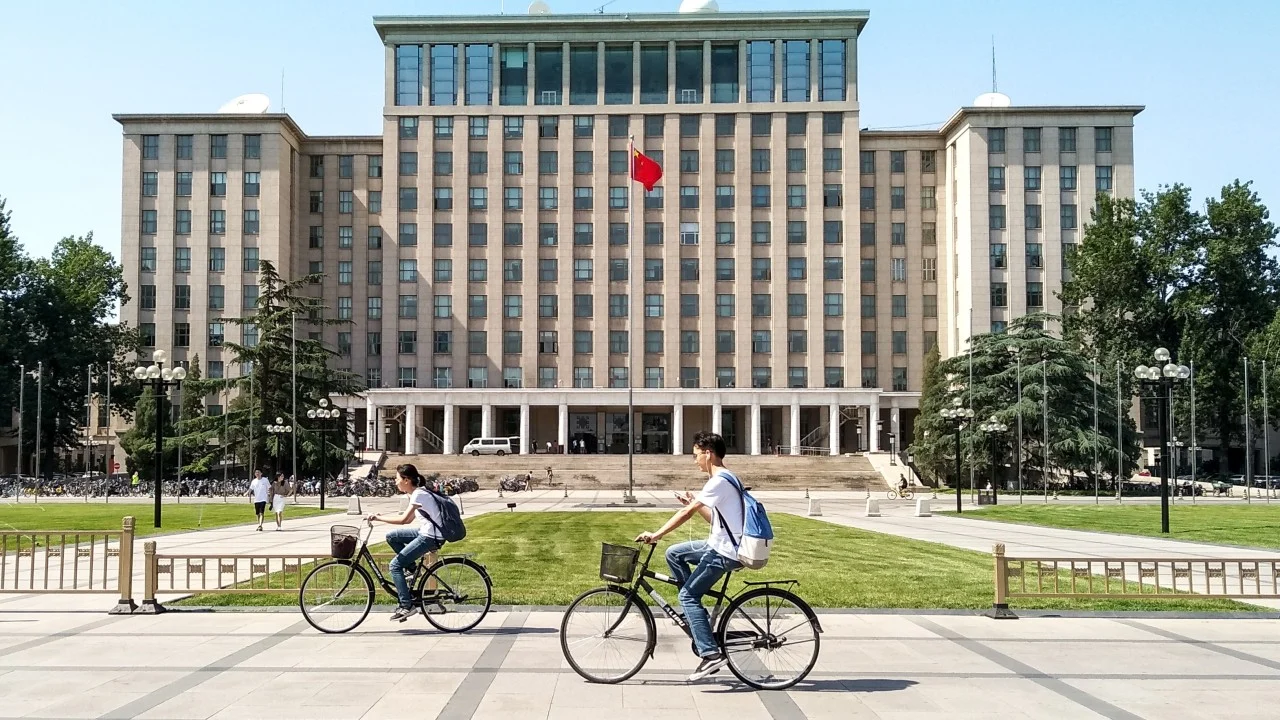
拟列入黑名单的知名院校中包括北京的清华大学。这所顶尖学府培养出了众多政界与商界领袖。
Tsinghua University among elite institutions proposed for blacklist Among the institutions listed by Moolenaar is Tsinghua University in Beijing, an elite organisation whose alumni cover top political and business leaders.
该校董事会高管包括来自美国主要科技巨头的成员,其中包括芯片制造商英伟达、科技巨头苹果和半导体公司超微半导体(AMD)。英伟达、苹果和AMD未立即回应置评请求。
The university’s board executives include those from major US tech giants, including chipmaker Nvidia, technology giant Apple and semiconductor company Advanced Micro Devices (AMD). Nvidia, Apple and AMD did not immediately respond to requests for comment.
根据该信函,被点名的众多机构聚焦于关键技术领域,包括人工智能、半导体和量子计算。
A large number of the targeted institutions focus on critical technology sectors, including artificial intelligence, semiconductors and quantum computing, according to the letter.
信函还敦促该部门将中国科学院的14个“被认定为中共[中国共产党]防御核心合作伙伴”的研究所,以及“22个境外恶意人才计划、中国留学基金委及其附属学者”列入第1286条清单。
The letter also urged the department to add 14 Chinese Academy of Sciences Institutes “identified as core CCP [Chinese Communist Party] defence partners” as well as “22 foreign malign talent programmes, and the China Scholarship Council and affiliated scholars” to the Section 1286 List.
近年来,许多机构招募了大量在美国任职的学者,以加强其基础研究。例如,2025年诺贝尔化学奖得主奥马尔·M·亚吉今年7月加入清华大学,领导一个新的人工智能驱动研究中心。
Many of the institutions have recruited numerous scholars serving in the United States in recent years to strengthen their basic research. For example, Omar M. Yaghi, the 2025 Nobel Prize in Chemistry laureate, joined Tsinghua University in July this year to lead a new AI-driven research centre.
目前尚不清楚,如果穆勒纳尔的名单被采纳,类似任命是否仍然可能。
It remains unclear whether similar appointments will still be possible if Moolenaar’s list is adopted.
该信函还要求将中国留学基金委(CSC)列入名单,理由是“它要求资助学生每三个月向中国驻外使领馆报告一次,详述学业进展”,并让学生在国外接受强制性的政治/思想教育课程。
The letter also requests that the China Scholarship Council (CSC) be included on the list because “it requires sponsored students to report to PRC embassies or consulates every three months, detailing their academic progress” and subjects students to mandatory political/ideological guidance sessions abroad.
《南华早报》已联系清华大学、北京大学以及名单上的若干中国科学院研究所;截至目前,尚未收到官方回复。
The South China Morning Post has contacted Tsinghua University, Peking University and several CAS institutes on the list; none has officially replied so far.
该名单依据2019年《国防授权法》设立,用于识别“对美国科研企业构成国家安全风险”的外国机构和人才招聘计划。
Created under the 2019 National Defence Authorisation Act, the list identifies foreign institutions and talent recruitment programmes that “present national security risks to the US research enterprise”.
穆勒纳尔的推动是在今年7月美国国防部最后一次更新其研究监控名单之后进行的,当时该名单扩大至包括88家中国大陆机构,其中包括复旦大学和上海交通大学等民用高校。
Moolenaar’s push follows the expansion to 88 mainland Chinese organisations, including civilian universities Fudan University and Shanghai Jiao Tong University, when the US Department of Defence last updated its research watch list in July.
历史上,该名单一直聚焦于人民解放军院校及与国防工业直接挂钩的机构,但华盛顿近年来一直在扩大其针对不受欢迎的中国影响的打击范围。
Historically, the list has focused on People’s Liberation Army academies and institutions tied directly to the defence industry, but Washington has increasingly broadened its push against unwanted Chinese influence.
这反映了委员会的观点,即与军民融合相关的人才和研究体系已不再局限于传统上被指定为国防院校的机构。
This reflects the committee’s view that the talent and research systems associated with military-civil fusion are no longer confined to institutions traditionally designated as national defence academies.
澳大利亚战略政策研究所高级分析师杰夫·韦德表示,清华大学是与“中国军事愿望”联系最紧密的教育机构之一,他称将其列入第1286条名单“显然是合理的”。
Geoff Wade, senior analyst at the Australian Strategic Policy Institute, said Tsinghua is one of the educational institutions “most tightly linked with China’s military aspirations”, calling the inclusion on the Section 1286 List “clearly warranted”.
他说:“根据ASPI的中国国防大学追踪器,清华大学因其广泛的国防研究活动、对武器科学研究的重视、具备保密级安全资质、与军工复合体的联系,以及据称与网络攻击相关联的IT基础设施,被评估为极高风险。”
“Tsinghua University is assessed by ASPI’s China Defence Universities Tracker as very high risk due to its extensive defence research activities, focus on armaments science research, secret-level security credentials, ties to the military – industrial complex, and IT infrastructure allegedly linked to cyberattacks,” he said.
美国对中国高校的打击可能影响未来的科学合作。与此同时,一些批评者和研究人员担心,将黑名单扩大至包括知名民用高校,可能会显著影响中美之间更广泛的科学合作。
US targeting of Chinese universities may impact future scientific collaborations Meanwhile, some critics and researchers worry that widening the blacklist to include prominent civilian universities could significantly affect broader scientific collaborations between the US and China.
清华大学战略与安全研究中心的学者周密在接受香港-based报纸《文汇报》采访时表示,此类封锁措施存在明显的局限性。
Zhou Mi, a scholar at Tsinghua University’s Centre for Strategic and Security Studies, told Hong Kong-based newspaper Wen Wei Po that such blockade measures have obvious limitations.
据周密称,美国的封锁忽视了现代技术的现实,而现代技术的成功需要国际劳动分工和大规模市场采用。
According to Zhou, US blockades ignore the realities of modern technology, which requires international labour sharing and large-scale market adoption to succeed.
与其切断中国与全球科学网络的联系,周认为“这些限制恰好会促使其他国家与北京合作,同时将美国科技公司排除在关键的海外机遇之外”。
Rather than cutting China off from global scientific networks, Zhou contends “the restrictions will, on the contrary, drive other nations to partner with Beijing while locking American tech firms out of critical foreign opportunities”.
西南政法大学美国研究中心主任朱颖在8月接受《环球时报》采访时也表达了类似观点。
Zhu Ying, director of the Centre for American Studies at Southwest University of Political Science & Law, shared a similar idea in an interview with Global Times in August.
“除了扩大[1286名单],美国方面对华科研合作的管控也在不断扩大,这已经在美国学术界产生了寒蝉效应,”朱颖说。
“In addition to expanding [the 1286 List], the US side’s controls on scientific research cooperation with China are also continually expanding, which has already created a chilling effect in US academic circles,” Zhu said.
“此类举措将削弱美国自身吸引人才的能力,并破坏其维持优势所依赖的开放科研生态系统。”
“Such moves will weaken the United States’ own ability to attract talent and undermine the open research ecosystem on which it relies to maintain its advantages.”