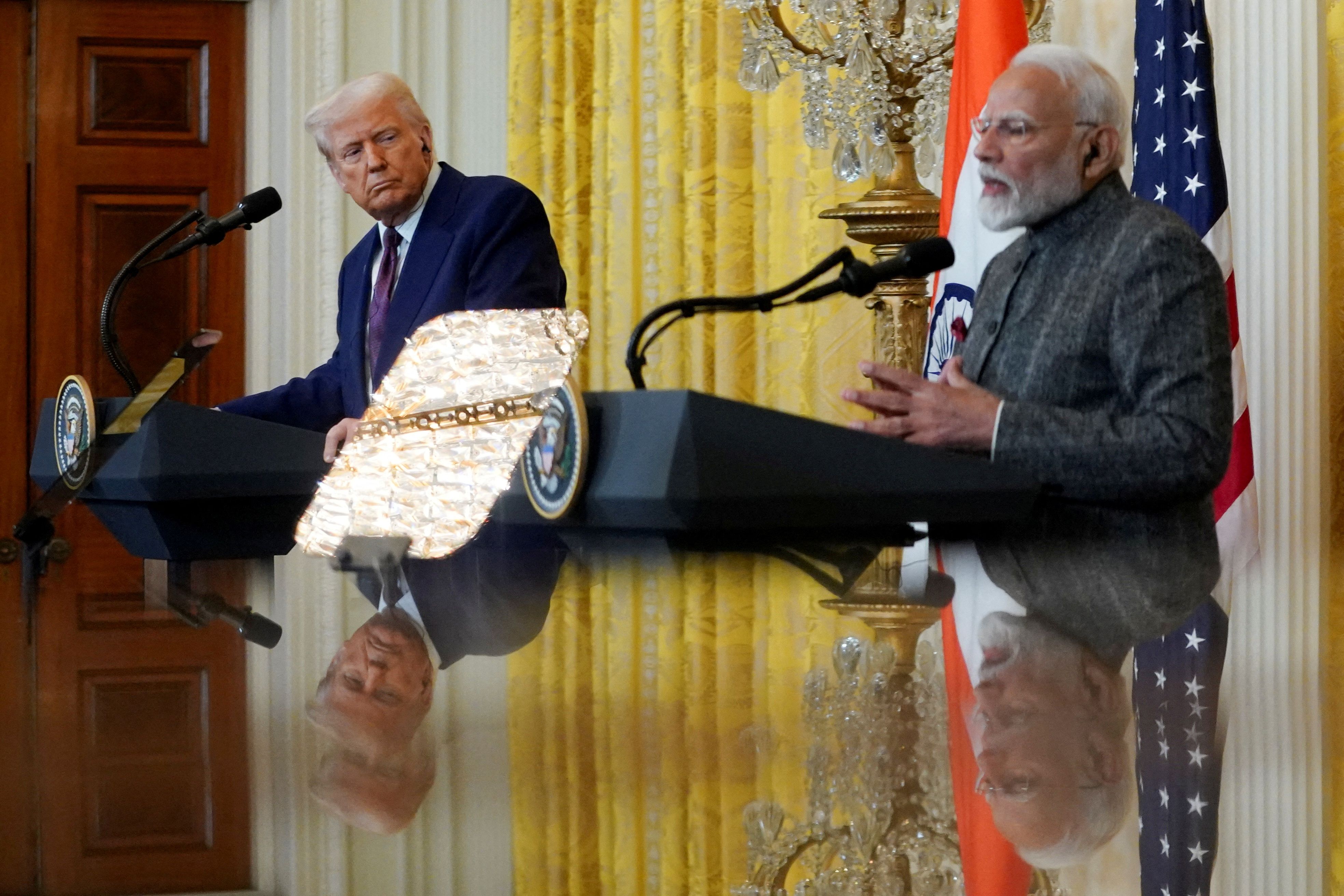
美国总统特朗普面临周日的截止日期,需要决定是否对他上个月签署的一项两党制裁法项下对其他国家实施某些惩罚措施。
President Donald Trump faces a deadline Sunday to decide whether to impose certain penalties on other countries under a bipartisan sanctions law he signed last month.
他若豁免对俄罗斯个人或实体的制裁,将招致批评;若决定不对中国购买俄罗斯天然气的行为征收关税,同样会招致批评。但华盛顿希望他能至少豁免一个国家:印度。
Any move by him to waive sanctions on Russian individuals or entities will be met with criticism, as would a decision not to impose tariffs on China for buying Russian gas. But Washington is hoping he’ll spare at least one country: India.
“美国和印度都不应购买俄罗斯石油和天然气,但我不认为仅仅对印度征收高额关税,就是让它们减少购买的办法,”新美国安全中心首席执行官理查德·丰塔纳表示。
“Both the United States and India should not buy Russian oil and gas, but I don’t think simply imposing big tariffs on India is the way to get them to” reduce their purchases, said Richard Fontaine, CEO of the Center for a New American Security.
惩罚印度对俄罗斯能源的依赖,“将对美印关系造成沉重打击,”外交关系协会高级研究员萨达南德·杜姆主张道。
Punishing India for its reliance on Russian energy “would deal a body blow to the US-India relationship,” argued Sadanand Dhume, a senior fellow at the Council on Foreign Relations.
美国和印度目前正陷入贸易谈判,更多关税无疑会打乱谈判。丰塔纳表示,特朗普政府“100%”有可能利用该制裁法,在谈判中向印度施压,迫使其让步。特朗普先前曾因印度购买俄罗斯能源而提高对印关税,但随着贸易谈判的推进,后来又将其取消。
The US and India are currently locked in trade negotiations, which more tariffs would surely disrupt. Fontaine said it is “100%” possible that the Trump administration uses the sanctions law to pressure India to give in to its demands in those discussions. Trump had previously hiked tariffs on India over its Russian energy purchases, but later removed them as trade talks progressed.
当被问及特朗普是否已就截止日期实施哪些制裁(如有)做出决定时,一名白宫官员表示,他“已签署该法案,政府将遵守该法案的要求”。该法案赋予总统广泛权力,若他认为符合美国利益,可豁免处罚。
Asked whether Trump had made a decision on which sanctions, if any, to impose at the deadline, a White House official said that he “signed the act and the administration will comply with the act’s requirements.”The bill gives the president broad power to waive penalties if he deems it in the US interest.