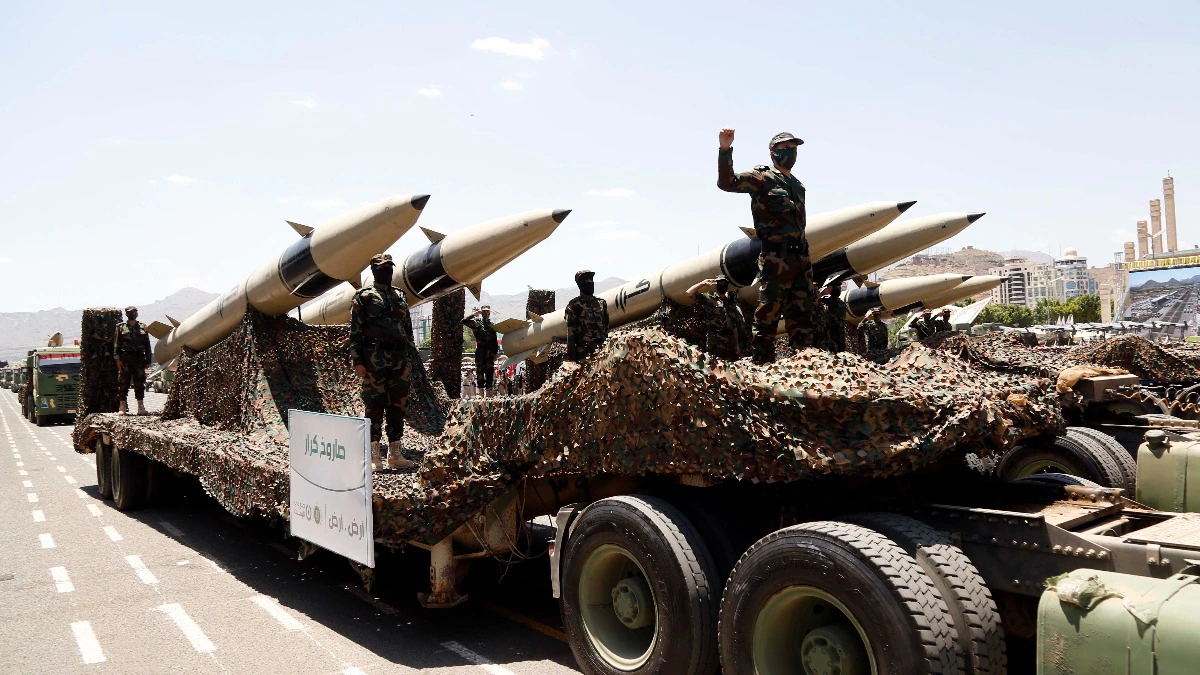
也门胡塞武装的经典形象是穿着拖鞋、手持卡拉什尼科夫步枪的武装分子骑着丰田皮卡穿越广袤沙漠的景象。他们也可能或可能没有嚼kat叶上瘾。但这一形象掩盖了扎伊德什叶派运动所发展的技术能力,以及它如今对其最大地区对手——石油富饶的海湾王国沙特阿拉伯所构成的军事威胁。自九月以来,得到伊朗支持的胡塞武装在无视数百次沙特空袭的情况下,几乎控制了也门红海海岸的全部地区。
The classic image of Yemen's Houthis is that of slippers wearing Kalashnikov-wielding militants riding their Toyota pickups across vast expanses of desert. They also may or may not be high on the khat leaf. But this image belies the technological capabilities the Zaydi Shia movement has developed, and the military threat it now poses to its biggest regional rival, the oil-rich Gulf Kingdom of Saudi Arabia. Since September, the Iran-backed Houthis have taken over almost all of Yemen's Red Sea coast while shrugging off hundreds of Saudi airstrikes.
尽管效忠利雅得支持的也门政府的部队发动反攻,夺回了一些失地,包括据报道解放了重要港口城市莫卡,胡塞武装(也被称为安萨尔·安拉)仍然是一个不容小觑的力量。更重要的是,胡塞武装还实施了针对沙特阿拉伯的导弹和无人机袭击,击中了包括关键石油开采和炼制基础设施以及利雅得哈立德国王国际机场在内的多个目标。
Although a counteroffensive by forces loyal to the Riyadh-backed Yemeni government has clawed back some ground, including reportedly liberating the vital port city of Mokha, Houthis (who are also known as Ansar Allah) remain a force to be reckoned with. More importantly, the Houthis have also carried out missile and drone strikes targeting Saudi Arabia, hitting, among other things, vital oil extraction and refining infrastructure and King Khalid International Airport in Riyadh.
伊朗代理人的战场收获不能仅靠惊喜来解释。一个在世界上经济最不发达国家之一运作的运动,是如何获得并维持一种既高科技又经济的导弹和无人机武库的,这种武库能够威胁到装备有价值数十亿美元先进军事硬件的地区大国?答案在于伊朗援助、中国制造零部件的供应,以及最近的美国人工智能(AI)平台的结合。
The battlefield gains of Iran's proxy's cannot be explained by surprise alone. How has a movement operating in one of the world's least economically developed countries acquired and sustained a high-tech but at the same time economical arsenal of missiles and drones capable of threatening a regional power equipped with billions of dollars' worth of advanced military hardware? The answer lies in a combination of Iranian assistance, supplies of Chinese-made components, and lately, American Artificial Intelligence (AI) platforms.
烟雾从沙特阿美炼油厂现场升起,此前据报道胡塞武装于10月3日对利雅得南部发动了袭击。胡塞武装的武器库在探讨胡塞武装如何建立起其高科技武器库之前,我们先来看看安萨尔拉组织正在使用的高科技武器。根据美国国防情报局(DIA)2024年2月的一份报告,胡塞武装除了拥有枪支和车辆之外,还拥有多种弹道导弹、巡航导弹和无人机(UAV),其中许多与伊朗设计相似。
Smoke rises from the site of the Saudi Aramco refinery after reported Houthi attacks, south of Riyadh on Octiber 3.THE HOUTHI ARSENALBefore we go into how the Houthis were able to build up their high-tech arsenal, let us first have a look at the high-tech weapons that are being used by the Ansar Allah. According to a February 2024 report by the US Defence Intelligence Agency (DIA), the Houthis, alongside their guns and vehicles, also possess a diverse arsenal of ballistic missiles, cruise missiles and unmanned aerial vehicles (UAVs), many of which bear similarities to Iranian designs.
该组织的无人机武器库包括Sammad无人机和Wa'id系列,DIA将其与伊朗的Shahed无人机联系起来。报告估计Sammad的射程为1800公里,Wa'id 1的射程为900公里,Wa'id 2的射程为2500公里。这些单程攻击无人机结合了相对较低的成本、较远的射程和爆炸性载荷,使胡塞武装能够威胁也门以外远距离的目标,DIA表示。
The group's drone arsenal includes the Sammad UAV and the Wa'id series, which the DIA linked to Iran's Shahed drones. The report estimated the Sammad's range at 1,800 km, the Wa'id 1's at 900 km and the Wa'id 2's at 2,500 km. These one-way attack drones combine relatively low costs with long ranges and explosive payloads, allowing the Houthis to threaten targets far beyond Yemen, the DIA said.
还有导弹系统。根据DIA报告,胡塞武装拥有多种弹道导弹和巡航导弹,能够打击陆地和海上的目标。这些包括Burkan-3,一种射程约为1200公里的中程弹道导弹,以及胡塞武装声称可飞行高达2000公里的Quds 4巡航导弹。该民兵还拥有Asif反舰弹道导弹,声称射程为400公里,可威胁海军和商用船只,并展示了其他类型,包括Toofan和Hatem。
Then there are the missile systems. According to the DIA report, the Houthis possess a diverse arsenal of ballistic and cruise missiles capable of striking targets on both land and sea. These include the Burkan-3, a medium-range ballistic missile with a range of about 1,200 km, and the Quds 4 cruise missile which the Houthis claim can travel up to 2,000 km. The militia also operates the Asif anti-ship ballistic missile, with a claimed range of 400 km, which can threaten naval and commercial vessels, and have displayed other types including the Toofan and Hatem.
一名身着军装的胡塞武装支持者手持模拟导弹,加入该武装组织支持者的行列,参加集会以示对该运动的支持。伊朗提供关键部件和技术伊朗的支持帮助胡塞武装不仅获得了武器,还掌握了在当地生产部分武器的技术。根据2024年美国国防情报局(DIA)报告,德黑兰已向胡塞武装提供日益复杂的导弹、无人机及其他武器。
A Houthi supporter wearing a military uniform holds a mock missile as he joins the militia's supporters in a rally to show support for the movement.IRAN PROVIDED CRITICAL COMPONENTS AND TECHNOLOGYIran's support has helped the Houthis acquire not just weapons but also the know-how to produce some of them locally. According to a 2024 US Defence Intelligence Agency (DIA) report, Tehran has supplied the Houthis with increasingly sophisticated missiles, drones and other weapons.
也门国家抵抗力量拦截的一批货物中含有750吨常规武器,包括先进无人机部件、导弹弹头和雷达系统,这一信息据对外关系委员会报告所述。DIA报告指出,伊朗常用的一种方式是利用多夫帆船(小型木制帆船)将部件和备件走私到也门。胡塞武装随后将这些部件重新组装成完整弹药,重新喷涂为其颜色,并赋予新名称。
One shipment, intercepted by Yemen's National Resistance Forces, contained 750 tonnes of conventional weapons, including advanced drone components, missile warheads and radar systems, according to a report by the Council on Foreign Relations. One common method used, according to the DIA report, was for Iran to use dhows (small sailing vessels made of wood) to smuggle in components and spares to Yemen. The Houthis would subsequently reassemble them into complete munitions, repaint them to their colours, and assign them new names.
但德黑兰的援助不仅限于提供装备。国际战略研究所(IISS)2025年4月的一份分析称,伊朗的技术专长、机械和部件帮助伊朗支持的胡塞武装建立了当地生产和组装能力,以制造萨马德-3攻击无人机及一些短程弹道导弹等武器。然而,胡塞武装在关键部件(包括制导和推进系统)方面仍依赖外部供应。IISS指出,该组织在组装无人机时,除了使用伊朗部件外,还采用商业上可获得的国外制造零件,如陀螺仪。
But Tehran's assistance extends beyond supplying equipment. An April 2025 analysis by the International Institute for Strategic Studies (IISS) said Iranian technical expertise, machinery and components had helped the Iran-aligned Houthi militia establish local production and assembly capabilities for weapons such as the Sammad-3 attack drone and some short-range ballistic missiles. However, the Houthis remain dependent on external supplies for critical components, including guidance and propulsion systems. The IISS noted that the group uses commercially available foreign-made parts alongside Iranian components, such as gyroscopes, to assemble drones.
更先进的弹道导弹和巡航导弹仍高度依赖伊朗技术和供应,因为胡塞武装缺乏独立制造某些专用部件的能力,例如小型涡喷发动机和雷达寻求器。
More advanced ballistic and cruise missiles remain heavily reliant on Iranian technology and supplies, as the Houthis lack the capability to independently manufacture some specialised components, including small turbojet engines and radar seekers.
据报道,伊朗的神鹰自杀式无人机正在胡塞武装内部制造。中国零部件助力胡塞武装制造导弹。虽然伊朗提供武器和制造技术,但中国供应商提供的零部件和工业设备使胡塞武装能够在也门制造导弹和无人机。华尔街日报(WSJ)10月14日报道引用武装冲突研究(CAR)报告称,2025年也门当局拦截的两批货物含有来自中国供应商的零部件,旨在帮助该组织制造伊朗开伯尔-谢坎弹道导弹的版本。
Iran's kamikaze Shahed drones are reportedly being manufactured in house by the Houthis.CHINA'S PARTS HELP HOUTHIS BUILD MISSILESWhile Iran gives the weapons and the know how to make them, Chinese suppliers are providing components and industrial equipment that enable the Houthis to manufacture missiles and drones in Yemen.A Wall Street Journal (WSJ) report published on October 14, citing a report by Conflict Armament Research (CAR), said two shipments intercepted by Yemeni authorities in 2025 contained components from suppliers in China intended to help the group build a version of Iran's Kheibar Shekan ballistic missile.
这些零部件包括用于导弹机身和火箭发动机的定制加工金属件、稳定鳍片、耐热烧蚀材料、工具和测试设备。WSJ报道称,该导弹可能打击到约1900公里(1200英里)外的目标。与此同时,彭博社9月的一项调查发现,一艘从中国出发、目的地为胡塞武装控制的荷台达港的集装箱在7月被拦截,内部装有工业机械、化学品和零部件。
These included custom-machined metal parts for the missile's airframe and rocket motor, stabilising fins, heat-resistant ablative material, tools and testing equipment. The missile could potentially reach targets around 1,200 miles away, the WSJ report said.A Bloomberg investigation published in September, meanwhile, found that a container shipped from China and bound for the Houthi-controlled port of Hodeidah that was intercepted in July, contained industrial machinery, chemicals and components.
在被查获的物资中,有一件疑似后部导弹鳍片的部件,专家认为这可能是伊朗开伯尔-谢坎导弹的一部分。另据美国财政部自2024年起指控,总部位于中国的深圳市精瀚电子有限公司和深圳市睿恩科技有限公司向胡塞武装提供双用途和军用级别的零部件,用于其导弹和无人机的生产。财政部称,这两家公司已运送数百枚用于制造导弹制导系统的组件。
Among the seized material was a suspected rear missile fin that experts believed could be part of an Iranian Kheibar Shekan missile. Separately, the US Treasury has, since 2024, accused China-based firms Shenzhen Jinghon Electronics and Shenzhen Rion Technology of supplying dual-use and military-grade components for Houthi missile and drone production, stating that the two firms had shipped hundreds of components used in manufacturing missile guidance systems.HOUTHIS USED AI TO DEVELOP WEAPONSIf getting tech transfers from the Iranians and dual-use components from the Chinese were not enough, the Ansar Allah have also turned to using AI to assist them in building their weapons.
胡塞武装利用人工智能研发武器如果从伊朗获得技术转让以及从中国获取双用途组件还不够,安萨尔拉也转向使用人工智能来协助其武器研发。人工智能公司Anthropic在9月发布的一份报告中指出,位于也门北部的一支“威胁行为者小组”使用Claude Code来支持三项武器研发计划。这些“威胁行为者”利用该平台为至少三项武器研发计划开发制导、导航和控制软件。
In its report published in September, the AI major, Anthropic, noted that a "cell of threat actors" based in northern Yemen used Claude Code to support three weapons development programmes. These "threat actors", used the platform to develop guidance, navigation and control software for at least three weapons development programmes.
这些武器包括一枚制导火箭、一枚射程达2000公里的多级弹道导弹,甚至还有一枚高超声速滑翔飞行器。他们还使用该平台开发用于模拟飞行和调校制导系统的仿真模型。Anthropic表示,这些“行为者”曾尝试通过Claude开发的火箭进行试射,但最终失败。该公司未发现他们成功装备并投入使用作战武器的证据,尽管该小组曾开发出一个可在无需Claude的情况下运行的离线仿真工具包。
These included a guided rocker, a multistage ballistic missile with a stated range of 2,000 km, and even a hypersonic glide vehicle. They also used the platform to develop simulation models that model flight and tune guidance systems. Anthropic stated that the "actors" attempted to test fire a rocket developed via Claude, but which ended up failing. The company found no evidence that they had successfully fielded an operational weapon, although the group had developed an offline simulation toolkit that could operate without Claude.
但尽管Anthropic含糊其辞地将该群体称为“威胁行为者小组”,美联社和《华盛顿邮报》的报道明确指出,该群体正是胡塞武装。
But while Anthropic beat around the bush by calling the group a "cell of threat actors", reports in the Associated Press and The Washington Post identified them as Houthis.
胡塞武装支持者在2023年10月7日参加萨那武装部落集会时携带步枪。这对沙特阿拉伯意味着什么?几十年来,沙特阿拉伯花费数千亿美元购买顶尖军事装备,包括F-15等战斗机以及先进版本的爱国者防空导弹系统。但这些武器成本高昂,更换困难,据《纽约时报》报道,部分部署目的在于防御来自伊拉克和伊朗的潜在威胁——这两国历来是王国的主要安全顾虑。
Houthi supporters carry their rifles while attending an armed tribal rally in Sanaa on October 7.WHAT DOES THIS MEAN FOR SAUDI ARABIA? For decades, Saudi Arabia has spent hundreds of billions of dollars on top-of-the-line military equipment, including fighter jets such as the F-15 and advanced versions of the Patriot air defence missile system. But these weapons are prohibitively expensive, difficult to replace and, according to a New York Times report, were positioned in part to defend against potential threats from Iraq and Iran, which have historically been major security concerns for the kingdom.
以爱国者系统为例,其拦截弹每枚成本约为300万美元,且随着欧洲和中东冲突的加剧,需求激增,供应面临压力。与此相对的是胡塞武装,他们能够部署单向攻击无人机和巡航导弹,其中一些正在外国协助下日益具备本地组装或生产的能力。这些武器在直接交锋中可能难以与爱国者拦截弹抗衡,但用价值数百万美元的拦截弹摧毁成本仅其零头的无人机,对防守方而言构成艰难的经济方程——这就像用化疗来治普通感冒。
Take the Patriot system, for instance. Its interceptors can cost around $3 million apiece, and demand for them has increased amid conflicts in Europe and the Middle East, putting pressure on supplies. Facing this force are the Houthis, who can deploy one-way attack drones and cruise missiles, some of which they are increasingly capable of assembling or producing locally with foreign assistance. These weapons might not stand much chance against a Patriot interceptor in a direct engagement, but using a multimillion-dollar interceptor to destroy a drone costing a fraction of that amount presents a difficult economic equation for the defender. It is akin to using chemotherapy to treat a common cold.
最终,通过伊朗的技术转让、中国制造的部件以及潜在的美国人工智能工具,胡塞武装已扩大其导弹和无人机库存,这些武器将日益复杂的技术与相对低廉的生产成本相结合。相比沙特阿拉伯昂贵且复杂的军事装备,胡塞武装所使用的武器制造和更换成本更低,这对利雅得构成持续挑战。- 完
Ultimately, through Iranian technology transfers, Chinese-made components and, potentially, American AI tools, the Houthis have expanded an arsenal of missiles and drones that combine increasingly sophisticated technology with relatively low production costs. Compared with Saudi Arabia's expensive, complex military equipment, the weapons used by Houthis can be cheaper to manufacture and replace, presenting Riyadh with a persistent challenge.- Ends