克里斯汀·希勒(Christine Shearer)是全球能源监测机构(Global Energy Monitor)的研究分析师。此前,她曾担任气候必行(Climate Imperative)的研究经理,以及加州大学欧文分校(University of California, Irvine)地球系统科学系的博士后研究员。
Christine Shearer is a research analyst at Global Energy Monitor. She previously served as a research manager at Climate Imperative and a postdoctoral scholar in Earth System Science at the University of California, Irvine.
扎纳伊姆·科兹拜(Zhanaiym Kozybay)是全球能源监测机构的高级研究员。此前,她曾在圣母大学(University of Notre Dame)担任研究助理和研究顾问。
Zhanaiym Kozybay is a senior researcher at Global Energy Monitor. She previously served as a research assistant and research consultant at the University of Notre Dame.
过去十年,土耳其的能源系统经历了一场悄然的转型。风能和太阳能快速扩张,而新建燃煤电厂的计划几乎已全部消失。
Türkiye’s energy system has undergone a quiet transformation over the past decade. Wind and solar energy have expanded rapidly, while plans for new coal power have almost disappeared.
2014年,土耳其的燃煤电厂在建及规划容量达到54.5吉瓦(GW),仅次于中国和印度。根据全球能源监测机构(GEM)收集的数据[1],此后几乎全部被搁置或取消。目前仅剩少数燃煤项目,其中包括正在上诉的阿夫辛-埃尔比斯坦电厂扩建项目[2],以及恰纳卡莱省塞纳尔电厂的新机组[3]。
In 2014, the country’s 54.5 gigawatt (GW) coal pipeline was exceeded only by those of China and India. Almost all of it has since been shelved or canceled, according to data collected by Global Energy Monitor (GEM) [1]. Only a handful of coal proposals remain, including the Afsin-Elbistan plant expansion [2], which is under appeal, and a new unit at the Cenal plant in Canakkale [3].
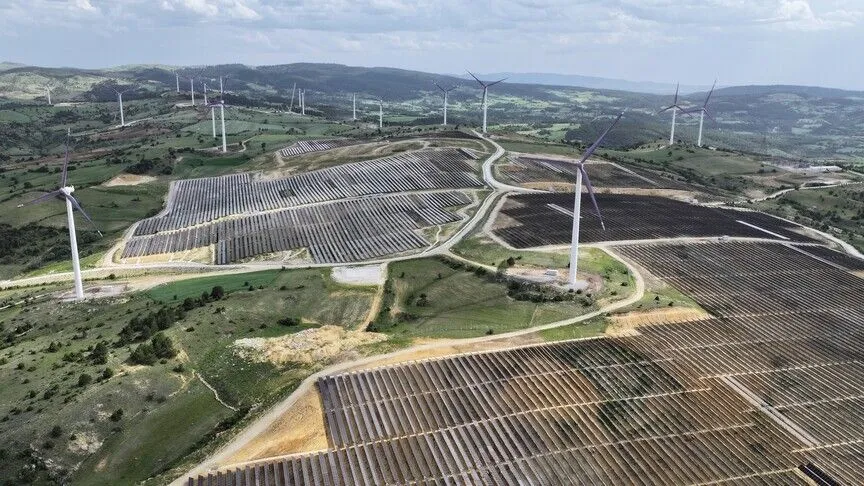
与此同时,可再生能源呈爆炸式增长。风能和太阳能目前占土耳其装机发电容量的三分之一,政府计划到2035年将两者的合并装机容量扩大三倍至120吉瓦[4]。
Meanwhile, renewables have surged. Wind and solar now account for one-third of Türkiye’s installed generating capacity, and the government plans to expand their combined capacity threefold to 120 GW by 2035 [4].
作为联合国年度气候峰会COP31[5]的东道主,土耳其呼吁到2035年让电力满足全球能源需求的35%[6]。将这一电气化目标与同等明确的推动可再生能源发电的举措[7]相结合,将使土耳其完成摆脱新建燃煤电厂的转型,并为全球树立榜样,展示清洁能源如何在推动气候目标的同时,兼顾经济增长和能源安全。
As host of the UN’s annual climate summit, COP31 [5], Türkiye has called for electricity to meet 35% of global energy demand by 2035 [6]. Pairing that electrification goal with an equally clear push [7] to generate this power from renewables would allow Türkiye to complete its shift away from new coal and provide a global example of how clean energy can advance climate goals alongside economic growth and energy security.
可再生能源已在降低土耳其的燃料支出。随着风能和太阳能的发展,土耳其能源和自然资源部估计,清洁能源在2015年至2025年间替代了相当于215亿美元的化石燃料进口[8]。
Renewables already cutting Türkiye’s fuel bill Türkiye is already seeing the energy security benefits of expanding renewable power. With the growth of wind and solar, the Ministry of Energy and Natural Resources estimates that clean energy displaced fossil fuel imports equivalent to $21.5 billion between 2015 and 2025 [8].
背后的节省源于风能和太阳能的快速扩张,它们现在是新增发电中最具成本竞争力的选择[9],也是该国增长最快的拟建电力来源[10]。
Behind the savings is the rapid expansion of wind and solar, which are now the most cost-competitive options for new power generation [9] and the country’s fastest-growing proposed electricity sources [10].
土耳其也是全球可再生能源配套电池储能规划方面的领先国家之一[11],储能成本下降使得在保持可靠性并满足需求的同时,整合更多可再生能源电力变得更加容易和便宜[12]。
Türkiye is also among the global leaders in planned battery storage paired with renewables [11], with falling storage costs making it easier and cheaper to integrate more renewable power while maintaining reliability and meeting demand [12].
但土耳其还有更大的雄心空间。超出当前计划扩大可再生能源发电,可能带来更多进口燃料节省,尤其是该国致力于推进电气化。用可再生能源供应这部分额外电力,将有助于将能源安全效益延伸至电力部门之外。
But Türkiye has room to be even more ambitious. Expanding renewable power beyond current plans could deliver even more savings on imported fuels, particularly as the country targets increased electrification. Supplying that additional electricity with renewables would help extend the energy security benefits beyond the power sector.
土耳其所在地区拥有大量未开发的风能和太阳能潜力[13],这为其在地中海可再生能源扩张中发挥更大作用创造了机会。与伊朗的战争对全球能源市场造成的近期动荡,进一步凸显了风能和太阳能的能源安全优势,因为它们不受包括煤炭在内的燃料国际价格上涨的影响[14]。
Türkiye also sits within a region with substantial untapped wind and solar potential [13], creating opportunities to play a larger role in the Mediterranean’s renewable energy expansion. Recent disruption to global energy markets from the war with Iran has further underscored the energy security advantage of wind and solar, which are insulated from rising international prices for fuels, including coal [14].
国内煤炭也有其自身的能源安全挑战。国内煤炭传统上被视为通过减少对进口燃料的依赖来加强土耳其能源安全的一种方式。与此同时,土耳其能源和自然资源部指出,土耳其93%的煤炭资源[15]是低等级的褐煤和沥青页岩,为了产生相同数量的能源,需要燃烧更多煤炭,并产生更多污染。
Domestic coal comes with its own energy security challenges Domestic coal has traditionally been seen as a way to strengthen Türkiye’s energy security by reducing dependence on imported fuels. At the same time, as the Ministry of Energy and Natural Resources of Türkiye has put out, 93% of Türkiye’s coal resources [15] are lower-grade lignite and asphaltite, requiring more coal to be burned and generating more pollution for the same amount of energy.
使用国内煤炭也与性能问题有关。Ember的一项分析[16]发现,由于频繁停机,土耳其10.4吉瓦的国内煤电产能中,只有大约一半在任何给定时间可用于发电,国内煤电厂的停机时间是进口煤电厂的五倍。
The use of domestic coal has also been tied to performance issues. An analysis by Ember [16] found that only about half of Türkiye’s 10.4 GW of domestic coal capacity was available to generate electricity at any given time due to frequent outages, with domestic coal plants experiencing five times more downtime than imported coal plants.
虽然国内煤炭在一些地区仍然是重要的就业来源 — — 因此支持工人和社区是清洁能源转型的关键部分 [17] — — 但最近的分析表明,仅在阿夫辛-埃尔比斯坦地区,可再生能源投资就可能创造数千个新岗位 [18]。
While domestic coal remains an important source of employment in some regions -- making support for workers and communities a key part of the clean energy transition [17] -- recent analysis suggests renewable energy investment could create thousands of new jobs in the Afşin-Elbistan region alone [18].
欧洲市场正在变化 邻近市场的贸易标准演变也在为土耳其远离煤炭的转型增添动力。欧盟的碳边境调节机制(CBAM)于1月正式生效 [19],对进口商品的隐含排放征收碳价,包括铁和钢、铝、水泥和电力。
European market is changing Evolving trade standards in neighboring markets are also adding momentum to Türkiye’s shift away from coal. The EU's Carbon Border Adjustment Mechanism (CBAM) formally took effect in January [19], placing a carbon price on the embedded emissions of imports, including iron and steel, aluminum, cement, and electricity.
土耳其是2026年初CBAM覆盖进口的主要来源国之一 [20],这使该国有强烈的经济动机,进一步降低其工业和电力系统的碳强度。
Türkiye was among the leading sources of CBAM-covered imports in early 2026 [20], giving the country a strong economic incentive to further reduce the carbon intensity of its industry and electricity system.
欧盟委员会也在审查用于制造进口商品的电力所产生的间接排放 [21],包括如何核算电力采购协议和已验证的电力排放。
The European Commission is also examining indirect emissions from electricity used to manufacture imported goods [21], including how to account for power purchase agreements and verified electricity emissions.
因此,土耳其的能源转型不仅与其气候承诺相关,而且与维持其强大的工业竞争力和与欧洲的贸易日益紧密相连。
Türkiye’s energy transition is therefore increasingly connected not just to its climate commitments, but to maintaining its strong industrial competitiveness and trade with Europe.
顺应土耳其的可再生能源势头 土耳其已经在用清洁能源取代新煤炭项目方面取得了长足进展。可再生能源的扩张正在为数十亿美元的化石燃料进口节省开支,并降低其对国际燃料市场波动的敞口,同时削减该国对国内煤炭的依赖 — — 以及由此带来的持续污染和可靠性问题。
Building on Türkiye’s renewable momentum Türkiye has already come a long way toward ending new coal proposals in favor of clean energy. Renewable expansion is saving billions of dollars in fossil fuel imports and reducing exposure to volatile international fuel markets, while curbing the country’s reliance on domestic coal -- along with the persistent pollution and reliability issues it brings.
但仍有进一步发展的空间。加速可再生能源发展并完成远离新煤炭的转型,可能带来更大的进口燃料节约,特别是随着更多交通、供暖和工业领域转向用电。
But there is room to go further. Accelerating renewable energy development and completing the shift away from new coal could deliver even greater savings on imported fuels, particularly as more transport, heating and industry move toward electricity.
通过将其全球电气化推动与同样强烈的清洁能源承诺相结合,土耳其可以在国内成果的基础上继续前进,同时为其他寻求减少对化石燃料依赖的国家提供一个典范。
By pairing its global push for electrification with an equally strong commitment to clean power, Türkiye could build on its achievements at home while providing a model for other countries seeking to reduce their dependence on fossil fuels.
*本文所表达的观点仅代表作者个人,并不一定反映安纳多卢通讯社的编辑政策。
*Opinions expressed in this article are the author's own and do not necessarily reflect the editorial policy of Anadolu.