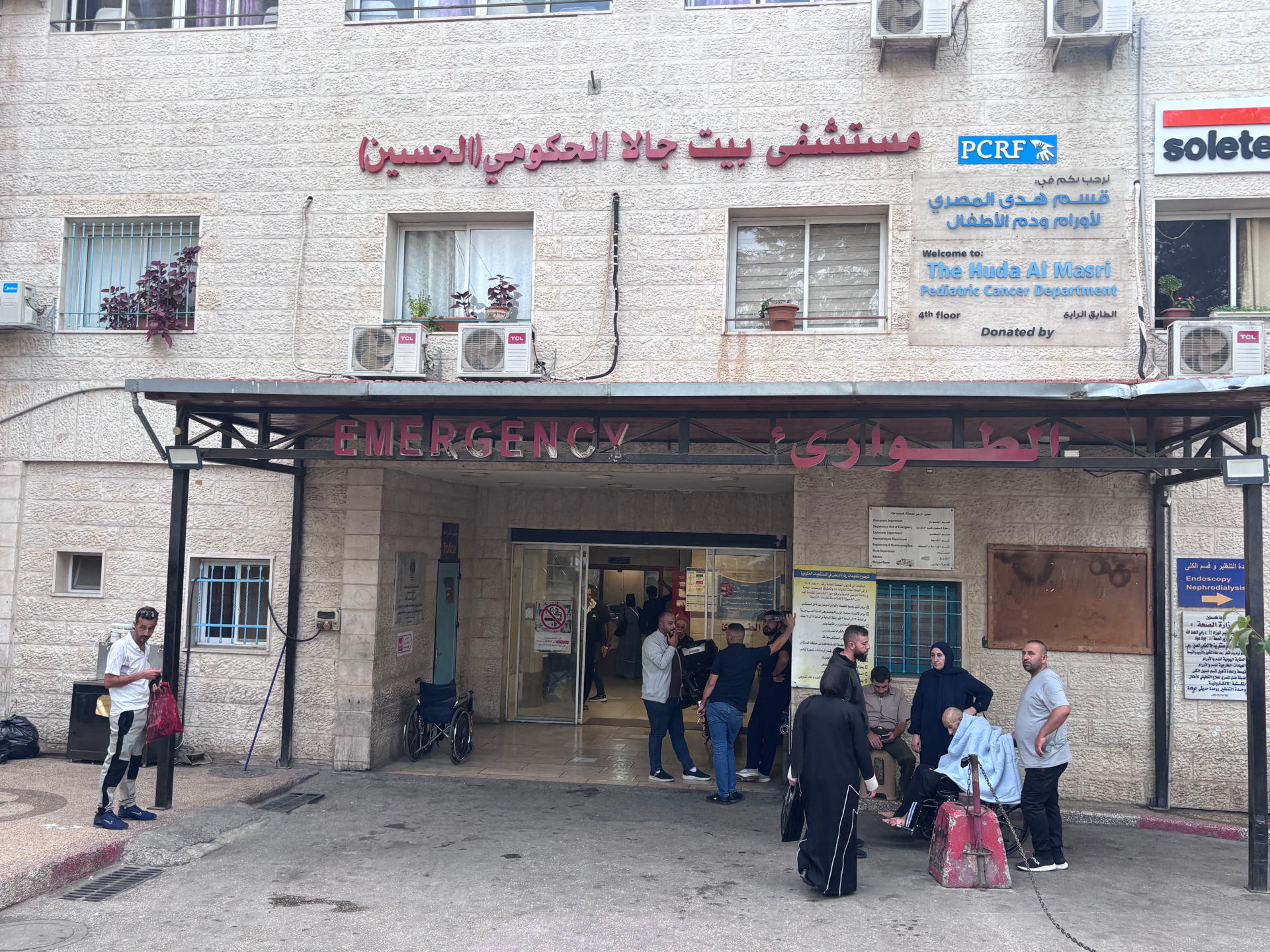
哈尔敦·阿特万(Khaldoun Atwan)每天在拜特贾拉政府医院(Beit Jala Government Hospital)的肿瘤科开始新的一天时,都不知道会遇到什么重重阻碍。
Khaldoun Atwan starts each day in the oncology ward at Beit Jala Government Hospital, not knowing what barriers will come his way.
位于哈尔胡尔(Halhul)的纳比尤尼斯(Nabi Yunis)检查站似乎“总是关着”,因此这家医院日间肿瘤科的主任不得不把车停下,乘出租车走完从希伯伦(Hebron)出发的剩余通勤路程。
The Nabi Yunis checkpoint in Halhul seems to be “always closed”, so the head of the daytime oncology unit at the hospital leaves his car and finishes the commute from Hebron by taxi.
“不止一次,天呐,我发现后视镜被砸碎了。我发现雨刷器被弄坏了,”他谈到自己穿过一个犹太定居者目前活动频繁的地区的行程时说。
“More than once, by God, I found the mirror broken. I found the wiper broken,” he said about his journey through an area where settlers are now active.
在各种随意开放或关闭的令人眼花缭乱的大门和检查站之间穿行,他不知道自己能否到达医院,不知道他的病人能否到达,也不知道他们到达时所需的药物是否还摆在货架上。
Traversing a dizzying array of gates and checkpoints opening or closing at will, he does not know whether he will reach the hospital, whether his patients will, or whether the drugs they need will be on the shelf when they do.
拜特贾拉是伯利恒省(Bethlehem governorate)唯一的政府医院,该省约有32万人口。在自己狭小简陋的办公室里,阿特万正竭力跟上那些因错过关键预约或化疗所需的基本药物而病情恶化的癌症患者的治疗。
Beit Jala is the only government hospital in Bethlehem governorate, home to some 320,000 people. Inside his tiny, spartan office, Atwan is struggling to keep up with his cancer patients who have regressed because they missed crucial appointments or essential drugs needed for their chemotherapy treatment.
他回忆说,甚至在第二次起义(Intifada)期间,药物供应都不是问题。而现在,这是无法逃避的现实。
Not even during the second Intifada, he recalls, was drug supply an issue. Now, it’s inescapable.
“什么都缺……有什么药我们就给什么,”他说,“这是一场灾难。”由于国际援助减少以及以色列移交税款受阻,巴勒斯坦权力机构(PA)的财政在过去三年中已经崩溃。自2023年10月以来,以色列在被占领的约旦河西岸采取的行动——包括广泛的道路封闭、检查站以及定居者对巴勒斯坦社区的一系列暴行——也对经济造成了冲击。
“Everything’s short … whatever’s available we give,” he said. “It’s a disaster.”The Palestinian Authority (PA)’s finances have collapsed over the last three years due to a reduction in international aid and disruptions in Israel’s transfers of tax receipts. Israel’s actions in the occupied West Bank since October 2023, including widespread road closures, checkpoints and a series of settler pogroms against Palestinian communities, have also impacted the economy.
因此,被占领的约旦河西岸的医疗卫生系统正在迅速恶化,医务人员只能拿到一半的薪水,而巴勒斯坦权力机构无力支付基本药物的费用。
As a result, the occupied West Bank’s healthcare system is rapidly deteriorating, with staff receiving just half their salaries, while the PA can’t pay for essential medications.
哈勒敦·阿特万必须经历一段艰难的旅程才能到达工作地点【半岛电视台】“仅限紧急情况” 在贝特莱姆省一个村庄的一名年长癌症患者与其他人一样在庭院里焦虑地踱步,他站在医院入口处,与儿子权衡着该怎么办。“每个月他们都尽力了,医生和清洁人员,但他们什么也没得到,”他说。
Khaldoun Atwan must make an arduous journey to reach his workplace [Al Jazeera]‘Emergency cases only’ Alongside others nervously pacing in the courtyard, an older cancer patient from a village in Bethlehem governorate stood at the entrance of the hospital, weighing with his son what to do. “Every month they do their best, the doctors and the cleaning staff, but they aren’t provided with anything,” he said.
卫生部的诊所目前正处于非全天候运营状态,医生在上班时的日均接诊量远超100人次。如今,就连看医生也变得仓促且负担不起:“如果我们想去看医生做个检查,我们需要200谢克尔(约合65美元),”一位年长的癌症患者说。
Ministry clinics are now operating part-time, with doctors seeing well more than 100 patients a day when they are. Now, even a doctor’s visit is rushed and unaffordable: “If we want to go to the doctor for a checkup, we need 200 shekels [$65],” said an older cancer patient.
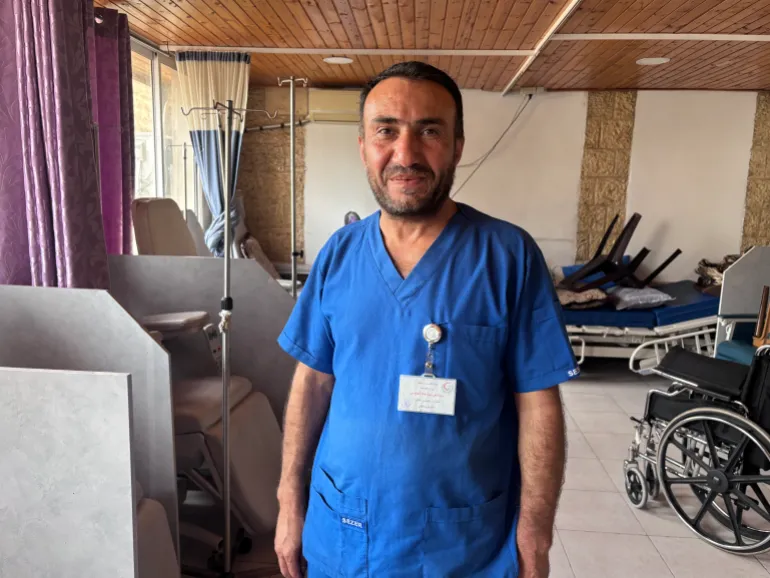
“这不是没有员工的问题,”拜特贾拉透析室的主治医师伊亚德·达里说。由于只能领到一半薪水,“政府雇员一周只工作两到三天,因为他没有足够的钱来撑满全部工时,”他补充说。因此,这家医院最终只能处理紧急情况。
“It’s not a story of there being no staff,” said Iyad Dari, the attending physician at the dialysis unit at Beit Jala. Getting paid only half their salaries, “the government employee is working just two or three days a week, because he hasn’t got enough to come in for his full hours,” he added. As a result, the hospital ends up covering emergency cases only.
“起implement初,[患者们]很[愤怒]。但现在每个人都理解了:每个人都在受苦,”达里说。
“At first, [patients] were [angry]. But now everyone understands: Everyone’s suffering,” Dari said.
拜特贾拉以及整个约旦河西岸的医疗物资危机,是由于以色列扣留了划拨给巴勒斯坦民族权力机构的税收收入,这一行动由以色列财政部长比撒列·斯莫特里奇主导。
The medical supplies crisis in Beit Jala and across the West Bank is the result of Israel’s withholding of tax revenues earmarked for the PA, an action spearheaded by Israeli Finance Minister Bezalel Smotrich.
“这场危机非常容易预测,我们百分之百预料到了这一点,”以色列人权医师组织的米莱娜·安萨里说。米莱娜表示,甚至在2023年10月对加沙的灭绝战争开始之前,以色列就一直在定期扣留税收收入,危及卫生部的金库。
“This crisis is very predictable, and we saw it coming 100 percent,” said Milena Ansari of Physicians for Human Rights Israel. Even before the genocidal war on Gaza began in October 2023, Israel was periodically withholding tax revenues, endangering the Ministry of Health’s coffers, Milena said.
据拜特贾拉(Beit Jala)内科专家约瑟夫·奥杰拉(Yosef Ojra)介绍,被扣留的税收已耗尽卫生部用于支付医疗供应商的资金,供应商目前正在暂停提供服务。医疗体系公立和私立部门之间不断借用物资的做法,给私人诊所、药店和医院带来了巨大压力。
According to Yosef Ojra, an internal medicine specialist at Beit Jala, the withheld revenues have depleted the Health Ministry’s funds to pay medical suppliers, who are now withholding their services. The ongoing borrowing of supplies between the public and private arms of healthcare has greatly strained private clinics, pharmacies and hospitals.
该院肿瘤科医生希沙姆·阿姆莱(Hisham Amle)表示,短缺问题“是一个老问题,而不是新问题”,但以往大约90%的重要物资(尤其是化疗物资)都能到位。现在,就连免疫疗法药物和生物制剂也告短缺,而癌症治疗需要连续不断进行。“如果患者错过了一两次疗程,他之前的所有治疗就都白费了,”他说。
Hisham Amle, an oncologist at the hospital, said shortages are “an old problem, not a new one”, but that about 90 percent of important items – for chemotherapy, above all – used to be there. Now, even immunotherapies and biologics are missing, and cancer treatment runs on an unbroken chain. “If the patient misses a session or two, he’s lost all the treatment before it,” he said.
“当我刚接手这个科室时,药物是齐全的,”肿瘤科护士长阿特万(Atwan)说。随后,他开始列举目前患者所需却无法获得的各种关键药物。“我手上没有一套完整的治疗方案。”该院肿瘤科医生希沙姆·阿姆莱在拜特贾拉【半岛电视台】该院药房主任赫卢德·德韦布(Khuloud Dweib)表示,卫生部最近设法获得了8种此前缺货的肿瘤药物和4种生物制剂。这些药物预计够用一个半月到两个月。不过,她表示,许多其他药物仍然缺货。
“When I first took over the department, the drugs were available,” said Atwan, the lead oncology nurse. He then began to list all the crucial drugs he was now missing for his patients. “There’s not one single complete protocol I’ve got.”Dr Hisham Amle, an oncologist at the hospital in Beit Jala [Al Jazeera] Khuloud Dweib, the hospital’s director of pharmacy, said the ministry recently managed to obtain eight previously missing oncology drugs and four biologics. This should be enough for between a month and a half and two months. But many other drugs are still out of stock, she said.
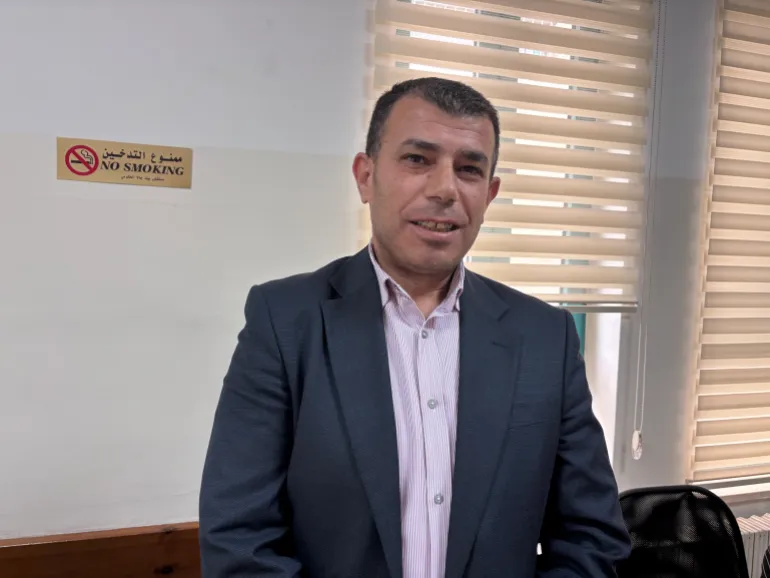
安萨里指出,与加沙不同,以色列并未阻止药品进入约克河西岸。问题“纯粹”在于巴勒斯坦权力机构没有资金购买这些药品。但她指出,作为占领国,“以色列负有首要的法律义务”,以确保被占领人口获得充足的医疗护理和医疗服务。
Unlike in Gaza, Israel is not blocking medicines from entering the West Bank, Ansari noted. The problem is “strictly” that the PA has no money to buy them. But “Israel has the primary legal obligation as an occupying power,” she notes, to ensure adequate medical care and access to occupied populations.
被剥夺出行权,被剥夺医疗服务对于整个约克河西岸南部地区而言,拜特贾拉的医院是提供癌症和透析治疗的唯一公立选择,患者来自伯利恒和希伯伦省、被占领东耶路撒冷的部分地区以及有时来自杰里科。
Denied movement, denied care For all of the southern West Bank, Beit Jala’s hospital is the only public option available for cancer and dialysis treatment, with patients coming from Bethlehem and Hebron governorates, parts of occupied East Jerusalem and sometimes Jericho.
随着以色列的检查站和关卡不断增多,抵达医院已经变成了一场噩梦。达里(Dari)描述了一名来自纳哈林(Nahalin)的透析患者,他预约在早上七八点,但所在的村庄被封锁了。“他在检查站坐了大约四、五个小时,”达里说。接着他绕了远路,经贾巴(Jaba)、苏里夫(Surif)、哈尔霍尔(Halhul)和赫伯尼(Hebron),在下午四点才到达透析室。一趟正常的行程大约花费10谢克尔。“像这样绕道需要花100多谢克尔,”达里说,而且有些患者一周需要进行四次透析。
But as Israeli checkpoints and gates multiply, reaching the hospital has become a nightmare. Dari described a dialysis patient from Nahalin, with an appointment at seven or eight in the morning, whose village was sealed. “He sat about four, five hours at the checkpoint,” Dari said. Then he took the long way round, through Jaba, Surif, Halhul and Hebron, and reached the unit at four in the afternoon. A normal journey costs about 10 shekels. “A detour like this costs more than 100 shekels,” Dari said, and some patients need dialysis four times a week.
与此同时,杜韦卜(Dweib)说,卫生部的中央供应仓库位于纳布卢斯(Nablus)——在遭遇封锁时,原本一个半小时的车程现在可能需要耗时六到十个小时。
The ministry’s central supply warehouse, meanwhile, is in Nablus, Dweib said – and an hour-and-a-half drive can now take six to 10 hours when closures hit.
阿特万(Atwan)的患者通常需要在他的科室和被占领的东耶路撒冷的奥古斯塔·维多利亚医院(Augusta Victoria Hospital)之间分阶段接受治疗。战争爆发前,来自约旦河西岸的癌症患者通常可以获得进入耶路撒冷的医疗通行证。一些治疗在拜特贾拉(Beit Jala)进行,而另一些治疗则只能在东耶路撒冷获得。但现在,没有任何保证能确保患者可以到达耶路撒冷。
Often, Atwan’s patients require treatments split between his unit and the Augusta Victoria Hospital in occupied East Jerusalem. Before the war, cancer patients from the West Bank routinely received medical permits to enter Jerusalem. Some treatments are in Beit Jala, while others are only available in East Jerusalem. But there are no guarantees any more that patients can reach Jerusalem.
“我有一个癌症患者……他等转诊通知,结果没有治疗,在经历了一番奔波之后,最后得到的回复居然是遭到安全拒绝,”阿特万说。“我的意思是,他拿不到去(奥古斯塔·维多利亚医院的)通行证?他该去哪儿?”
“I’ve got a cancer patient … He waited on a referral, and there’s no treatment, and after all the running around it comes back he’s security-rejected, too,” Atwan said. “I mean, he doesn’t get a permit to go to [Augusta Victoria]? Where’s he supposed to go?”
阿特万回忆起那些因错过治疗时间而导致中性粒细胞减少的患者,其中有一名患者很幸运,才没有演变成败血症。“这些都是灾难。”他不确定自己究竟失去了多少名因错过和未完成治疗的癌症患者;他说,许多较贫困的患者只能选择回家,并在那里死去。
Atwan recalled patients who became neutropenic due to missed treatment sessions, and one was lucky not to end up with sepsis. “These are disasters.”He’s not sure exactly how many cancer patients he’s lost due to missed and incomplete treatments; many of the poorer patients, he said, simply go home and die there.
医院肾脏科的伊亚德·达里医生【半岛电视台】“我已经开始节衣缩食,不敢多拿”随着前台的人群越聚越多,人们在医院入口处等待,一种紧张的疲惫感在医院老旧的大厅里蔓延。“人们真的很紧张。每个人都很害怕,”达里说。
Dr Iyad Dari at the nephrology wing in the hospital [Al Jazeera]‘I’ve started cutting back, not taking much’ As crowds swell at front desks and people wait at the hospital’s entrance, a nervous exhaustion percolates through the hospital’s aged halls. “People are really tense. Everyone’s scared,” Dari said.
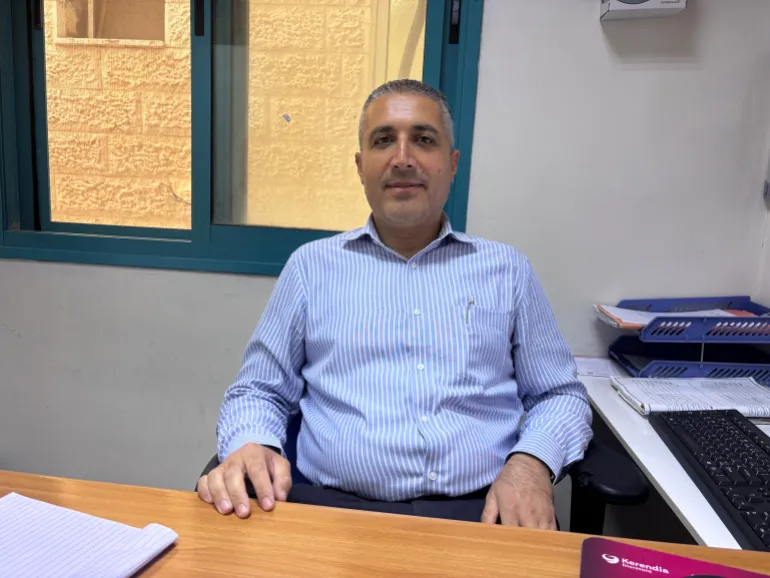
阿特万只领到一半薪水,他勉强维持着从希伯伦通勤的费用,并资助在大学读书的女儿们。
Atwan, who receives half his salary, struggles to cover his commute from Hebron and help support his daughters at university.
阿特万说:“我们别谈心情了——看在上帝的份上,我们要哭了。我们的士气跌到了谷底……我们是在勉强挤出笑容。”在劳务许可证被系统性吊销、大规模失业的背景下,越来越多的巴勒斯坦患者被推向公立医院,而这些医院却越发无能为力。安萨里补充说,医院“将优先救治那些真正付得起钱的人”。
“Let’s not talk about our state of mind – we’ll start crying, for God’s sake,” said Atwan. “Our morale is at rock bottom … We smile in spite of ourselves.”Amid mass unemployment with labour permits systematically revoked, more sick Palestinians are pushed towards public hospitals just as those hospitals have less to give. Hospitals “will prioritise someone who will actually pay them”, Ansari added.
艾哈迈德是一名拥有医学学位的伯利恒巴勒斯坦人,他每隔几天就会去药店查看是否有修美乐(Humira)。这是一种他患有克罗恩病的妹妹每两周需要注射一次的针剂。药店已经断货三个月了。直接从制药公司购买一两针大约需要2,000谢克尔(合650美元)。他说:“我们承担不起这个费用。所以我们只能硬挺,直到它重新有货为止。”
Ahmed, a Palestinian from Bethlehem with a medical degree, would check every couple of days with the pharmacist to see if they had Humira, an injection every two weeks that his sister with Crohn’s disease needs. For three months, the pharmacists were out of stock. Buying directly from the pharmaceutical company would cost about 2,000 shekels ($650) for one or two injections. “We couldn’t afford that,” he said. “So we just struggled until it became available again.”
这名来自一个面临定居者大屠杀威胁的村庄的老年癌症患者已经削减了自己的药量。他说:“这并不是定期供应的。”一个疗程的费用为2万谢克尔(合6,500美元)。他补充说:“我已开始减量,没吃多少。”
The elderly cancer patient from a village facing settler pogroms has cut back on his own medication. “It’s not supplied regularly,” he said. A course of it costs 20,000 shekels ($6,500). “I’ve started cutting back, not taking much,” he added.
在物资和人手短缺的情况下,积压的手术越来越多。来自埃扎里亚(al-Eizariya)的22岁青年赛义德·阿亚德(Sayed Ayyad)上个月在一次事故中摔倒,脚踝严重骨折。由于严重的手术优先,他等了三个星期才排上手术。
Amid supply and staffing shortages, surgery backlogs have piled up. Sayed Ayyad, 22, from al-Eizariya, fell during an accident, fracturing his ankle badly last month. With serious operations taking priority, he waited three weeks for a slot.
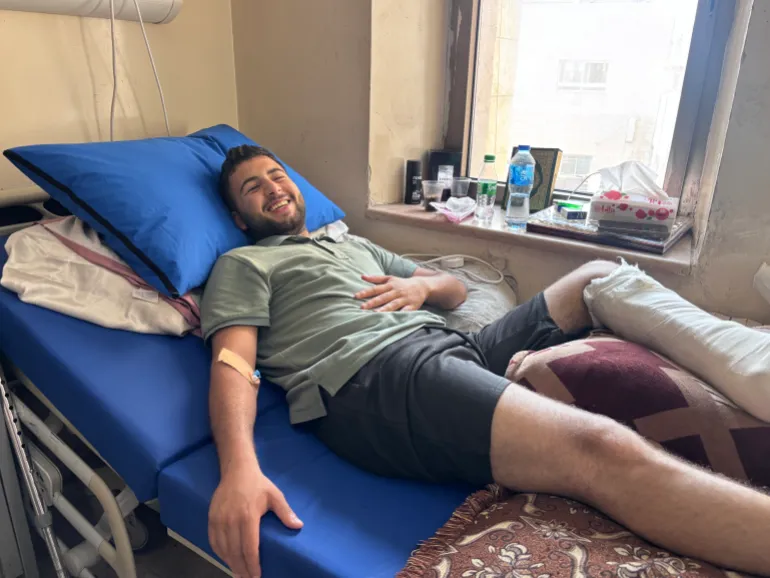
“他们告诉我,有60个人在等手术,”他说。“有一天我们没法做手术,因为没有药,没有止痛药,没有麻醉剂,什么都没有。”贝特贾拉医院的患者赛义德·阿亚德(Sayed Ayyad)正在接受治疗 [半岛电视台] 命运听天由命 负责贝特贾拉药剂科的库鲁德·德韦布(Khuloud Dweib)不得不应对日益恶化的危机,而患者们则在健康和财务困境中挣扎。“没有安全感。我们没有政治、健康、甚至财务上的安全感,”她说。
“They told me there’s 60 people waiting for an operation,” he said. “One day we couldn’t do the surgery because there were no medicines, no painkillers, no anaesthetic, nothing.”Sayed Ayyad, a patient at the hospital, receives treatment [Al Jazeera] Fates left to chance Khuloud Dweib, who heads the pharmacy department at Beit Jala, has to manage the worsening crisis as patients struggle with their health and finances. “There’s no security. We don’t have political, or health, or even financial security,” she said.
她不禁想起了一些病例,比如一名在埃及学医的多发性硬化症年轻男子。卫生部过去曾通过私下采购为他提供药物,直到该公司在收不到款项的情况下停止供货。他的母亲来找过她。“我想把房子卖了,好给我儿子买针剂,”这位母亲对她说。“因为他在埃及,远离家乡,在上学,而且……他已经看不见东西了,也走不动了。”
She’s left thinking of cases like a young man with multiple sclerosis studying medicine in Egypt. The Health Ministry used to provide his medicine through private purchase until the company stopped supplying without payment. His mother came to see her. “I want to sell my house so I can get the injection for my son,” the mother told her. “Because he’s in Egypt, away from home, studying, and … he’s stopped seeing, stopped walking.”
“所以,我能跟你说什么呢,”德韦布强忍着泪水说道。“愿上帝保佑人们。”医务人员担心,随着他们的医疗物资被掏空,他们可能会面临与加沙同行相似的命运——被绑架或杀害。
“So, what can I tell you,” Dweib said, fighting back the tears. “God help people.”The medical staff fear that with their supplies being hollowed out, they could face a similar fate to their colleagues in Gaza who have been kidnapped or killed.
“我们知道,在任何时刻,我们都可能成为针对医务人员的目标,仅仅因为我们是为民众提供服务的医疗人员,”德韦布说。“在这个社会里,我们既是父亲,也是母亲。”这座老旧医院病房里的任何人都没有看到尽头。“我们待的时间越长,情况就越糟,”达里说。
“We know that at any moment we could be targeted as medical staff, just because we’re medical personnel providing services to people,” Dweib said. “We’re a father and a mother in this society.”Nobody in the ageing hospital wards sees an end in sight. “The longer we stay, the worse the situation gets,” said Dari.
每天下午三点,阿特万必须离开,希望能赶到希伯伦的巴卜扎维亚(Bab az-Zawiya),在那里等拼车。
At three o’clock each afternoon, Atwan has to leave in the hope that he can reach Bab az-Zawiya in Hebron, where he waits for a shared taxi.
“也许会遇到关卡,也许不会,”他说。这与他的患者们所面临的困境没什么两样。“当一个病人病了,药是不是在那里全凭他的运气,”他说。“我们没有未来。我发誓:我们没有未来。”
“Maybe there’ll be a checkpoint for me, maybe there won’t be,” he said. It’s not so different from the conundrums his patients face. “When a patient gets sick, it’s his luck if the medicine’s there,” he said. “We’ve got no future. I swear: We’ve got no future.”