人工智能有潜力改造制造业,欧洲希望走在前列作者:Marilen Martin乍一看,中国似乎已具备在工厂车间主导人工智能部署的优势。该国是世界制造业强国。其人工智能系统的性能已接近领先的美国竞争对手。北京领导层已将工业人工智能列为国家优先事项,以推动经济增长。
AI has the potential to transform manufacturing, and Europe wants to lead the way By Marilen Martin At first glance, China appears well placed to dominate the deployment of artificial intelligence on the factory floor. The country is the world’s manufacturing powerhouse. Its AI systems are close to matching the performance of leading US rivals. And the leadership in Beijing has made industrial AI a national priority to boost economic growth.
欧洲另有想法。该大陆的老牌工业 conglomerates 也在尝试利用人工智能,以便在工厂自动化的下一阶段占据主导地位。凭借海量的生产数据可供利用,西门子、ABB 和施耐德电气等公司希望欧洲能够在此有人工智能开发的有利可图的领域占得先机,此前它们未能像 DeepSeek 或 Claude 那样推出世界领先的聊天机器人。
Europe has other ideas. The continent’s old industrial conglomerates are also trying to harness AI so they can dominate the next phase of factory automation. With an ocean of production data to draw upon, companies such as Siemens, ABB and Schneider Electric are hoping the continent can corner this lucrative area of AI development after failing to produce world-leading chatbots like DeepSeek or Claude.
成功将使这些历史悠久的公司能够供应下一代数据驱动的工厂,并使以技术为中心的新兴竞争对手更难夺走它们的客户。这也有助于限制欧洲对美国和中国的技术和经济依赖。利害关系是什么?
Success would allow those venerable companies to supply the next generation of data-driven factories and make it harder for upstart, tech-focused rivals to steal their customers. It would also help to limit Europe’s technological and economic dependence on the US and China. What’s at stake?
将人工智能应用于商品的设计、制造和运输意味着可以用更少的工人、更少的停机时间和更少的浪费生产更多产品。政府将其视为应对劳动力短缺、推动经济增长并让更多商品生产留在国内的一种方式。
Applying AI to how goods are designed, made and moved means more can be produced with fewer workers, less downtime and less waste. Governments see it as a way to deal with labor shortages, boost economic growth and keep more production of goods at home.
被称为大型语言模型的新一代人工智能平台主要由美国和中国的初创公司开发,如 OpenAI、Anthropic 和 DeepSeek。但许多最适合将人工智能嵌入全球生产机械的公司正是制造和维护这些设备的公司——这些是已建立的、历史悠久的参与者。
The new generation of AI platforms, known as large language models, were developed mostly by US and Chinese startups such as OpenAI, Anthropic and DeepSeek. But many of the companies best placed to embed AI in the world’s production machinery are the companies that make and maintain that equipment — established, older players.
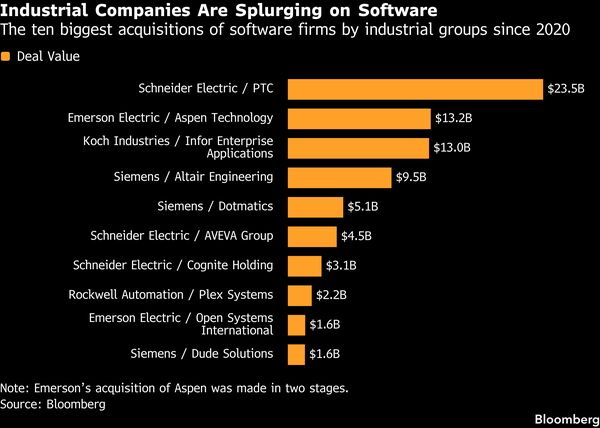
高盛(Goldman Sachs)的数据显示,自2020年以来,工业企业已花费超过1,100亿美元收购软件企业,以增强其人工智能能力。这一押注的逻辑在于,先行者可以将这项技术嵌入到难以替换的制造系统中。更换工厂软件可不像取消聊天机器人订阅那么简单,它可能需要新设备、重新培训以及重新设计流程。此类投入可以将一家工厂与同一项技术绑定多年。竞争形势如何演变?
Industrial groups have spent more than $110 billion since 2020 to acquire software businesses to bolster their AI capabilities, according to Goldman Sachs. The bet is that early movers can embed the technology in manufacturing systems that are difficult to replace. Switching factory software is not like canceling a chatbot subscription. It can require new equipment, retraining and redesigning processes. Such commitments can tie a factory to the same technology for years.
中国生产了全球约30%的商品,年产值达4.7万亿美元,北京方面已誓言利用人工智能来推动该国制造基础的现代化。国际机器人联合会(International Federation of Robotics)的数据显示,中国企业去年安装了全球近60%的新工业机器人,且政府正通过“人工智能+制造”计划,优先推进人工智能的大规模部署。
How is the competition shaping up? China produces around 30% of the world’s goods, worth $4.7 trillion a year, and Beijing has vowed to use AI to modernize the country’s manufacturing base.
但中国作为世界工厂的现象相对较新,其工厂的质量参差不齐,许多设施依然严重依赖人工。欧洲安装机器人和实现制造业数字化起步更早,因为这是应对该地区相对较高劳动力成本的一种方式。并且,全球工厂安装的许多设备都是在欧洲制造的。例如,德国西门子(Siemens)表示,全球部署的工厂控制器中,每三个就有一个由其供应。
Chinese companies installed almost 60% of the world’s new industrial robots last year, according to the International Federation of Robotics, and the government is prioritizing the wide-scale deployment of AI with its “AI + manufacturing” program. But China’s role as the world’s workshop is a relatively recent phenomenon, the quality of its factories varies widely and many facilities still rely heavily on manual labor. Europe has been installing robots and digitizing manufacturing for longer because it was a way to address the region’s relatively high labor costs. And a lot of the equipment installed in factories worldwide was made in Europe.
这意味着欧洲企业拥有构建最佳人工智能驱动工业系统所需的大量数据。墨卡托中国研究所(Mercator Institute for China Studies)的安东尼娅·赫迈迪(Antonia Hmaidi)表示,它们在利用这些数据预测设备故障、提高产品质量以及提升现有机械效率方面尤其在行。
Germany’s Siemens, for example, says it supplied one in every three factory controls deployed across the globe. This means European companies have a lot of the data that’s needed to build the best AI-driven industrial systems.
虽然欧洲工业集团深深嵌入世界各地的工厂,但美国公司拥有最先进的AI系统,并正努力将其能力带入物理世界。总部位于加利福尼亚州圣克拉拉的英伟达在AI芯片领域拥有压倒性优势,几乎所有开发工业AI的制造商都在使用其设备来训练机器人和加速仿真。一些美国工业AI初创公司正吸引巨额估值。由杰夫·贝索斯和维克·巴贾吉共同创立的普罗米修斯公司于6月筹集了120亿美元,用于开发其所谓的“通用人工智能工程师”。面临哪些挑战?
They are particularly adept at using it to predict equipment failures, improve product quality and make existing machinery more efficient, according to Antonia Hmaidi of the Mercator Institute for China Studies. While European industrial groups are deeply embedded in the world’s factories, US companies have the most advanced AI systems and are working hard to bring their capabilities to the physical world. Santa Clara, California-based Nvidia has an overwhelming lead in AI chips, and almost all manufacturers developing industrial AI are using its equipment to train robots and speed up simulations. Some American industrial AI startups are attracting hefty valuations. Prometheus, co-founded by Jeff Bezos and Vik Bajaj, raised $12 billion in June to develop what it calls an “artificial general engineer.”
如果能够负担得起聘请全球顶尖软件工程师的成本,设计一个AI聊天机器人相对容易。事实上,一些大型语言模型现在正在生成自身的更好版本——这一过程被称为递归自改进。
What are the challenges? Designing an AI chatbot is relatively easy if you can afford to employ the word’s best software engineers.
然而,试图将AI的能力应用于物理世界则是一件更为复杂的事情。设计芯片、更改机器设置或移动机器人的AI系统必须遵守物理定律,并受其所控制设备的限制。生产线上的错误指令可能损坏设备、毁掉数千件产品,或在最坏的情况下伤害工人。
In fact, some LLMs are now producing better versions of themselves — a process known as recursive self-improvement. Trying to harness AI’s capabilities in the physical world is a messier affair. An AI system designing a chip, changing a machine setting or moving a robot has to obey the rules of physics and stay within the limits of the equipment it controls.
聊天机器人是通过在线上可获得的大量文本、图像和代码进行训练的。而工厂AI需要更专业的信息,例如机器的传感器读数、工程图纸、生产记录、工人工作的视频以及展示设备出故障时行为的数据。其中大部分此前从未被收集,一些仍仅存在于纸质文件中,还有大部分属于专有信息。
A wrong instruction on a production line can damage equipment, ruin thousands of products or, in the worst case, hurt workers. Chatbots were trained on vast collections of text, images and code available online. Factory AI needs more specialized information such as sensor readings from machines, engineering drawings, production records, videos of workers and data showing how equipment behaves when something goes wrong.
作为欧洲主导的出口国,德国花了十多年时间在其“工业4.0”计划下推动企业实现工厂数字化和互联,但许多企业仍然在基础环节举步维艰。根据数字协会(Bitkom)的一项研究,近半数的德国工业企业表示,它们缺乏足够的IT基础设施来使用“数字孪生”技术,以在制造和安装设备之前,通过虚拟方式测试新机器或模拟整个生产线。许多企业生产的都是相对小批量的专业产品,这限制了人工智能驱动的自动化所带来的潜在效益。
Much of it has never been collected, some is still only on paper and large parts are proprietary. Germany, Europe’s dominant exporting nation, has spent more than a decade pushing companies to digitize and connect factories under its Industrie 4.0 program, yet many still struggle with the basics. According to a Bitkom study, almost half of German industrial companies say they lack the adequate IT infrastructure to use “digital twins” for testing new machines or simulating entire production lines virtually before making and installing the equipment.
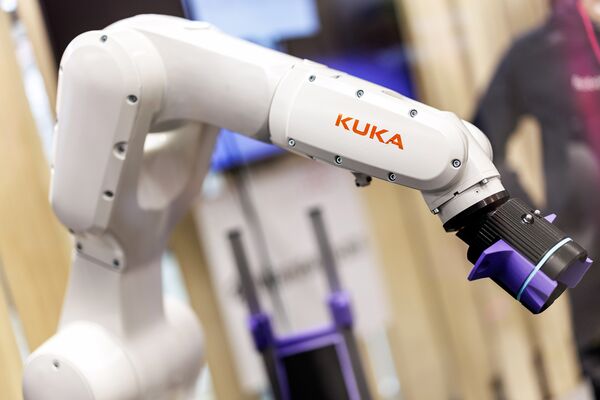
机械制造商几乎不可能通过按下一个按钮就用最新的人工智能升级其系统,因为没有哪两家工厂是完全相同的。一家公司可能在崭新的库卡(Kuka)机器人旁边使用已有30年历史的西门子控制器,而另一家工厂则可能使用罗克韦尔自动化(Rockwell Automation)的控制器和ABB的设备。将多个部件连接起来,使它们作为人工智能增强型生态系统的一部分无缝运行——通常还跨越多个厂区——可能是一项重大挑战。
Many produce specialist goods in relatively low-volume, limiting the potential benefits from AI-driven automation. It’s rarely possible for a machinery maker to upgrade its systems with the latest AI at the push of a button, as no two factories are alike. A company may have 30-year-old Siemens controls beside a new Kuka robot, while another plant might use Rockwell Automation controllers and ABB equipment.
归根结底,技术需要收回成本,有时最具成本效益的生产力提升根本不需要人工智能。预测性维护就是一个例子。制造商可以构建一个人工智能模型来预测昂贵的机器部件何时会发生故障,但几十年的采购记录可能已经表明,无论如何,该部件每三年就需要更换一次。
Connecting multiple elements so they work seamlessly as part of an AI-enhanced ecosystem — often across several factory sites — can be a major challenge. Ultimately, the technology needs to pay for itself, and sometimes the most cost-effective productivity enhancements don’t require AI at all. Predictive maintenance is one example.
巴伐利亚数字转型研究所所长萨比娜·普费弗(Sabine Pfeiffer)说:“人工智能可能会得出相同的结论,但可能有一种更快、更便宜且更稳健的方法来达到这一目标。”她多年来一直在大众(Volkswagen)和宝马(BMW)等公司研究自动化。那么,工业人工智能到底能做什么?
A manufacturer could build an AI model to predict when an expensive machine part will fail, but decades of purchasing records may already show that the part needs replacing every three years, in any case. “AI may come to the same conclusion, but there might have been a faster, cheaper and more robust way to get there,” said Sabine Pfeiffer, director of the Bavarian Research Institute for Digital Transformation, who has for years studied automation at companies including Volkswagen and BMW. So what can industrial AI do, exactly?
工业人工智能是用于生产商品的各种人工智能的总称。制造工程师使用聊天机器人起草电子邮件不算,但用它来设计汽车或控制制造汽车的机器则算数。
Industrial AI is an umbrella term for AI used for producing goods. A manufacturing engineer using a chatbot to draft an email does not count, but using it to design a car or control the machine that builds it does.
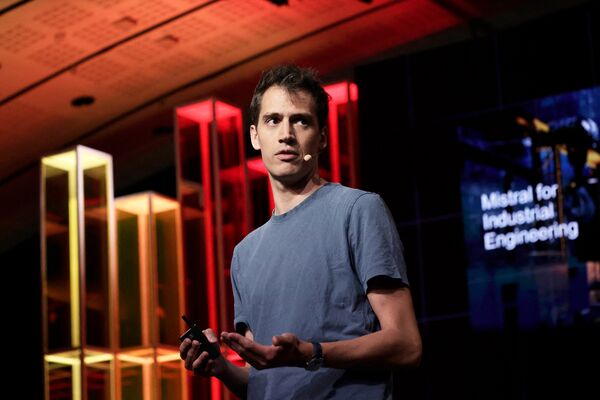
设计 传统上,数字孪生依靠的是已知的规则:改变一个部件的重量或形状,软件就会计算出这会对最终产品的性能产生怎样的影响。人工智能能够分析大得多的模拟数据量,并测试更多的组合,从而帮助工程师更快地找到更好的设计方案。宝马在开发过程中会进行数千次虚拟汽车碰撞测试,然后才会撞毁实体原型车。该公司已开始与法国的Mistral AI合作以加快这一过程,分析超过1PB(拍字节)的碰撞模拟数据。
Design Digital twins traditionally rely on known rules: Change the weight or shape of a component and the software calculates how that affects the behavior of the final product. AI can analyze far larger volumes of simulation data and test more combinations, helping engineers to find better designs faster. BMW runs thousands of virtual car crashes during the development process before wrecking physical prototypes. It’s begun to work with France’s Mistral AI to speed up the process, analyzing more than one petabyte of crash-simulation data.
生产 工厂流水线使用大量传感器来监测温度、振动和压力。人工智能可以同时查看许多信号,并发现单独来看更难察觉的模式。德国化工制造商朗盛使用该技术将振动和温度数据与其他工艺变量结合起来进行分析,以识别设备何时出现异常运转,从而使工程师能够提前数小时甚至数周发现可能代价高昂的故障。人工智能还能比人类更快地配置机器的控制软件。
Production Factory lines use lots of sensors to monitor temperature, vibration and pressure. AI can look at many signals in conjunction and detect patterns that would be harder to spot individually. German chemicals maker Lanxess uses the technology to analyze vibration and temperature data together with other process variables to identify when equipment is behaving abnormally, allowing engineers to spot potential costly failures hours or even weeks in advance. AI can also configure a machine’s control software far quicker than a human.
西门子的工程师用日常语言向其Eigen工程代理描述一项任务,它就会生成并检查一段新的自动化代码。然后,机床操作员在机器上运行该代码。中国自动化设备制造商中科新松利用这一点加快了电动汽车刹车原型生产线的建设,据该公司称,这使工人完成任务的速度提高了两到五倍。
Engineers at Siemens describe a task to its Eigen Engineering Agent in plain language and it will generate and check a new automation code. The machine operator then runs the code on the machine. Chinese automation-equipment maker CASMT used this to speed up the building of a prototype electric-car brake production line as it enabled workers to complete tasks two to five times faster, according to the company.
物流 工厂和仓库长期以来一直使用机器人来从事重复性工作,但当参数不断变化时,它们就会陷入困境。例如,包裹的形状、大小、重量和材质各不相同。人工智能模型正在接受培训,以识别机器人面前是什么,并当场决定如何处理,而不是事先编程每一种可能的动作。亚马逊表示,其Sparrow机器人可以处理进入其仓库的超过2亿种不同的产品。这里的最终目标是什么?
Logistics Factories and warehouses have long used robots for repetitive jobs but they struggle when the parameters keep changing. For example, parcels can come in different shapes, sizes, weights and materials. AI models are being trained to recognize what is in front of a robot and decide how to handle it in the moment instead of programming every possible movement in advance. Amazon said its Sparrow robot can handle more than 200 million different products that enter its warehouses. What’s the endgame here?
工业人工智能开发者看到了一种未来:你可以向一个人工智能模型提供产品设计,它将协助确定如何制造该产品、设计所需的工具、规划工厂布局、指挥机器,并协调组装和打包成品机器人的工作。
Industrial AI developers see a future where you could give an AI model a product design and it will help determine how to make it, design the necessary tools, plan the factory layout, direct machines and coordinate robots that assemble and package the finished goods.
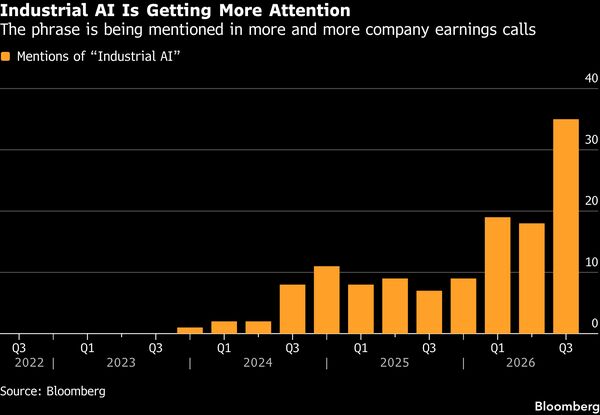
这一愿景正在吸引人们的浓厚兴趣。自OpenAI于2022年推出ChatGPT以来,公司报告中对工业人工智能的提及次数增加了八倍多。但这项技术只有从演示走向工厂,并且节省的资金超过安装成本时,它才具有意义。
That vision is attracting intense interest. Since OpenAI launched ChatGPT in 2022, mentions of industrial AI in company reports have increased more than eightfold. But the technology will matter only if it moves from demonstrations into factories — and saves more money than it costs to install.
中国展示了自动化能走多远。其工厂运营着超过200万台工业机器人,大约是使用量第二大的国家日本的4.5倍。汽车制造商比亚迪和手机制造商TCL等公司正在朝着所谓的无灯工厂(即生产线上无需人员即可运转的工厂)努力。
China shows how far automation can go. Its factories operate more than 2 million industrial robots, about 4.5 times as many as Japan, the next-largest user. Companies such as automaker BYD and phone manufacturer TCL are working toward so-called dark factories that can operate without people on the production line.
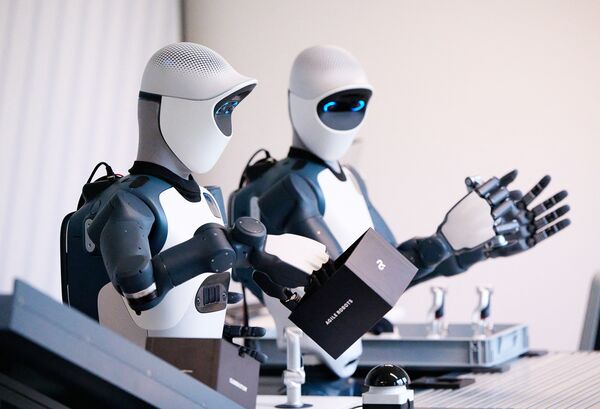
在缺乏用于训练人工智能驱动机器人的现实世界数据的领域,各大公司正在自行创建这些数据。在敏捷机器人位于慕尼黑的实验室里,数十名工人整天向该公司的仿生机器人展示如何拿起和组装物品,而其他人则将自己执行相同任务的过程拍摄下来。这些演示成为了该公司人工智能模型的训练素材。
Where real-world data for training an AI-driven robot are scarce, companies are creating their own. At Agile Robots’ lab in Munich, dozens of workers spend their days showing the company’s humanoids how to pick up and assemble objects, while others film themselves performing the same tasks. Those demonstrations become training material for the company’s AI models.
模拟可以廉价地使这些数据成倍增加,因为虚拟机器人可以在不同的物体和条件下将一项任务重复数千次。但开发者仍然需要现实世界的例子来检验在模拟中奏效的方法是否同样适用于工厂车间。面临的挑战在于,需要找出每种方法各占多大比例,才能在不使训练成本过高的情况下构建可靠的模型。
Simulation can multiply that data cheaply, as a virtual robot can repeat a task thousands of times with different objects and conditions. But developers still need real-world examples to check that what works in a simulation also works on a factory floor. The challenge is finding how much of each is needed to build reliable models without making training prohibitively expensive.