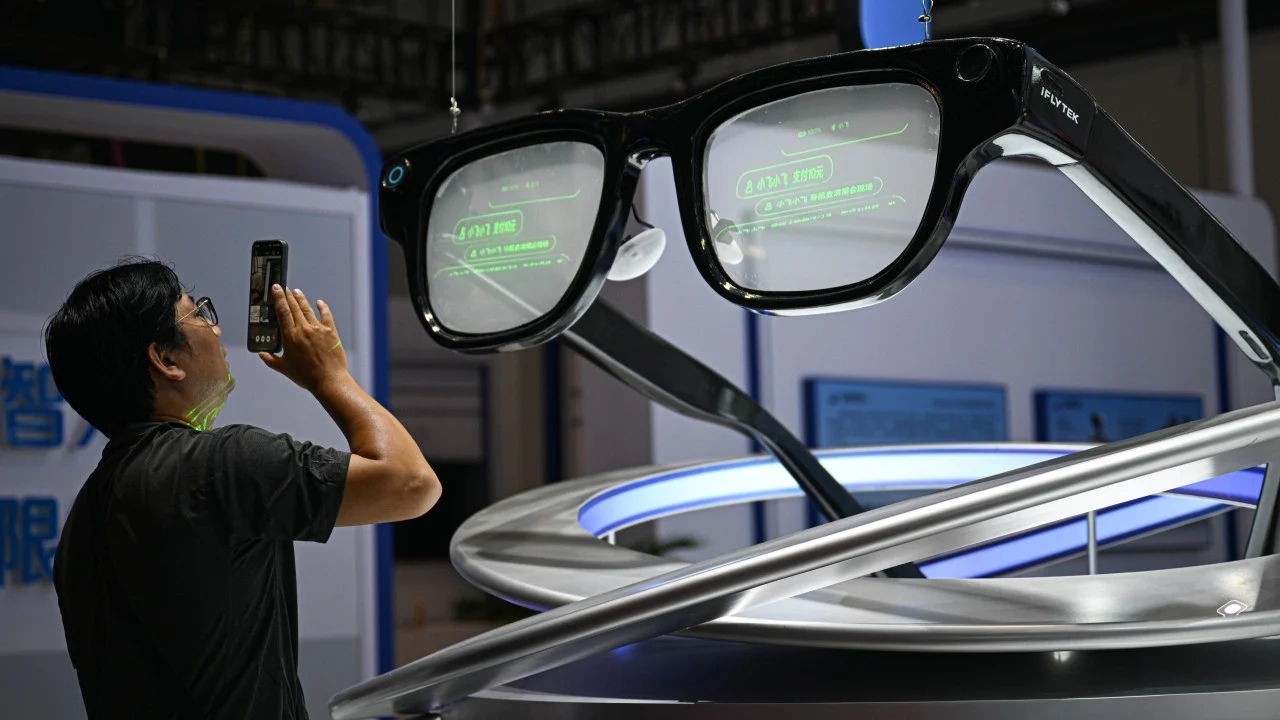
人工智能驱动的眼镜可以充当导游,免手操作拍照并翻译外语。这些设备在中国的售价也相对亲民。但它们是否是完美的旅行伴侣?尚未达到。
Artificial intelligence-powered glasses can act as tour guides, snap photos hands-free and translate foreign languages. The devices also sell at relatively affordable prices in China. But are they the perfect travel companion? Not yet.
分析师表示,随着技术改进和更多设备进入市场,人工智能眼镜正在旅行者中慢慢普及,但技术故障正在减缓这种可佩戴如普通眼镜的智能手机联动设备的大规模采用。
AI glasses were slowly catching on with travellers as the technology improved and more devices entered the market, analysts said, but technical hitches were slowing mass adoption of the smartphone-linked gear that could be worn like ordinary spectacles.
“在行走、观光或在陌生环境中互动时,它们可能特别有用,因此在国外旅行时尤其有帮助,”市场研究公司Counterpoint的首席分析师唐慧兰(Flora Tang)表示。
“They can be particularly useful when walking, sightseeing or interacting in unfamiliar environments, making them especially helpful when travelling in foreign countries,” said Flora Tang, principal analyst at market research firm Counterpoint.
“我们认为,中国出境旅客和来华的国际旅客都可能是更易接受的用户群体之一,”她说。“低价产品的可得性也有助于降低进入门槛并提升消费者认知。”科技公司和旅游景点已经开始探索这些设备的潜力。
“We believe both Chinese outbound travellers and international travellers visiting China are potentially among the more receptive user groups,” she said. “The availability of lower-priced products is also helping lower the entry barrier and raise consumer awareness.”Technology companies and tourist sites have already begun exploring the potential of the devices.
根据Meta Platforms官网,其2023年发布的雷朋AI眼镜(Ray-Ban AI glasses)被设计用于识别地标、翻译标识并提供实时口译。
Meta Platforms’ Ray-Ban AI glasses, released in 2023, were designed to identify landmarks, translate signs and provide live interpretation, according to the company website.
在中国,阿里巴巴集团控股有限公司的通义眼镜(Qwen Glasses)正与杭州市文化广电旅游局合作,以“开创”人工智能增强的旅行体验,这是根据5月的一份声明所述。它还曾加入中意协会,探讨人工智能眼镜如何解读和分享文化。阿里巴巴拥有《南华早报》。
In China, Alibaba Group Holding’s Qwen Glasses was working with the Hangzhou Culture, Radio, TV and Tourism Bureau to “pioneer” AI-enhanced travel experiences, according to a statement in May. It had also joined a China-Italy association to explore how AI glasses could interpret and share culture. Alibaba owns the South China Morning Post.
“我们的目标是将AI无缝融入日常生活,以流行的文化和旅游体验作为我们的起点,”Qwen Glasses发言人表示。“这为人们探索当地艺术、文化和旅游创造了令人兴奋的全新方式。”在比较领先的中外品牌时,AI眼镜在中国显然更便宜。马克·纳特金,Marbridge Consulting。中国科技巨头华为技术和小米支持的初创公司Superhexa也推出了AI眼镜。
“Our goal is to seamlessly integrate AI into everyday life, using popular cultural and tourism experiences as our launching pad,” a Qwen Glasses spokesperson said. “This creates exciting new ways for people to explore local art, culture and travel.”When comparing leading Chinese and foreign brands, AI glasses are definitely cheaper in ChinaMark Natkin, Marbridge Consulting Chinese tech giant Huawei Technologies and Xiaomi-backed start-up Superhexa have also released AI glasses.
上海豫园旅游景区表示,正分别测试用于导览和多语言翻译的AI眼镜。
Shanghai’s Yuyuan Garden tourist attraction said it was separately testing AI glasses for tours and multilingual translation.
根据Counterpoint的数据,2025年底全球AI眼镜的平均售价为每台360美元。
The global average selling price for AI glasses was US$360 per unit in late 2025, according to Counterpoint.
相比之下,马克·纳特金表示,搭载透明镜片的小米AI眼镜零售价约为2000元人民币(约合298美元),而一副Meta Ray-Ban Gen 3眼镜的售价可能达到450美元。马克·纳特金是总部位于香港的市场研究公司Marbridge Consulting的董事总经理。
By comparison, Xiaomi AI glasses with clear lenses retailed for about 2,000 yuan (US$298), while a pair of Meta Ray-Ban Gen 3 glasses could sell for US$450, said Mark Natkin, managing director at Hong Kong-based market research firm Marbridge Consulting.
阿里巴巴于周二推出了其最新智能眼镜系列,包括Qwen Glasses N1,标准版售价为2218元人民币。具备眼动追踪功能用于视觉交互的更高级版本起售价为2600元人民币。
Alibaba launched its latest smart glasses series on Tuesday, including the Qwen Glasses N1, which is priced at 2,218 yuan for a standard version. A more advanced version with an eye-tracking function for visual interaction starts at 2,600 yuan.
根据科技市场研究公司IDC的预测,今年全球智能眼镜出货量预计将达到1866万台,包括具备AI功能和非AI功能的型号。
Global shipments of smart eyewear were expected to reach 18.66 million units this year, including both AI-capable and non-AI models, according to forecasts from tech market research firm IDC.
根据市场研究公司罗图科技的数据,2026年上半年中国智能眼镜的销量约为90.9万副。
Some 909,000 smart glasses were sold in China in the first half of 2026, according to market research firm Luo Tu Technology.
ITB中国商务旅行展会的公共关系经理朱莉娅·索内曼表示,全年期间,全球旅行者在使用智能眼镜时预计将从“被动响应”转向“主动服务”。
During the year, travellers worldwide were expected to shift from “passive response to proactive service” when using smart eyewear, said Julia Sonnemann, public relations manager for business-to-business travel trade show ITB China.
这意味着眼镜将越来越能够预判用户情境,并在无需明确提示的情况下提供相关信息或建议。
That meant glasses would increasingly anticipate user context and provide relevant information or suggestions without requiring explicit prompts.
“在旅游方面,我认为最大的潜力在于免提式、情境化的信息服务——比如在观看地标时询问相关信息、翻译标识牌、在旅游过程中接收语音信息,或在不需要频繁掏出智能手机的情况下获取个性化推荐,”索内曼说。
“For tourism, I see the greatest potential in hands-free, contextual information – asking about a landmark while looking at it, translating a sign, receiving spoken information during a tour or accessing personalised recommendations without constantly taking out a smartphone,” Sonnemann said.
然而,电池续航、AI服务的可及性以及响应准确性仍然是问题,IDC中国的研究分析师叶莉雅表示。因此,智能手机在处理复杂交互和视觉任务方面仍更具优势,她补充道。
However, battery life, AI service accessibility and response accuracy remained issues, said Layla Ye, a research analyst with IDC China. As a result, smartphones remained better suited for complex interactions and visual tasks, she added.
根据Meta的说法,其Ray-Ban(第二代)和Oakley HSTN眼镜单次充电可使用长达八小时,而它们的充电盒可提供额外最多48小时的使用时长。
According to Meta, its Ray‑Ban (Gen 2) and Oakley HSTN glasses could operate for up to eight hours on a single charge, while their charging cases provided up to 48 additional hours of use.
纳特金表示,国产品牌在原始硬件规格方面通常优于国外竞争对手,但用户在海外使用时可能会遇到软件和生态系统方面的问题。
Chinese brands often featured “superior raw hardware specs” compared with foreign rivals, but users could encounter software and ecosystem hitches overseas, Natkin said.
他补充说,这些产品通常与百度地图、支付宝等国内应用深度集成,而在中国境外的支持力度较弱。
They were typically integrated with Chinese apps such as Baidu Maps and Alipay, which offered less support outside China, he added.
Meta的眼镜在中国并未正式发售,且有报道称中国用户在访问该公司AI服务时遇到了困难。
Meta’s glasses were not officially sold in China and Chinese users had reportedly faced difficulties accessing the company’s AI services.
“智能眼镜作为旅行工具目前仍处于全球早期采用阶段,但增长速度正在加速,”叶莉雅说。
“Smart eyewear as a travel tool is still in the early adoption phase globally, but the growth rate is accelerating,” Ye said.