霍尔木兹海峡的令人不安的“新常态”:船舶袭击创纪录高位,油价每桶100美元 随着中东和平前景在美国中期选举前显得越来越渺茫,油价居高不下,袭击事件不仅未平息反而愈演愈烈。专家告诉迈拉·巴特,这场冲突正处于危险的僵局 成为独立报会员以收藏本文 想要收藏您喜欢的文章和故事以便日后阅读或参考?立即开始您的独立报会员资格。立即加入 已经是会员?
The disturbing ‘new normal’ in the Strait of Hormuz: Attacks on ships at a record high and oil at $100 a barrel With the prospect of peace in the Middle East looking increasingly remote ahead of the US midterm elections, oil prices remain stubbornly high and attacks have intensified rather than settled. Experts tell Maira Butt that the conflict is in a dangerous limbo Become an Independent member to bookmark this article Want to bookmark your favourite articles and stories to read or reference later? Start your Independent Membership today. Join today Already a member?
当唐纳德·特朗普和本杰明·内塔尼亚胡于2月28日宣布对伊朗开战时,计划是发动一次有限入侵,在两周内推翻伊朗政权并宣布迅速取胜。
When Donald Trump and Benjamin Netanyahu announced their war on Iran on 28 February, the plan was to launch a limited incursion, topple the Iranian regime within a fortnight and declare a swift victory.
但随着冲突进入第八个月,一种令人担忧的僵局已经形成。谈判依然陷入僵局,油价顽固地维持在每桶100美元以上——这一曾引发市场恐慌的局面如今几乎不引人注意。
But as the conflict approaches its eighth month, a worrying limbo has set in. Negotiations remain deadlocked and the price of oil remains stubbornly above $100 a barrel - a development that had once sparked panic in the markets now barely raises an eyebrow.
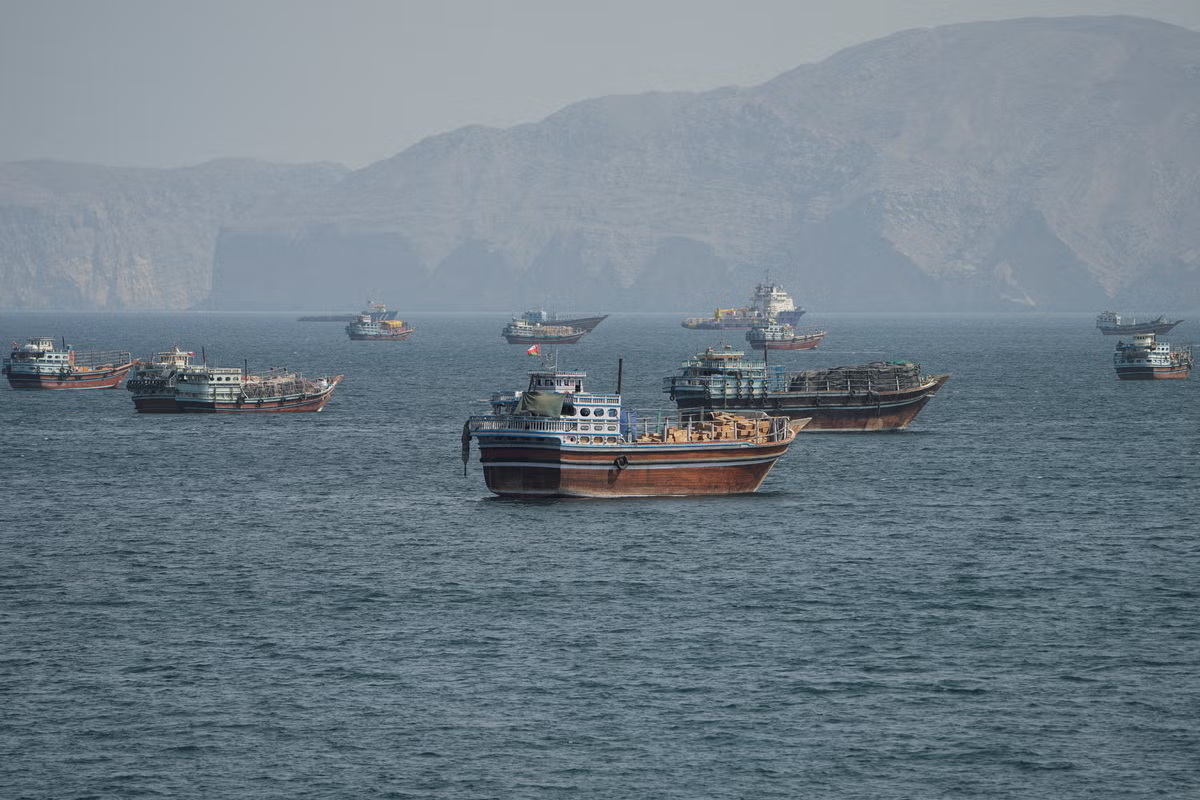
霍尔木兹海峡在战争开始时实际上被德黑兰封锁,目前正经历冲突迄今为止最暴力的时期。过去十天里,油轮遭遇了空前数量的无人机和导弹袭击。
The Strait of Hormuz, which was effectively blockaded by Tehran when the war began, is experiencing its most violent period of the conflict so far. Oil ships have been the target of an unprecedented number of drone and missile attacks in the past ten days.
为了在美国中期选举前降低油价,唐纳德·特朗普被迫在燃料成本飙升之际解除对俄罗斯的制裁,以将柴油出口投放全球市场。
In a bid to lower oil prices ahead of the US midterm elections, Donald Trump has been forced to lift sanctions on Russia to release diesel exports into the global market amid soaring fuel costs.
专家告诉《独立报》,霍尔木兹海峡持续的混乱——该海峡是五分之一世界石油和海运天然气供应的通道——将对全球经济造成毁灭性影响,而国际社会缺乏警觉反映出一种令人担忧的“新常态”。
Experts have told The Independent that persistent chaos in Hormuz, the route for a fifth of the world’s supply of oil and seaborne gas, will have a devastating impact on the global economy - and that the lack of international alarm reflects a concerning “new normal”.
当油价首次突破每桶100美元大关时,这一消息立刻成为全球媒体的头条新闻。专家们警告称,这将引发一场全球性的能源危机,对全球经济、人们的生活成本以及从食品到药品等各个领域产生深远影响。
Oil settles at $100 a barrel When the price of oil first hit $100 a barrel, it sparked headlines worldwide. Experts warned of a global energy crisis that would have a knock-on effect for economies, the cost-of-living, and everything from food to medicine.
根据美国能源信息署(US Energy Information Administration)的数据,2月27日布伦特原油(Brent Crude)的平均价格在每桶65至70美元之间。随着冲突的爆发,油价迅速飙升至100美元以上,甚至一度短暂触及120美元的高点。尽管在达成临时和平协议后油价有所回落,但在过去的一个季度里,油价始终维持在100美元以上。
On 27 February, the price of Brent Crude averaged around $65 to $70, according to the US Energy Information Administration. Once fighting broke out, this surged to over $100, and even briefly reached as high as $120. Despite a brief respite in July following an interim peace agreement that later collapsed, the price of oil has remained at over $100 for much of the last quarter.
“油价稳定在每桶100美元左右,并不意味着市场已经实现了真正的稳定,”查塔姆研究所(Chatham House)的能源政策、地缘政治与外交事务专家尼尔·奎利亚姆(Neil Quilliam)博士指出。“市场虽然在一定程度上适应了这种不确定性,但潜在的风险依然十分严重。沙特的能源基础设施仍然处于脆弱状态,历史上曾多次发生过针对关键能源设施的袭击,这些袭击都造成了严重的、即时的破坏,并对全球产生了广泛影响。”
“The fact that oil has settled around $100 per barrel should not be mistaken for stability,” says Dr Neil Quilliam, an energy policy, geopolitics and foreign affairs specialist, at Chatham House. “Markets have absorbed a degree of unpredictability, but the underlying risks remain significant.
据Kpler公司的数据,上个月该地区的石油出口量平均达到了每天1550万桶,这是自战争爆发以来的最高水平。然而,由于新的袭击事件,石油出口量再次急剧下降——10月11日的出口量仅为每天290万桶,创下了本月的最低纪录。
“Saudi energy infrastructure remains exposed, and there is ample precedent for attacks causing serious and immediate damage to major installations with global repercussions.”According to Kpler, oil flows out of the region had reached an average of 15.5 million barrels a day last month, their highest level since the war began.
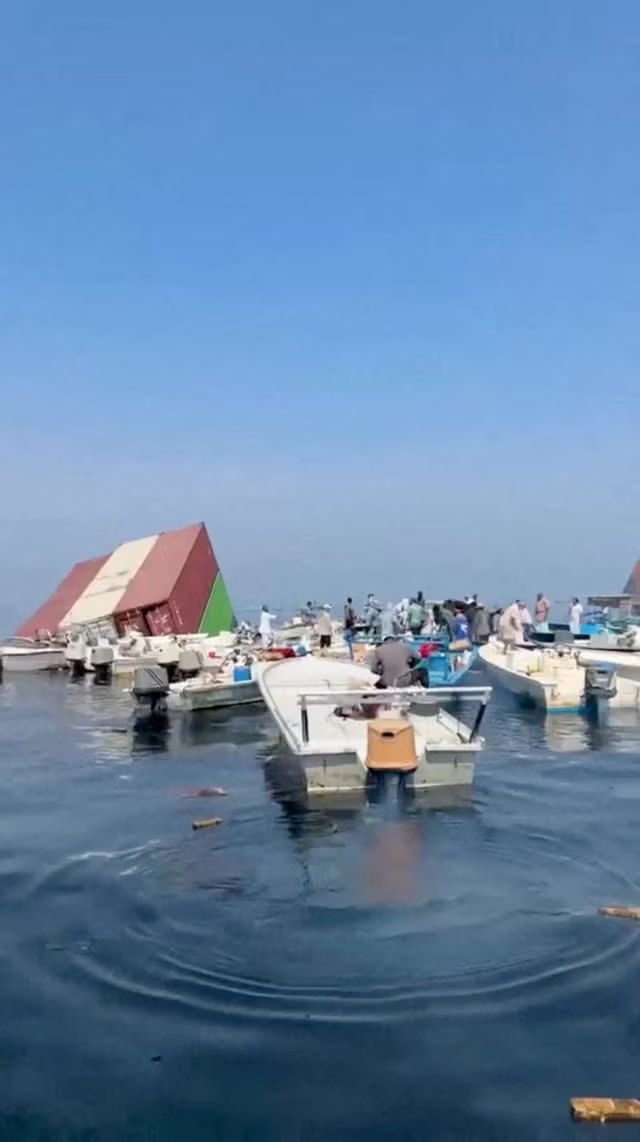
“石油出口量的恢复应被视为一种暂时的缓解措施,而非持久的解决方案,”奎利亚姆博士解释道。“确保石油运输的安全需要投入大量的军事资源,涉及大量的运输船只,同时还需要承担高昂的保险和运营成本。”
But they have plummeted once again amid new strikes, with only 2.9 million barrels passing on 11 October, their lowest numbers this month. “The return of oil flows should be seen as temporary relief rather than a durable solution, given the extensive military resources required to secure shipping, the large number of vessels involved, and the high insurance and operating costs,” says Dr Quilliam.
“目前真正值得关注的问题不是市场情绪,而是石油的实物供应情况。只要霍尔木兹海峡(Hormuz Strait)和曼德海峡(Bab al-Mandab Strait)的安全风险依然存在,海湾地区的石油出口就始终面临威胁。”
”The real concern now is less about market sentiment and more about physical supply.
“这一情况不仅对该地区意义重大,对全球经济同样影响深远。全球经济至今仍极易受到世界上最重要的能源通道出现动荡的影响。” 霍尔木兹海峡地区的袭击事件数量创下历史新高。据《金融时报》分析,在截至10月11日的两周内,共有24艘船只遭到袭击,这是整场战争期间袭击最为密集的时期。这一数字几乎是次高峰时期的两倍——战争爆发初期的3月,前两周共有13艘船只遇袭。
As long as the risks to Hormuz and Bab al-Mandab persist, there remains a credible threat to Gulf exports. “That is significant not only for the region but also for the global economy, which remains highly sensitive to disruptions in one of the world's most important energy corridors.”Attacks in Hormuz reach an all-time high According to analysis conducted by the Financial Times, 24 ships were hit in the two weeks to 11 October, the most intense period of attacks in the entirety of the war. It is almost double the second worst period, when in the first two weeks of the war in March, 13 ships were hit.
“伊朗可能正在提升反舰导弹能力,以增强对各类船只的打击能力,”战争研究所指出。
“Iran may be developing its anti-ship missile capabilities to improve its ability to target vessels,” the Institute for the Study of War said.
奎利姆博士表示,该海域周边的袭击形式“随着时间推移不断演变”。
Dr Quilliam says that the nature of attacks around the waterway has “evolved over time”.
“此类袭击愈发频繁,地理分布范围也日益广泛,采用的战术手段也愈发多样化。除了导弹与无人机袭击外,人们愈发担忧伊朗会使用水雷、用于侦察与定位的小船以及其他手段,以此弥补自身监视与雷达系统受损带来的缺陷。”
“They have become more frequent, more geographically dispersed and more diverse in their tactics. Alongside missile and drone strikes, there are growing concerns about the use of mines, small boats for reconnaissance and targeting, and other methods designed to compensate for damaged surveillance and radar capabilities.
“始终不变的一点是,伊朗始终会切实履行自身发出的威胁,这意味着市场无法轻易忽视局势升级的风险。” 如今这条航道已变得极其危险,据报道,船长为顺利通过该海域每月可获得10万美元的报酬。据《纽约时报》报道,至少有25名海员在海峡附近丧生,他们的家属至今仍在为争取赔偿而奔波。
“One constant throughout has been Iran's willingness to follow through on its threats, which means markets cannot easily dismiss the risk of escalation.”The route has become so treacherous that ship captains are reportedly being paid $100,000 a month to transit. At least 25 seafarers have been killed near the strait, with families left struggling for compensation, according to the New York Times.
粮食、能源与经济均受影响 负责监督联合国相关计划的一名官员周三对路透社表示,若美国与伊朗无法就经由霍尔木兹海峡运输化肥的联合国支持方案达成一致,亚洲与非洲部分地区可能爆发粮食安全危机。
Food, fuel and the economy impacted A food security crisis in parts of Asia and Africa could be caused by a failure by the US and Iran to agree to a UN-backed plan to move fertiliser through Hormuz, an official overseeing the scheme told Reuters on Wednesday.
“霍尔木兹海峡最初被封锁所带来的连锁影响如今开始显现,”国际农业发展基金主席阿尔瓦罗·拉里奥对路透社说道。
“The pass-through from the initial locking down of the Strait of Hormuz ... is now starting to be seen,” International Fund for Agricultural Development President Alvaro Lario told Reuters.
对霍尔木兹海峡的中断导致的肥料运输受阻以及燃料运输成本上升,加上厄尔尼诺现象和黑海小麦供应中断,对整个食品供应链的成本产生了叠加影响,他说。
Disruption to fertiliser shipments and higher fuel transport costs linked to the disruptions in Hormuz are compounded by El Niño and disruptions to Black Sea wheat supplies, adding costs throughout the food supply chain, he said.
国际货币基金组织进一步警告称,中东地区长期战争以及能源生产、航运路线或关键基础设施的进一步中断,是对中东和中亚经济构成的最大风险。
The International Monetary Fund added to warnings by saying that prolonged war in the Middle East and further disruptions to energy production, shipping routes or critical infrastructure pose the biggest risk to economies in the Middle East and Central Asia.
加入我们的评论论坛 加入发人深省的对话,关注其他《独立报》读者并查看他们的回复
Join our commenting forum Join thought-provoking conversations, follow other Independent readers and see their replies