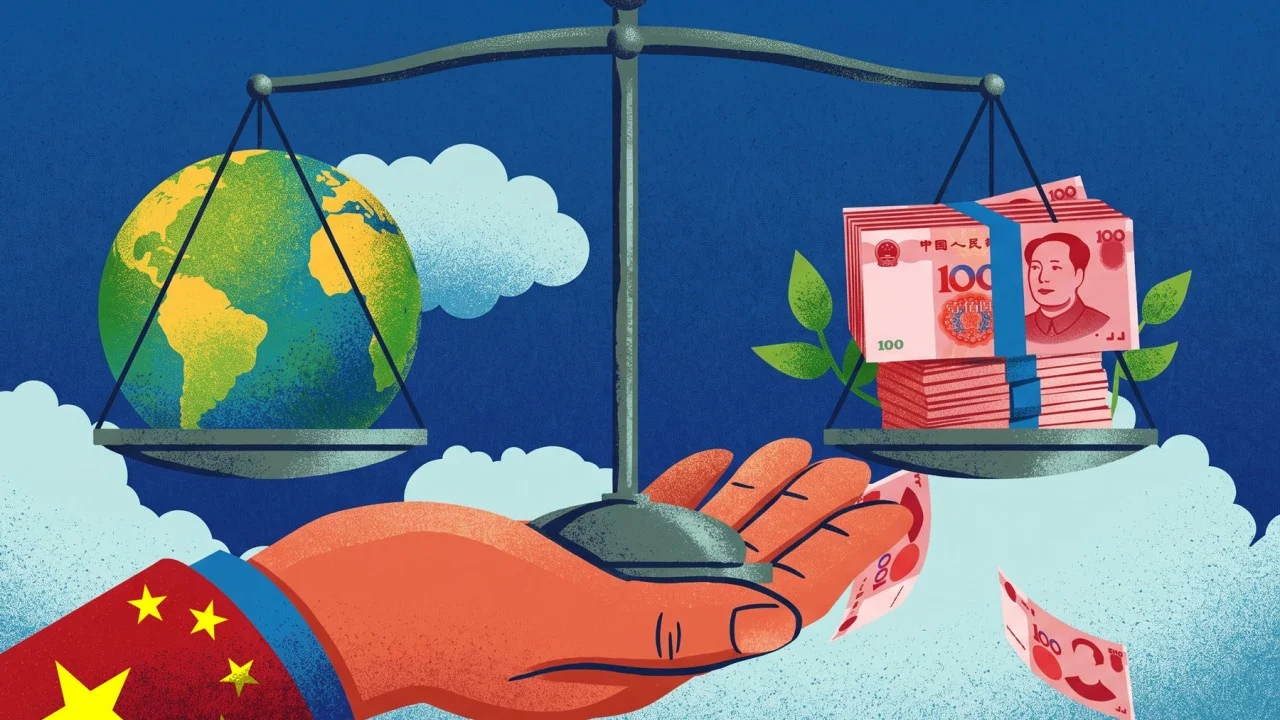
中东战争扰乱了石油和天然气供应,使各国政府在为下月在土耳其安塔利亚举行的第31届联合国气候变化大会(Cop31)做准备时,不得不面对能源压力。
The war in the Middle East has disrupted oil and gas supplies, leaving governments to confront energy pressures as they prepare for next month’s Cop31 UN climate conference in Antalya, Turkey.
这场危机提出了一个持久的问题:气候行动如何能够增强经济的韧性?
The crisis raises an enduring question: how can climate action strengthen the resilience of an economy?
中国提供了一个有益的案例。其工厂以具有竞争力的价格供应绿色转型所必需的技术先进产品。中国在电动汽车、电池以及风能和太阳能设备方面具有生产成本优势。这些产品背后是一项发展战略。
China offers a useful case. Its factories supply technologically advanced products essential to the green transition at competitive prices. China has production cost advantages in electric cars, batteries and equipment for wind and solar power. Behind those products lies a development strategy.
中国日益将气候目标纳入工业政策和发展规划之中。这使得转型不仅仅是为了遵守国际协议,更是为了保护人们的生活环境、现代化生产并创造增长来源。
China has increasingly brought climate objectives into industrial policy and development planning. That gives the transition a purpose beyond compliance with international agreements: to protect people’s living environment, modernise production and create sources of growth.
对于寻求将减排与工业发展相结合的国家来说,理解这一点至关重要。
Understanding this matters for countries seeking to combine lower emissions with industrial development.
去年联合国环境规划署金融倡议组织对中国绿色银行体系的一项研究有助于解释这种联系。国家优先事项通过政策指令、投资标准和金融激励措施传达给企业。这一经验具有实践意义:企业需要看到投资方向,银行则需要为这些投资提供融资理由。
A study last year by the UN Environment Programme Finance Initiative of China’s green banking system helps explain the connection. National priorities reach businesses through policy directives, investment standards and financial incentives. The lesson is practical: companies need to see where to invest and banks need reasons to finance those investments.
其哲学基础是“生态文明”,即将经济活动与自然环境的和谐关系置于中国发展愿景的核心。
The philosophical foundation is “ecological civilisation”, which places a harmonious relationship between economic activity and the natural environment at the centre of China’s vision of development.
它表达了一种雄心:改变增长的实现方式,从资源密集型生产转向创新、先进技术和更高生产率。
It expresses an ambition to change how growth is achieved, shifting from resource-intensive production towards innovation, advanced technology and higher productivity.
中国2021年关于碳达峰、碳中和的工作指导意见将这一雄心转化为政策要求。它要求将气候目标纳入各行业和地区的发展规划。这使得其落实成为一项责任,其范围远超环境部门,延伸至塑造投资、基础设施和工业生产的官员。
China’s 2021 working guidance on carbon dioxide peaking and carbon neutrality translates that ambition into policy requirements. It calls for climate goals to be incorporated into development plans across sectors and regions. This makes their implementation a responsibility extending well beyond the environmental authorities to officials who shape investment, infrastructure and industrial production.
2025年白皮书《碳达峰、碳中和:中国的行动与方案》进一步将气候行动与技术进步和经济升级联系起来。新能源产业可以创造商业机遇;清洁生产可以提升竞争力。这些国内利益为企业和地方当局提供了支持转型的理由,这也与中国的国际承诺相一致。
The 2025 white paper “Carbon Peaking and Carbon Neutrality: China’s Plans and Solutions” further connects climate action with technological progress and economic upgrading. New energy industries can create business opportunities; cleaner production can improve competitiveness. These domestic benefits give firms and local authorities reasons to support the transition alongside China’s international commitments.
一家考虑实施清洁生产的企业需要对其产品需求有信心,并能够获得负担得起的融资。工业和金融政策可以帮助创造这些条件,使气候目标成为企业发展决策的一部分。
A company considering cleaner production needs confidence in demand for its products and access to affordable financing. Industrial and financial policies can help create these conditions, making climate objectives part of business development decisions.
通过这些政策,中国帮助营造了一个让企业能够竞争、创新和提升制造效率的环境。中国在生产和供应链方面积累的优势,在政策和金融支持的加持下,已得到国际能源署的充分记录。
Through these policies, China helped create an environment for companies to compete, innovate and improve manufacturing efficiency. China’s accumulated advantages in production and supply chains, reinforced by policy and financial support, are well documented by the International Energy Agency.
中国2024年关于加快经济社会发展全面绿色转型的指导意见将产业和能源的变革与财政措施、投资支持和更绿色的消费结合在一起。
China’s 2024 guidelines on accelerating the comprehensive green transition of economic and social development bring together changes in industry and energy with fiscal measures, investment support and greener consumption.
正如联合国环境署研究所解释的那样,监管措施鼓励银行考虑环境风险,而项目目录则确定哪些活动符合绿色融资条件,并指导贷款决策。
As the UNEP study explains, supervisory measures encourage banks to consider environmental risks while project catalogues identify activities eligible for green finance and guide lending decisions.
2021年推出的央行碳减排支持工具说明了这种联系。它向符合条件的贷款人提供等同于本金60%的低成本资金。其支持的领域包括清洁能源和减排技术。这为银行提供了融资激励,以支持符合国家气候目标的项目。
The central bank’s Carbon Emission Reduction Facility, launched in 2021, illustrates the link. It provides qualified lenders with low-cost funding equal to 60 per cent of the principal. Its supported fields include clean energy and emissions reduction technology. This gives banks a financing incentive to support projects consistent with national climate goals.
绿色金融推广和环境风险管理相互促进。为更清洁的技术提供融资可以帮助企业降低面临更严格环境要求的风险,而评估这些风险有助于银行判断哪些投资是可行的。
Green finance promotion and environmental risk management reinforce each other. Financing cleaner technologies can help companies reduce their exposure to tighter environmental requirements, while assessing those risks helps banks judge which investments are viable.
实施还需要反映当地经济状况。中国将国家方向与地方试点项目相结合,同时关注变化的步伐和顺序。北京的官方原则——“先立后破”认识到,在现有产能退役之前,必须先发展替代性产能。可靠的能源供应和生产的连续性有助于使转型对企业和家庭具有可操作性。
Implementation also needs to reflect local economic conditions. China combines national direction with local pilot projects, while paying attention to the pace and sequence of change. Beijing’s official principle of “establishing the new before discarding the old” recognises that replacement capacity must be developed before existing capacity is retired. Reliable energy and continuity of production help make the transition workable for businesses and households.
钢铁、水泥和化工仍然是仍在工业化的经济体的基础。它们的转型需要在不同的生产工艺、清洁能源和更高效的设备方面进行投资。仅将融资限制在被标记为绿色的活动上,会使许多工作未完成。这些行业的转型融资也必须与可衡量的减排进展挂钩。对于一家钢铁企业来说,关键问题是融资是否有助于用更清洁的工艺替代高排放工艺,以及贷款人将如何随时间验证这种改善。
Steel, cement and chemicals remain essential to economies still industrialising. Their transformation requires investment in different production processes, cleaner energy and more efficient equipment. Restricting finance to activities labelled as green would leave much of that work undone. Financing the transition of these industries must also be tied to measurable progress in reducing emissions. For a steelmaker, the question is whether financing will help replace an emissions-intensive process with a cleaner one, and how the lender will verify that improvement over time.
中国尚未完成向绿色经济转型的旅程。2024年指南承认煤炭和传统产业的分量。清洁技术制造的成功必须伴随着持续的减排以及对受工业变化影响的工人和社区的支持。
China has not completed its journey towards a green economy. The 2024 guidelines acknowledge the weight of coal and traditional industries. Success in manufacturing clean technologies must be accompanied by sustained emissions reductions and support for workers and communities affected by industrial change.
希望借鉴中国经验的国家需要自行做出制度选择。适用于中国银行体系的融资机制在其他地方可能需要不同的形式,这反映了政治制度和行政能力的差异。关键在于气候目标、产业政策和金融激励是否能够支持相同的投资,以及实施责任是否明确。孤立地采用补贴或绿色标签无法实现这种一致性。
Countries wishing to learn from China’s experience will need to make their own institutional choices. A financing mechanism suited to China’s banking system may need a different form elsewhere, reflecting differences in political systems and administrative capacity. What matters is whether climate goals, industrial policy and financial incentives support the same investments, and responsibility for implementation is clear. Adopting a subsidy or a green label in isolation cannot provide that coherence.
通过提供价格合理的设备和发展当地技能的合作伙伴关系,与中国的合作可以支持这一进程。各国可以利用这些机会推进其发展优先事项,包括安装、运营和维护新技术的能力。
Cooperation with China can support this process through affordable equipment and partnerships that develop local skills. Countries can use those opportunities to advance their development priorities, including the capacity to install, operate and maintain new technologies.
在安塔利亚,各国政府将就其气候承诺的雄心程度展开辩论,但其成功的前景将很大程度上取决于国内所作的决定:发展哪些行业、建设哪些基础设施以及如何为变革融资。中国的经验表明,关于生产和融资的决策如何塑造一个国家应对气候变化的能力。
At Antalya, governments will debate the ambition of their climate commitments, but their prospects for success will largely depend on decisions taken at home: which industries to develop, which infrastructure to build and how to finance the changes. China’s experience shows how decisions about production and finance shape a country’s ability to act on climate change.