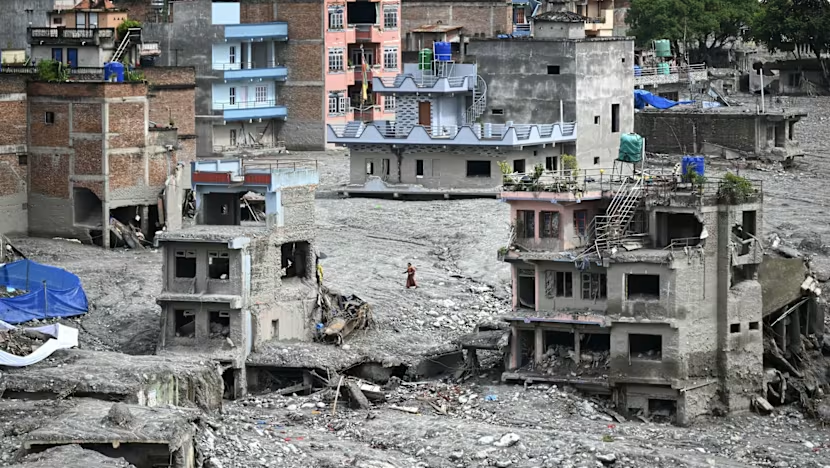
那场洪水摧毁了房屋和基础设施,时间是10月11日。这些连续发生的事件凸显了发展中国家面临自然灾害的脆弱性,以及它们承受气候变化不成比例的冲击。
that destroyed homes and infrastructure on Oct 11. These back-to-back events highlight how vulnerable developing countries are to natural disasters, and how they bear the disproportionate brunt of climate change.
尼泊尔当局估计,8月份的冰川洪水造成了26亿美元的财产和基础设施损失,重建将花费48亿美元。
Nepalese authorities estimate that the August glacial flood incurred US$2.6 billion of property and infrastructure damage, and that reconstruction will cost US$4.8 billion.
然而,尼泊尔仅向联合国损失与损害基金申请了2000万美元——这仅相当于预计重建成本的0.4%。
Yet Nepal has requested only US$20 million from the United Nation’s Loss and Damage Fund – which is only about 0.4 cent of projected reconstruction costs.
生命、基础设施和生计的惨重损失因气候融资状况悲惨而雪上加霜,尤其是在减少风险和从气候变化引发的灾难中恢复方面。距离COP31气候谈判开始仅剩几周,像尼泊尔这样的国家还有哪些选择?
The tragic loss of lives, infrastructure and livelihoods is compounded by the pitiful state of climate finance, especially to reduce risks and recover from climate change-induced disasters. With weeks to go before COP31 climate negotiations commence, what options do countries like Nepal have?
气候脆弱国家 对于像尼泊尔这样的内陆发展中国家,气候冲击将已经非常低的人类发展水平进一步拉后。
CLIMATE-VULNERABLE COUNTRIES For a landlocked developing country like Nepal, climate shocks set back already very low levels of human development.
根据联合国数据,内陆发展中国家运输货物的费用是沿海国家的两倍。当灾害损毁道路和桥梁时,这些费用可能会迅速攀升,使持续恢复变得更加困难。
According to United Nations data, landlocked developing countries face double the freight rates for transporting goods compared to coastal states. When disasters damage roads and bridges, these costs can rapidly escalate making sustained recovery much harder.
联合国估计,对于最不发达国家,灾害损失占国内生产总值的约1%,远高于全球平均的0.3%。
The UN estimates that for least developed countries, disaster losses amount to about 1 per cent of gross domestic product, much higher than the global average of 0.3 per cent of GDP.
在某些情况下,损失可能完全压垮经济:2017年的飓风玛丽亚造成多米尼克国内生产总值226%的损失。
In some cases, the losses can completely overwhelm the economy: Hurricane Maria in 2017 caused losses of 226 per cent of Dominica's GDP.
2022年,脆弱二十国集团——代表气候脆弱国家的一个联盟——估计,气候变化导致其成员国在2000年至2019年期间累计损失达5250亿美元。
In 2022, the Vulnerable Twenty – a bloc representing climate-vulnerable nations – estimated that climate change led to cumulative losses of US$525 billion for its members from 2000 to 2019.
气候赔偿不太可能实现 尽管归因科学日益精密,能够精准指出气候变化对极端天气事件的责任程度,但气候脆弱国家要求赔偿的诉求不太可能在近期取得成果。
CLIMATE COMPENSATION IS UNLIKELY Despite rising sophistication of attribution science, which pinpoints the degree to which climate change is responsible for extreme weather events, demands from climate-vulnerable countries for compensation are unlikely to yield outcomes soon.
2025年7月,国际法院一致裁定,各国在国际法、《联合国气候变化框架公约》和《巴黎协定》下具有防止对气候系统造成重大损害的约束性义务。
In July 2025, the International Court of Justice delivered a unanimous finding that states had binding obligations under international law, the UNFCCC and the Paris Agreement to prevent significant harm to the climate system.
然而,国际法院的裁决具有咨询性质,并不迫使发达国家或主要排放国提供额外资源。发达国家一直强烈反对将损失和损害的付款与其在温室气体排放方面的历史责任所导致的任何法律责任挂钩。
However, the ICJ ruling is advisory and does not obligate developed countries or major emitters to provide additional resources. Developed countries have strongly pushed back against linking payments for loss and damage to any kind of legal liability for their historical responsibility in emitting greenhouse gases.
应对损失和损害基金(FRLD)于2022年COP27上宣布,次年正式运行。迄今为止,该基金在提供资金方面一直面临困难。截至2025年,尽管承诺捐款达8.22亿美元,但实际到账仅5.85亿美元——且尚未有项目获批或拨款。
The Fund for Responding to Loss and Damage (FRLD) was announced at COP27 in 2022 and operationalised the following year. So far, the FRLD has struggled to deliver. As of 2025, against pledges of US$822 million, only US$585 million had been contributed—with no project approvals or disbursements.
最不发达国家和小岛屿国家指出,获取资金面临不成比例的官僚障碍。此外,中国和印度因被归类为发展中国家,无需向FRLD缴纳义务性捐款。它们可以自愿捐款,但也有资格获得基金资金。
Least developing countries and small island states have pointed to disproportionate bureaucratic obstacles to accessing funds. Moreover, China and India do not have any obligations to contribute to the FRLD because they classified as developing countries. They can make voluntary contributions, but they are also eligible to receive funds.
损失和损害资金的未能到位,与各国的诉求形成鲜明对比。能源、环境与水理事会(Council on Energy, Environment and Water)发现,发达国家仅需贡献其GDP的0.08%,即可为FRLD提供600亿美元。
This non-delivery of funds for loss and damage stands in stark contrast to the demands. The Council on Energy, Environment and Water found that just 0.08 per cent of GDP contribution from developed countries could provide US$60 billion to the FRLD.
保险方案也证明了其不足。在COP27上,全球气候风险防护盾(Global Shield against Climate Risks)被启动,但它并不为韧性基础设施或风险降低措施提供资金。
Insurance schemes have also proven inadequate. At COP27, the Global Shield against Climate Risks was launched, but it does not fund resilient infrastructure or risk-reduction measures.
最后,气候韧性债务条款允许国家在超过预先约定的灾害阈值时暂停债务服务付款。这些条款已被世界银行和其他金融机构采用或试点,但它们并不能消除已有的债务负担,只能推迟。
Finally, climate resilient debt clauses allow countries to suspend debt service payments when pre-agreed disaster thresholds are crossed. These have been adopted or piloted by the World Bank and other financial institutions but they don’t eliminate pre-existing debt burdens, only postpone them.
国际货币基金组织的韧性与可持续信托基金由基金会员国自愿捐款提供资金,提供有利条件的长期贷款。然而,该设施既不是赠款也不是补偿机制。
The International Monetary Fund's Resilience and Sustainability Trust, funded through voluntary contributions by IMF members, offers longer-term loans on favourable terms. However, this facility is neither a grant nor a compensation mechanism.
短期选项 损失与损害融资以及增强韧性的架构仍然零散。由于补偿在政治上仍然困难,发展中国家在要求气候适应资金方面可能拥有更大的谈判筹码。
NEAR-TERM OPTIONS The architecture of financing loss and damage and increasing resilience remains fragmented. Because compensation remains politically difficult, developing countries may have greater leverage in demanding funds for climate adaptation.
对于尼泊尔等脆弱国家来说,更务实的途径是寻求支持以建设多灾害预警系统。数据合作将在气候脆弱地区如喜马拉雅山地区至关重要。为此,尼泊尔总理上个月在联合国大会上与印度和中国提出了喜马拉雅气候韧性机制。
A more pragmatic route for vulnerable countries like Nepal would be to seek support in building multi-hazard early warning systems. Data cooperation will be critical in climate-fragile regions such as the Himalayas. To this end, Nepal’s prime minister suggested a Himalayan Climate Resilience Mechanism with India and China last month at the UN General Assembly.
清洁能源区域贸易的增加可能成为收入和韧性的来源。投资于劳动密集型绿色经济——从山区可持续旅游到沿海地区的红树林和海藻养殖——可能吸引新投资并带来气候协同效益。
Increased regional trade in clean energy could be a source of revenue and resilience. Investing in a jobs-intensive green economy – from sustainable tourism in mountainous regions to mangroves to seaweed cultivation in coastal areas – could attract new investment and yield climate co-benefits.
尼泊尔的灾难无疑会在即将召开的COP谈判代表脑海中回荡。尼泊尔外交部长在10月斐济举行的Pre-COP领导人活动上提出了“萨加尔玛塔到海洋”伙伴关系,旨在将喜马拉雅山脉与气候脆弱的太平洋岛国联系起来。
The Nepal disaster will surely play on negotiators’ minds at the forthcoming COP. Nepal’s foreign minister suggested a “Sagarmatha to Sea” partnership at the Pre-COP Leaders’ Event in Fiji in October, seeking to link the Himalayas with climate-vulnerable Pacific Island states.
但COP31谈判中没有专门的议程项。最好的赌注是共同、有力地要求补充2027年到期的FRLD,以及建立一个更高效的资金拨付机制。
But there is no dedicated agenda item for COP31 negotiations. The best bet would be a collective, vigorous demand for the replenishment of the FRLD due in 2027—as well as a more efficient mechanism to disburse funds.
当发展援助在减少时,甚至这些需求也可能得不到满足。气候脆弱地区可以提出他们的诉求,但应做好失望的准备。气候正义的延迟就是气候正义的被拒绝。
When development assistance is on the decline, even these demands might not be met. The climate-vulnerable can make their demands but should be ready for disappointment. Climate justice delayed is climate justice denied.
阿伦纳布哈·戈什博士是COP30特使,代表南亚,也是联合国发展政策委员会成员。他是能源、环境与水理事会(CEEW)的创始人,曾任首席执行官(2010-2026)。观点为个人立场。
Dr Arunabha Ghosh is COP30 Special Envoy, representing South Asia, and member of the UN Committee for Development Policy. He is founder and was CEO (2010-2026) of the Council on Energy, Environment and Water (CEEW). Views are personal.