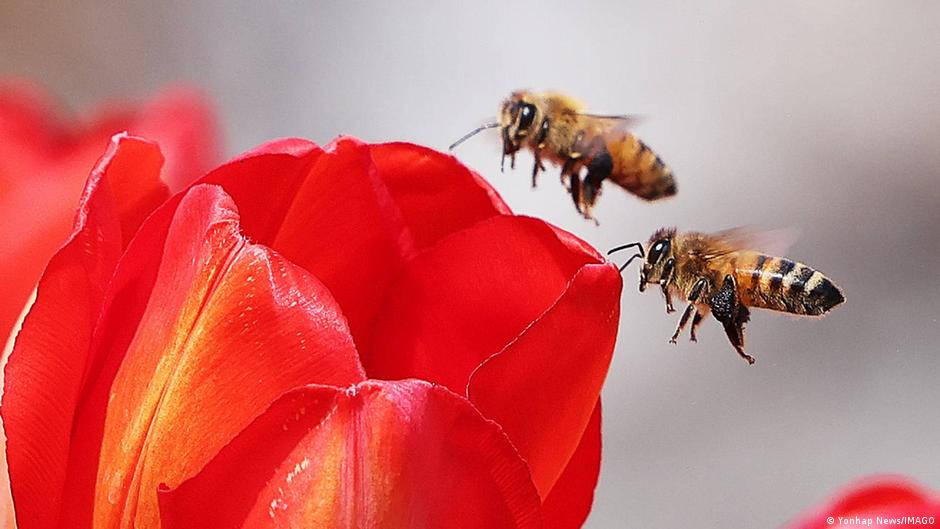
从人类肠道中最微小的微生物到海洋中的巨型鲸鱼,生物多样性是地球上所有生命的总和。它是自然的另一种说法。而且因为自然像一个团队,每个成员都有自己的职责。
From the tiniest microbes in the human gut to giant whales in the ocean, biodiversity is the sum of all life on the planet. It's another word for nature. And because nature is like a team, every player has a job.
当从树木到动物的各种物种协同工作时,它们调节天气、维护土壤健康、净化水源并支持粮食生产。这些益处被称为生态系统服务,是人类福祉的基础。
When various species from trees to animals work together, they regulate weather, maintain soil health, purify water and support food production. These benefits are known as ecosystem services and they underpin human wellbeing.
“这确实是一个抽象的概念,但我们每天都在亲身感受,”保护组织世界自然基金会(WWF)首席科学家Rebecca Shaw 说,“而且当自然在运作时,我们几乎从不去思考它。”如果没有生物多样性,人类可食用的食物种类将不复存在。生物多样性的下降正危及农作物生产。但随着其下降,她和其他科学家正呼吁全球认真思考这一问题。因为在人类通过集约化农业、燃烧化石燃料以及塑料化学品等来源的污染将生态系统推向崩溃边缘时,生物多样性正面临困境。
"It is really an abstract concept, but we experience it absolutely every day," said Rebecca Shaw, chief scientist at conservation group WWF "And we almost never think about it when nature is functioning." Without biodiversity, the variety of food humans eat would not be available. Declining biodiversity is endangering crop production But as it declines, she and other scientists are calling on the world to really think about it. Because biodiversity is struggling as humans push ecosystems to the brink through intensive farming, burning fossil fuels, and pollution from sources like plastic chemicals.
过去 52 年里,受监测的脊椎动物种群平均下降了 73%,而淡水生态系统的情况最为严峻,下降幅度达 85%,这依据 WWF 最近发布的《活的星球》报告。
Over the past 52 years, monitored vertebrate populations have collapsed by an average of 73%, while freshwater ecosystems are faring worst with a drop of 85%, according to WWF's recent Living Planet report.
这一数据与其他研究相吻合——除非人类减轻对自然的压力,否则将有一百万动植物物种面临灭绝。
It tallies with other studies that show a million animal and plant species face extinction unless humanity reduces its pressure on nature.
肖恩说:“这是一个非常陡峭的下降。” “它告诉我们的是,自然正陷入困境,而我们赖以获得淡水、食物和清洁空气的生命之网正在解体,这是一个早期预警信号。” 森林砍伐直接导致生物多样性下降,因为森林是超过80%陆生物种的家园。数千名政策制定者、企业领袖和民间社会团体将在未来两周于亚美尼亚首都叶里温举行COP17——即最新的联合国生物多样性峰会,以推进到2030年扭转自然损失的承诺。
"It is a really steep decline," said Shaw. "What it's telling us is that nature is in trouble, and it's an early warning indicator of the fabric of life that we depend on for freshwater and food and for clean air is unravelling." Deforestation directly drives biodiversity decline because forests are home to more than 80% of all land-based species Thousands of policymakers, business leaders and civil society groups are meeting in Yerevan, Armenia over the next two weeks for COP17, the latest UN biodiversity summit, to advance commitments to reverse nature loss by 2030.
但实现这些目标的进展仍然不足,资金和执行是其中最大的挑战。当生态系统服务下降或消失时会发生什么?以湿地为例。
But progress towards those targets remains insufficient, with funding and implementation among the biggest challenges. What happens when ecosystem services decline or disappear? Take wetlands as an example.
在1700年至2000年之间,约85%的这些重要生态系统已经消失。加拿大滑铁卢大学的一项研究发现,安大略省南部的沼泽和湿地等栖息地每年提供价值42亿加元(约26.3亿欧元)的水过滤服务,去除磷等营养物质,保持饮用水源清洁。
Some 85% of these vital ecosystems disappeared between 1700 and 2000. One study from Canada's University of Waterloo found that habitats like marshes and swamps in Southern Ontario provide C$4.2 billion (€2.63 billion) worth of water filtration services each year, removing nutrients like phosphorus and keeping drinking water sources clean.
该研究发现,随着这些生态系统的消失,水质恶化,导致水处理成本大幅增加。
The study found that as they disappear, water quality worsens, which massively increases the cost of treating it.
另一个例子是传粉者如蜜蜂和蝙蝠的减少。全球超过75%的粮食作物类型部分依赖动物传粉。
Another example is the decline in pollinators like bees and bats. More than 75% of global food crop types rely in part on animal pollination.
为什么气候变化正在驱动物种损失 要观看此视频,同时,与气候变化相关的土壤和生态系统退化、风暴和热浪已经在损害农作物收成。英国政府最近的一份报告指出,每个关键生态系统都处于“崩溃的路径”上,警告说自然的衰退对全球粮食供应和地缘政治稳定构成严重威胁。
Why climate change is driving species loss To view this video , and At the same time, soil and ecosystem degradation coupled with storms and heat waves linked to climate change are already damaging harvests. A recent UK government report stated that every critical ecosystem is on a "pathway to collapse," warning that nature's decline posed a grave threat to global food supply and geopolitical stability.
“与许多其他国家一样,英国的大部分食品都依赖进口,因此也依赖于世界各地的生态系统,”伦敦动物学会的研究员路易丝·麦克雷说道。她也是世界自然基金会《地球生命力报告》的撰稿人。“正因如此,我们必须重视全球生物多样性的保护。”此外,许多现代药物也以自然物质为基础,据估计约50%的药物成分源自天然化合物。
"The UK, like many other countries, relies on imports for much of the food and so is reliant on ecosystems around the world," said Louise McRae, a research fellow at the Zoological Society of London, who also contributed to WWF's Living Planet report. "This is why we need to care about global biodiversity." It also provides the basis for many modern human medicines, with some 50% coming from natural compounds.
有毒蛙类或许能成为新药的来源,但随着这些物种逐渐消失,我们可能错失开发新药物的机会。第一种抗生素——青霉素便是由一种霉菌产生的,据估计它已挽救了超过5亿人的生命。在青霉素被发现之前,一个小小的伤口都可能致人死亡。世界卫生组织指出,约70%的抗癌药物均来源于天然产物或“受自然启发”而合成的化学物质。
Poisonous frogs could be a source for new medications but as species disappear we could be missing out on novel drugs Penicillin, the first antibiotic, is produced by a mold and is estimated to have saved over 500 million lives. Before its discovery, a person could die from a simple cut. Around 70% of cancer drugs come from natural products or synthetic compounds "inspired by nature," according to the World Health Organisation (WHO).
随着生物多样性的减少,人类可能再也无法获得那些尚未被发现的治疗手段。一个物种的消失真的无关紧要吗?
As biodiversity disappears, humans risk losing access to undiscovered treatments. Does it really matter if one species disappears?
回到“大自然是一个团队”的比喻:如果某个“队员”消失了,生态系统中有时会有功能相似的物种取而代之。但这种情况并非必然发生,尤其是对于那些“关键物种”而言。它们在生态系统中发挥着极其重要的作用,一旦消失便会引发一系列连锁反应。
To return to the "nature as a team" metaphor, if a player disappears, sometimes a species with similar functions in the ecosystem can jump in as a substitute. But not always, particularly if it's a "keystone species." They play a disproportionately large role in their environments, and their disappearance has significant knock-on effects.
牡蛎就是这样的物种。目前野生牡蛎的数量正急剧减少,全球范围内已有85%的牡蛎礁遭到破坏。一只成年牡蛎每天能过滤多达50加仑的水。
The oyster is one such species. Wild oyster populations are facing massive declines, while 85% of their reefs have been lost worldwide. An adult oyster filters up to 50 gallons of water a day.
没有人会想到,他们除了坐在壳里、变得黏糊糊的之外,还做了其他事情,”肖说。“但你会失去牡蛎,你可能会失去水过滤和清洁水源,你可能会失去许多其他物种的栖息地——这些物种我们既会互动,有时也会食用。”
"No one would ever think, they did anything but sit in a shell and be slimy," said Shaw. "But you lose oysters, you can lose water filtration and clean water, you can lose the habitat for many other species that we interact with or sometimes consume."
世界各地的人们依赖牡蛎和其他海洋生物谋生,也将其作为食物来源。牡蛎也是一种关键物种。正如肖所说,这种不起眼的牡蛎能够保护沿海社区免受风暴潮的侵袭。如果你失去它,“你就会失去沿海防护。”单一物种的消失也可能导致更多疾病的发生。
People around the world rely on oysters and other marine life for their livelihoods and as a food source. Oysters are also a keystone species And, said Shaw, the humble oyster protects coastal communities from storm surges. If you lose it "you lose the coastal protection." The loss of a single species can also lead to more disease.
一项研究表明,北美红狐的数量下降与莱姆病的传播有关,莱姆病是一种由蜱虫传播的疾病,也会影响人类。人类是否正经历第六次大规模灭绝?是否已经太晚,无法阻止它?
One study suggests a decline in red foxes in North America is linked to the spread of Lyme disease, a tick-borne illness that also impacts humans. Is humanity living through a sixth mass extinction and is it too late to prevent it?
地球曾经历过五次大规模灭绝,在短短的地质时期内,全球大比例的物种消失。灭绝是一个自然过程。但科学家认为,如今物种消失的速度表明,地球正经历第六次灭绝事件,这一事件主要由人类活动驱动。麦克雷和肖都称这种下降极其令人担忧,但表示这不应导致绝望。
The planet has experienced five mass extinctions when a large proportion of species globally disappeared over a short geological period. Extinction is a natural process. But the rate at which species are disappearing today, suggests Earth is experiencing a sixth event, driven largely by human activity, according to scientists. Both McRae and Shaw called the declines extremely worrying, but said they shouldn't provoke despair.
尽管她承认全球潜在趋势正朝着错误的方向发展且无法忽视,麦克雷表示:“这些统计数据的作用是激励我们采取行动,而不是制造恐慌。”《地球生命报告》也指出了一些保护成功案例,表明自然是可以恢复的。
Though she acknowledges that the underlying global trend is moving in the wrong direction and cannot be ignored, McRae says "the statistics are there to just motivate us to action rather than to cause alarm." And the Living Planet report also highlights conservation successes, showing that nature can recover.
例如,绿海龟的数量曾经显著下降,但如今已经回升。这得益于全球范围内为保护产卵海滩所做的巨大努力,以及改变捕鱼方式以减少意外捕获。
The number of green sea turtles, for example, had fallen significantly, but has now bounced back. This is thanks to a massive worldwide effort to protect nesting beaches and changes to fishing practices that reduce accidental capture.
自北美太平洋海岸的海獭种群恢复以来,海带森林也随之恢复。海獭是另一个例子。它们因皮毛珍贵,在1800年代被猎杀至美国太平洋海岸濒临灭绝。当它们消失时,意味着海胆失去了天敌,得以肆意破坏海带森林。
Since sea otters on the North American Pacific Coast have rebounded, so too have kelp forests Sea otters are another example. Prized for their fur, in the 1800s they were hunted to near extinction on the US Pacific Coast. When they disappeared, it meant sea urchins had no predators, leaving them free to decimate kelp forests.
这一点很重要,因为除了为其他物种提供栖息地,这些巨大的水下林地还能保护海岸线免受风暴潮侵袭,并吸收碳,因此对气候保护具有重要意义。
That matters because as well as providing habitat for other species, these giant underwater groves protect coastlines from storm surges and absorb carbon, making them important for climate protection.
在禁止商业捕猎之后,海獭种群也得以恢复,有助于海带森林的恢复。
Following a ban on commercial hunting, sea otters have also rebounded, helping kelp forests recover.
“你可以看到这种连锁反应,它确实产生了明显且可测量的影响。但关键的是,它是可以逆转的,”麦克雷说,并补充道,生物多样性丧失和气候变化相互交织、相互加剧,但它们有共同的解决方案。
"You can see that ripple effect that really had an obvious and a measurable impact. But critically, it can be reversed," said McRae, adding that biodiversity loss and climate change are intertwined and exacerbate each other but have joint solutions.
“我们正在学习如何在非常小的规模上扭转局面,”肖说。“现在真正的挑战是要在非常大的规模上扭转局面,这样我们才能在全球指标中看到这一点。”波罗的海海草:恢复一个秘密的气候盟友 编辑:塔姆辛·沃克
"We're learning how to turn things around at very small scales," said Shaw. "Now the real challenge is to turn things around at very big scale so we can see it in the global indicators."