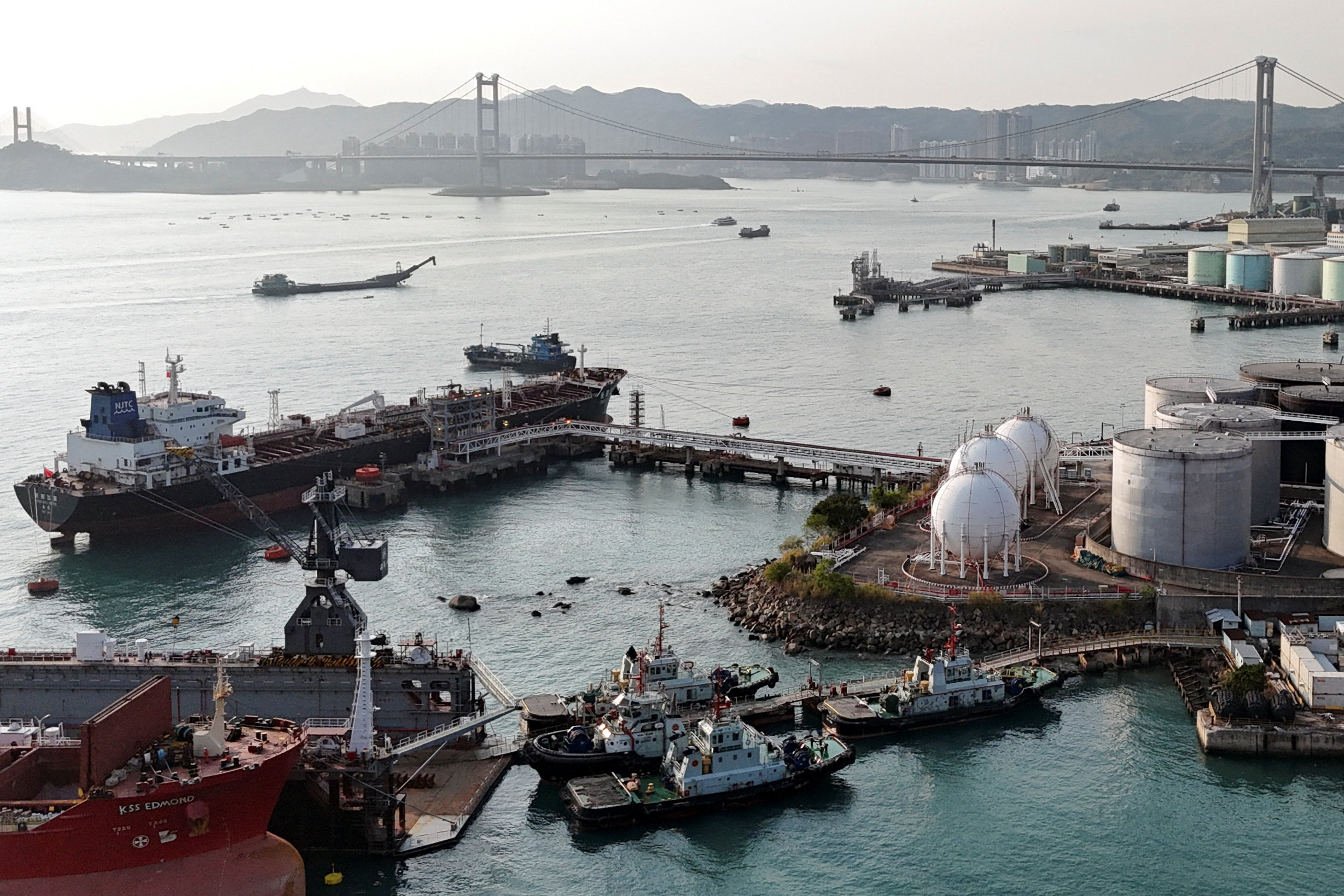
运输成本接近历史高点,正在压缩亚洲炼油利润,尽管全球燃料市场供应短缺。为了让亚洲炼油商继续采购,中东出口商可能不得不自行承担更多这些成本,这将进一步压缩他们在战争持续数月后急需的收入。
Shipping costs near record highs are crushing Asian refining margins even as global fuel markets run short of supply. To keep Asian refiners buying, Middle Eastern exporters may have to absorb more of those costs themselves, squeezing the revenue they desperately need after months of war.
随着美国和伊朗争夺霍尔木兹海峡控制权,全球能源市场正经历前所未有的扭曲,这是又一个迹象。石油正日益从中东流出,但将其实际运送到客户手中变得如此昂贵,以至于威胁到复苏的前景。
In yet another sign of the extraordinary distortions rippling through global energy markets as the US and Iran vie for control of the Strait of Hormuz, oil is increasingly flowing out of the Middle East, but actually getting it to customers has become so expensive that it threatens to undermine the recovery.
能源危机的焦点已明显从原油短缺转向成品油短缺。根据国际能源署的数据,全球炼油产能预计今年将下降230万桶/日,降至8170万桶/日。
The energy crisis has shifted decidedly from a shortage of crude to a shortage of refined fuels. Global refining throughput is set to fall by 2.3 million barrels per day this year to 81.7 million bpd, according to the International Energy Agency.
许多炼油厂在中东冲突中受损,该冲突已进入第八个月;乌克兰对俄罗斯炼油厂的袭击进一步加剧了供应紧张。柴油受影响最为严重,其价格上月已触及历史最高点。
Many refineries have been damaged during the Middle East conflict, already in its eighth month, and Ukrainian strikes on Russian refineries have compounded the squeeze. Diesel has felt the impact most acutely, with prices hitting all-time highs last month.
亚洲承受了霍尔木兹海峡中断带来的大部分冲击。该地区历来约60%的石油供应依赖中东。战争爆发后,许多亚洲炼油商被迫降低开工率,并不惜高昂成本从美国和南美洲等遥远地区寻找替代原油。
Asia has borne much of the pain from the Hormuz disruption. The region has historically relied on the Middle East for around 60% of its oil supplies. After the war began, many Asian refiners were forced to reduce operating rates and scramble for alternative crude from as far away as the United States and South America, at enormous cost.
其他地区的炼油商,尤其是美国和欧洲的炼油商,则因满负荷运转而获益,其利润率上月飙升至历史最高点。
Refiners elsewhere, particularly in the US and Europe, reaped the benefit as they ran at record levels while profit margins soared to record highs last month.
理论上,近几周中东石油出口的回复应能为亚洲炼油商提供一些急需的缓解。但实际上,航运经济正使这几乎成为不可能。
In theory, the recovery in Middle East oil exports in recent weeks should offer Asian refiners some much-needed relief. In practice, shipping economics are making that almost impossible.
中东原油运输在过去六周内显著增加。根据Kpler数据,包括绕过霍尔木兹海峡航线运输的量在内的中东原油总出口量,9月份升至1540万桶/日,几乎达到战前水平的90%。
Crude shipments from the Middle East have risen significantly over the past six weeks. Total Middle Eastern crude exports, including volumes shipped through routes bypassing Hormuz, rose to 15.4 million bpd in September, nearly 90% of pre-war levels, according to Kpler data.
其中大部分恢复来自霍尔木兹海峡本身的通行。随着海湾产油国在美军监督下增加油轮过境,9月份霍尔木兹海峡的通行量升至1070万桶/日,约为战前水平的四分之三。
Much of that recovery came from transit through the strait itself. Flows through Hormuz climbed to 10.7 million bpd in September, around three-quarters of pre-war levels, as Gulf producers stepped up tanker transits under US Navy supervision.
亚洲原油进口也在恢复,预计10月份将达到2350万桶/日,为自2月以来的最高水平,略高于2025年的平均水平。根据Kpler的数据,中东原油桶占该总量的约1000万桶/日。
Asian crude imports are also recovering and are set to reach 23.5 million bpd in October, their highest level since February and slightly above the 2025 average. Middle Eastern barrels account for about 10 million bpd of that total, according to Kpler.
然而,原油供应的回升并未转化为亚洲炼油厂利润的改善。根据交易商的说法,在某些情况下,利润率正徘徊在接近零的水平。问题在于运输。
Yet the rebound in crude supplies has not translated into healthier profits for Asian refiners. In some cases, margins are hovering close to zero, according to traders. The devil is in the delivery.
原料油通常占炼厂运营成本的约80%,而运费和保险通常仅占一桶原油到岸价的3%至7%。情况已不再如此。
Crude feedstock typically accounts for around 80% of a refinery's operating costs, while freight and insurance usually account for only around 3% to 7% of the delivered price of a barrel. Not anymore.
伊朗反复对通过霍尔木兹海峡的油轮发动袭击,导致运费和保险费飙升。这些袭击还迫使交易商和生产商构建复杂的物流绕行方案,利用油轮舰队将原油从海湾地区运出,并在船舶之间转运货物。
Repeated Iranian attacks on tankers transiting Hormuz have sent freight rates and insurance premiums soaring. The attacks have also forced traders and producers to construct elaborate logistical workarounds, using fleets of tankers to shuttle crude out of the Gulf and transfer cargoes between vessels.
这一复杂的穿梭系统需要如此多的油轮,以至于限制了全球可用船舶的数量,进而推动运费在中东以外地区也飙升至极高水平。
This complex shuttle system requires so many tankers that it is limiting the vessels available globally and, in turn, driving freight rates sky-high well beyond the Middle East.
根据投资回报率计算,对一些炼油厂而言,运费和保险现在可能占原油到岸成本的30%。
For some refiners, shipping and insurance can now account for as much as 30% of the delivered cost of crude, according to ROI calculations.
亚洲尤其脆弱。该地区不仅严重依赖中东石油,而且用大西洋盆地的原油替换这些桶装石油需要进行更长的航程——因此成本也更高。
Asia is particularly vulnerable. Not only does the region depend heavily on Middle Eastern oil, but replacing those barrels with crude from the Atlantic Basin involves much longer voyages – and thus much higher costs.
例如,根据LSEG的数据,将200万桶原油从尼日利亚运往新加坡目前每桶成本约为32美元,大约是战前水平的八倍。对炼油经济的影响十分显著。
Transporting a 2-million-barrel cargo from Nigeria to Singapore, for example, now costs around $32 a barrel, roughly eight times its pre-war level, according to LSEG data. The impact on refining economics is striking.
根据HiLo Analytics的数据,截至目前,亚洲炼油毛利润在10月平均约为每桶40美元。但扣除平均每桶约33美元的运输成本后,炼油商剩余的净利润仅略高于每桶7美元。
Gross Asian refining margins have averaged around $40 a barrel so far in October, according to HiLo Analytics. But strip out average freight costs of roughly $33 a barrel, and refiners are left with a net margin of just over $7.
换句话说,运输成本相当于亚洲炼油商可获得毛利润的82%。相比之下,根据HiLo Analytics的数据,美国墨西哥湾沿岸和西北欧地区炼油商的运输成本仅占毛利润的约16%。
In other words, freight is consuming the equivalent of 82% of the gross margin available to Asian refiners. That compares with around 16% for refiners on the US Gulf Coast and in Northwest Europe, according to HiLo Analytics.
亚洲炼油商有几种应对这些利润空间缩小的方式,但这些方式对海湾产油国都不是好消息。
Asian refiners have several ways to respond to these shrinking margins, none of which is good news for Gulf producers.
他们可以降低总体加工率,同时将产出集中在生产最大利润燃料的装置上,例如柴油。一些炼油商也可能选择减少国内原油库存,而不是进口昂贵的替代原油。这两种选择都会降低他们对进口原油的需求。
They could cut overall processing rates while concentrating output on units producing the most profitable fuels, such as diesel. Some could also draw down domestic crude inventories rather than importing expensive replacement barrels. Both options would reduce their appetite for imported crude.
这将把压力重新施加到海湾产油国身上,而这些国家正试图最大限度地增加石油出口,并在冲突期间数月的收入枯竭后实现恢复。
That puts the pressure back on Gulf producers, who are trying to maximise oil exports and rebuild revenue depleted during months of conflict.
中东产油国已经通过降低售价来补偿买家因物流成本飙升而承受的损失,据报道,一些卖家正提供高达每桶30美元的折扣。如果冲突持续下去,这一数字可能会进一步上升,因为海湾产油国在努力保持竞争力方面面临困难。
Middle Eastern producers have already slashed selling prices to compensate buyers for soaring logistics costs, with some sellers reportedly offering discounts of as much as $30 a barrel.
不幸的是,对于他们而言,几乎没有迹象表明这种运输紧张局势即将消失。过去两周,伊朗对穿越霍尔木兹海峡的油轮的袭击有所加剧,袭击次数达到自冲突开始以来的最高周值。
If the conflict drags on, that figure could climb as Gulf producers struggle to remain competitive. Unfortunately for them, there is little sign that the freight squeeze is about to disappear.
如果每桶石油的运输成本持续飙升,而客户要求的折扣力度越来越大,海湾产油国的复苏可能只是海市蜃楼。
Iranian attacks on tankers crossing Hormuz have intensified over the past two weeks, reaching their highest weekly tally since the conflict began.
喜欢这篇专栏吗?请查看路透社公开利息(ROI),这是您获取全球金融评论的必备来源。在领英上关注ROI,并
If the cost of moving each barrel keeps soaring while customers demand ever-larger discounts, Gulf producers’ recovery may turn out to be a mirage.