摆脱束缚,更加大胆,否则将永远失去人工智能竞赛。这是英伟达首席执行官黄仁勋在过去一周对欧洲大陆之行中向欧洲领导人传递的尖锐信息。过去七天,黄仁勋在柏林GTC活动开始之前访问了法国、瑞典、英国和德国,该活动周二开始。在此期间,他一直明确表示,他认为欧洲大陆需要在人工智能领域行动更快,并减少对该行业的监管依赖。
Cast off the shackles and be bolder, or risk losing the AI race for good. That's the pointed message Nvidia CEO Jensen Huang has delivered to European leaders during his trip to the continent over the past week. Over the last seven days, Huang has visited France, Sweden, the UK, and Germany ahead of Nvidia's GTC event in Berlin, which began Tuesday. During that time, he's been clear that he believes the continent needs to move faster on artificial intelligence and rely less heavily on regulating the sector.
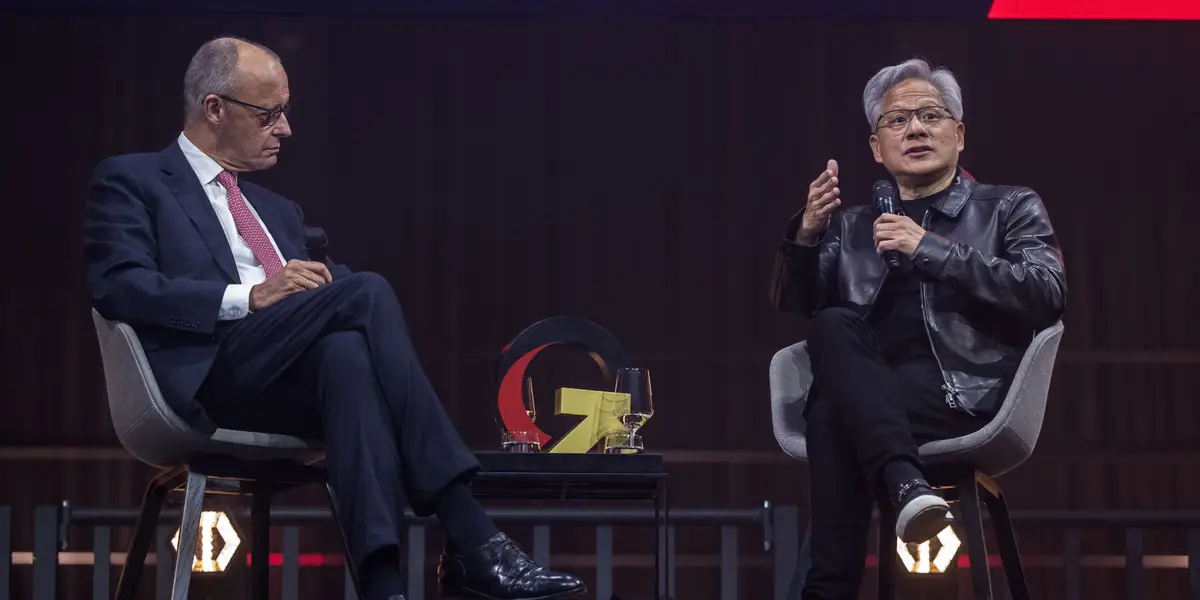
黄仁勋周一晚上在柏林与德国总理梅尔茨的公开对话中,最直接地阐述了这一观点。被问及欧洲应如何监管人工智能时,黄仁勋表示安全必须是首要的,但警告说,政策制定者不能通过监管来实现技术领导地位。“如果产业不繁荣,就没有什么可监管的,”黄仁勋对梅尔茨说,并认为德国需要培育本土人工智能产业,同时确保其安全、负责任地发展。
Huang made the case most directly on Monday evening in Berlin, during a public conversation with German Chancellor Friedrich Merz. Asked how Europe should regulate AI, Huang said safety had to be paramount, but cautioned that policymakers could not regulate their way to technological leadership. "There's nothing to regulate if the industry doesn't thrive," Huang told Merz, arguing that Germany needed to foster a domestic AI industry while ensuring it developed safely and responsibly.
他说,政策制定者应专注于监管人工智能应用,类似于监管使用互联网的产品,而不是试图全面监管底层技术。“我们应立即监管应用,”黄仁勋说。梅尔茨回应说,欧洲仍在努力在创新与监管之间找到平衡。这位德国领导人表示,他不认为“不监管”是正确答案,但过于严格的规则也不是。黄仁勋的回应是:“给德国一个机会。给这个产业一个机会。”
He said that policymakers should focus on regulating AI applications, similar to the way they regulate products that use the internet, rather than trying to regulate the underlying technology wholesale. "We should be regulating the applications right away," Huang said. Merz replied that Europe was still trying to find the balance between innovation and regulation. The German leader said he did not believe "no regulation" was the right answer, but that overly tight rules were not either. Huang’s response: "Give Germany a chance. Give this industry a chance."
这次交流发生在黄仁勋和梅尔茨将人工智能描述为可能解决导致德国在2023年和2024年陷入衰退的经济困境的潜在答案之际。黄仁勋表示,该国的制造业、工程专业知识和工业技术是国家资源,人工智能可以帮助其公司将这些转化为下一阶段技术竞赛中的优势。
The exchange came as Huang and Merz pitched AI as a potential answer to the economic malaise that led Germany into recessions in 2023 and 2024. Huang said the country's manufacturing sector, engineering expertise, and industrial know-how are national resources, and that AI could help its companies turn them into an advantage in the next phase of the technology race.
“AI的下一波浪潮是物理层面的,”黄仁勋表示,指的是机器人技术、制造业、汽车和重工业。“电子永远无法取代原子。”几天前他在伦敦传递的也是同一个紧迫信息。上周在接受记者采访时,黄仁勋说英国正出现一种“奇怪的普遍行为”。黄仁勋向英国传递信息他抨击了他所描述的英国倾向于沉溺于失败的倾向。“你们拥有聪明的人才,拥有优秀的文化,拥有年轻人,精力充沛。但出于某种原因,如果有一百万个理由能赢,你们却能找到那个不做的理由。”“我觉得你们想得太多了,”他补充道。
"The next wave of AI is physical," Huang said, referring to robotics, manufacturing, cars, and heavy industry. "Electrons will never replace atoms." It was the same urgent message Huang had delivered in London days earlier. Speaking to reporters last week, Huang said there was a "strange general behavior" going on in the UK. Jensen Huang has a message for the UK He took a swipe at what he described as Britain’s tendency to dwell on failure. "You have smart people, you have a great culture, you have young people, and the energy is vibrant. But for some reason, if there was a million reasons to win, you find the one reason not to do it." "I think you overthink things," he added.
这些言论凸显了欧洲在AI应对方式上一个熟悉的张力。该大陆已率先制定针对该技术的全面规则,包括《欧盟人工智能法案》,而美国和中国在开发前沿模型及训练所需基础设施方面已拔得头筹。
The remarks underscore a familiar tension in Europe’s approach to AI. The continent has moved early to establish sweeping rules for the technology, including the EU AI Act, while the US and China have pulled ahead in developing frontier models and the infrastructure needed to train them.
作为在为AI繁荣提供动力的先进芯片市场占据主导地位的公司掌舵人,黄仁勋几乎算不上中立观察者。如果政府和企业加快建设AI基础设施并部署其技术,英伟达将获益良多。
Huang, whose company dominates the market for the advanced chips powering the AI boom, is hardly a neutral observer. Nvidia stands to benefit enormously if governments and companies move faster to build AI infrastructure and deploy its technology.
无论他在欧洲AI成功与否上有何利害关系,黄仁勋的信息都很直白。如果大陆花费过长时间辩论如何监管AI,可能会发现有意义的创新已在别处完成。
Regardless of his stake in Europe's AI success, Huang's message was blunt. If the continent spends too long debating how to regulate AI, it may find that the meaningful innovation is done elsewhere.