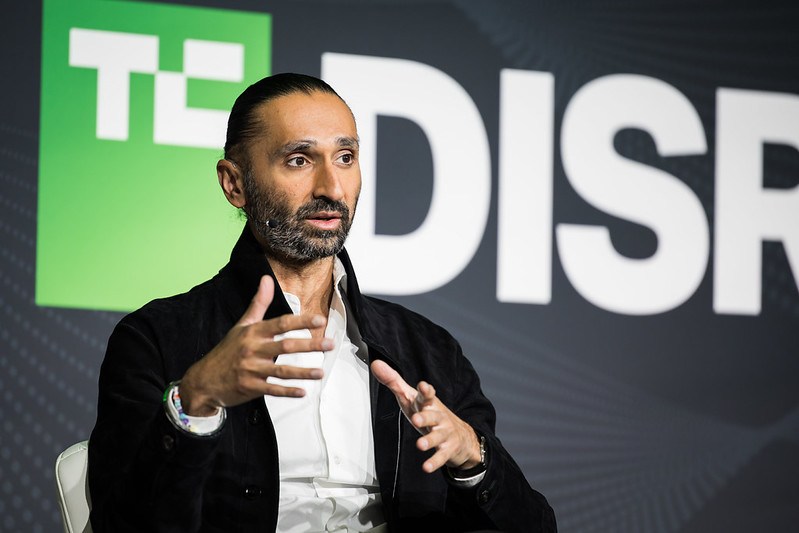
私募股权巨头黑石集团正将自己置于人工智能热潮的中心,该公司资深人士贾斯·凯尔上周在TechCrunch Disrupt舞台上进行了讨论。
Private equity giant Blackstone is putting itself at the center of the AI boom, firm veteran Jas Khaira discussed last week on stage at TechCrunch Disrupt.
该公司通过各种策略进行投资,范围从向数据中心提供巨额贷款,到投资前沿人工智能模型和应用。
It is writing checks via various strategies, ranging from offering massive loans to data centers to investing in frontier AI models and applications.
今年早些时候,该公司推出了黑石N1(BXN1),这是一个位于旧金山的人工智能计划中心枢纽。该团队由凯尔领导,他从纽约搬迁到旧金山,以身处人工智能的核心区域。
Earlier this year, the firm launched Blackstone N1 (BXN1), a San Francisco-based central hub for its AI initiatives. The group is led by Khaira, who relocated from New York to be at the epicenter of AI.
与移动或SaaS等早期技术周期不同,那些周期让公司能够以中等资本实现显著规模,而向人工智能的转型需要惊人的投资额。正是这种对资本的需求,使得拥有1.3万亿美元管理资产的黑石集团,能够在这场技术转型中发挥如此关键的作用。
Unlike earlier tech cycles such as mobile or SaaS, which allowed companies to reach significant scale with moderate capital, the transition to AI requires staggering amounts of investment. That need for capital is precisely why Blackstone, with its $1.3 trillion in assets under management, could play such a critical role in this tech shift.
凯尔强调,黑石集团通过专注于算力融资以及提供从债务到股权等灵活资本结构的能力,使其区别于传统风险投资家。而且它一直在积极投资。
Khaira emphasized that Blackstone sets itself apart from traditional venture capitalists through its focus on compute financing and its ability to offer flexible capital structures, ranging from debt to equity. And it has been investing aggressively.
“我们今天是超大规模云服务商之外最大的算力所有者,无论是对新云的投资、对数据中心的投资,还是能够战略性地利用该算力来支持公司,”凯尔说。
“We’re the largest owner of compute outside of the hyperscalers today, whether it’s investments in neo clouds, investments in data centers, and being able to use that compute strategically to support companies,” Khaira said.
例如,BXN1在多项与算力相关的交易中发挥了关键作用,其中包括Crux AI,这是一家与谷歌合作推出的新云公司,旨在商业化其定制TPU,黑石集团作为投资者承诺投资50亿美元。它还支持了四岁的芯片初创公司Etched,该公司的快速发展引起了投资者的关注。新云是出租人工智能GPU基础设施的云服务提供商。
For instance, BXN1 played a key role in several compute-related deals, among them Crux AI, a neocloud launched in partnership with Google to commercialize its custom TPUs, to which Blackstone committed $5 billion as an investor. It also backed four-year-old Etched, a chip startup whose rapid development has caught investor attention. Neoclouds are cloud providers that rent out AI GPU infrastructure.
黑石集团开创了一种融资结构,使其能够通过分析已承诺的客户合同以及将GPU作为抵押品,向风险投资支持的云新云公司提供巨额贷款。
Blackstone pioneered a financing structure that allowed it to lend massive sums to venture-backed cloud neoclouds by analyzing both committed customer contracts and using GPUs pledged as collateral.
黑石集团的首笔此类交易发生在2023年,对象是CoreWeave公司。就在那之后,随着ChatGPT的推出,neocloud公司的需求激增。据Khaira称,尽管CoreWeave当时仅实现了3000万美元的收入且盈利能力极低,但它仍向黑石集团申请了一笔23亿美元的贷款。
Blackstone’s first such deal came in 2023 with CoreWeave, shortly after that neocloud saw demand explode following the launch of ChatGPT. Despite having only “30 million of revenue and minimal profitability” at that time, according to Khaira, CoreWeave approached Blackstone for a $2.3 billion loan.
CoreWeave公司利用其大量Nvidia显卡所具备的巨大价值来申请贷款,而Nvidia本身也是该公司的投资者之一。由于CoreWeave与微软等优质客户签订了合同,黑石集团对这笔贷款的审批也更加放心。
CoreWeave was borrowing against the considerable value of its large collection of Nvidia GPUs, with Nvidia also an investor. Blackstone also grew more comfortable with the loan because CoreWeave had contracts with blue-chip customers like Microsoft.
这一交易很快成为了黑石集团及其他金融机构向CoreWeave及其他类似公司提供数十亿美元贷款的融资模式。
That transaction quickly became the financing model for how Blackstone and other credit institutions provided billions in follow-on debt to CoreWeave and rival neoclouds.
Khaira表示:“我们在评估贷款申请时最看重的因素之一就是客户的资质。如果客户属于投资级客户(比如微软或Meta),那么其风险水平就会相应降低。”
“One of the primary things that we’re looking to is the nature of the customer. And if the customer is an investment-grade customer — let’s say it’s Microsoft or let’s say it’s Meta — the risk gets priced relative to that customer,” Khaira said.
在CoreWeave项目取得成功的基础上,黑石集团又与其他机构合作,今年早些时候共同为澳大利亚GPU供应商Firmus公司提供了100亿美元的贷款。
Building on its success with CoreWeave, Blackstone struck other neocloud financing deals, including co-leading alongside Coatue a $10 billion credit facility for Australian GPU provider Firmus earlier this year.
Khaira指出,最近几周,这些公司以及其他neocloud运营商累积的大量债务已经开始引发担忧。CoreWeave的债务规模已经膨胀至约500亿美元。Altimeter Capital的创始人Brad Gerstner在最近接受CNBC采访时指出:“CoreWeave用于抵押的资产主要是Nvidia显卡,但这些资产已经不再具有足够的价值了;过去它们曾依靠这些资产来获取低成本贷款。”
Khaira acknowledged that in recent weeks, the large debt burdens accumulated by these companies and other neocloud operators have begun to raise red flags. Coreweave’s debt alone has since ballooned to about $50 billion, causing Altimeter Capital founder Brad Gerstner to note in a recent CNBC interview, “The collateral that CoreWeave is putting up which is really only GPUs is not good enough anymore. They used that in the past to get cheap debt.”
Khaira认为,市场上的紧张情绪源于多种因素:9月份利率上升,且通胀率高于预期,这表明借贷成本可能会继续上升;此外,大量AI基础设施相关的债务融资项目也加剧了市场的不确定性。
Khaira said that on the credit side, the market jitters stem from a combination of factors. Interest rates ticked up in September, and hotter-than-expected inflation signals that borrowing costs may keep climbing. The flood of AI infrastructure debt offerings isn’t helping either.
“我们同时也观察到信贷利差在不断上升,”Khaira解释道,“这是因为贷款机构在已经较高的基准利率基础上,又额外收取了更高的费用来为人工智能(AI)相关项目的建设提供资金。像Meta或Microsoft这样的科技巨头,尽管拥有庞大的资产负债表和稳定的盈利能力,但在借款时仍需支付更高的成本。”
“We’re also seeing higher credit spreads,” Khaira said, explaining that lenders are charging higher premiums on top of already higher base interest rates to finance the AI buildout. “The cost of capital to price in debt for a Meta or a Microsoft has widened out,” he added, pointing out that even tech giants with massive balance sheets and solid earnings are paying more to borrow.
人们对债务成本上升的担忧已经波及到了股市:CoreWeave的股价最近几天下跌了超过20%;而Firmus则放弃了在澳大利亚证券交易所的IPO计划(该计划的估值约为300亿美元)。“归根结底,市场并不认可这个估值,因此这笔交易最终未能达成,”Khaira说道。
Concerns about the rising cost of debt have spilled into the stock market. Shares of CoreWeave dropped over 20% in recent days, while Firmus scrapped its planned IPO on the Australian Securities Exchange at a target valuation of roughly $30 billion. “Ultimately, the market wasn’t there at that valuation, and so I think as a result, that deal didn’t get done,” Khaira said about Firmus’ cancelled listing.
“市场正在思考:在当前利率上升的背景下,这些AI企业的合理估值应该是多少?”他补充道。
“The market is thinking what is the right price for neoclouds, what is the right price for these businesses in this moment when interest rates are moving up,” he said.
尽管一些基础设施提供商面临压力,但AI企业仍然无法获得足够的计算资源来运行他们的AI模型,因此它们对数据中心的建设需求持续旺盛。
Despite those pressures on some infrastructure providers, AI companies simply can’t get enough compute to power their models. Their appetite continues to drive data center buildout.
Khaira对那些悲观论者(他们担心AI基础设施债务的累积会导致广泛的信用危机,甚至引发经济崩溃)的看法表示怀疑:“这与2008年时银行信用状况极差的情况完全不同。”他指出,由于绝大多数数据中心都是为大型科技公司(即所谓的‘超大规模企业’)建设的,因此为这些数据中心提供的债务融资实际上是由全球信用状况最好的公司来担保的。
Khaira downplayed worries of doom-mongers that the massive accumulation of AI infrastructure debt could lead to a widespread credit crisis, or worse, crash the economy altogether. “This doesn’t feel like something where you’ve got 2008 banks that are shaky credits,” he said. Instead, he pointed out that because the vast majority of data centers are built for hyperscalers, the debt financing them is ultimately backed “by the most creditworthy companies in the world.”
此外,Blackstone还通过与Anthropic和Hellman & Friedman共同成立的、总规模达15亿美元的合资企业“Ode”来帮助企业采用AI技术。该合资企业负责派遣工程师,协助企业将AI技术融入其业务运营中,首批合作对象包括Blackstone旗下的280家子公司。
Beyond funding data centers, Blackstone is helping companies adopt AI through a $1.5 billion joint venture called “Ode with Anthropic,” formed alongside Anthropic and Hellman & Friedman this year. Ode supplies forward-deployed engineers to help companies adopt AI and integrate it into their operations, starting with Blackstone’s 280 portfolio companies.
当被问及黑石集团旗下公司是否正在从人工智能中看到切实收益时,凯拉承认:“确实存在投资回报率(ROI),但情况不均衡。”他将技术采用描述为可能呈现“锯齿状模式”,而在怀疑论者眼中,这在采用率赶上来之前,可能看起来像是算力供过于求。
When asked if Blackstone-owned companies are seeing tangible gains from AI, Khaira conceded that “there is definitely ROI, but it is uneven.”He described technology adoption as something that could move in a “sawtooth-type pattern,” which, to skeptics, can look like an oversupply of compute before adoption catches up.