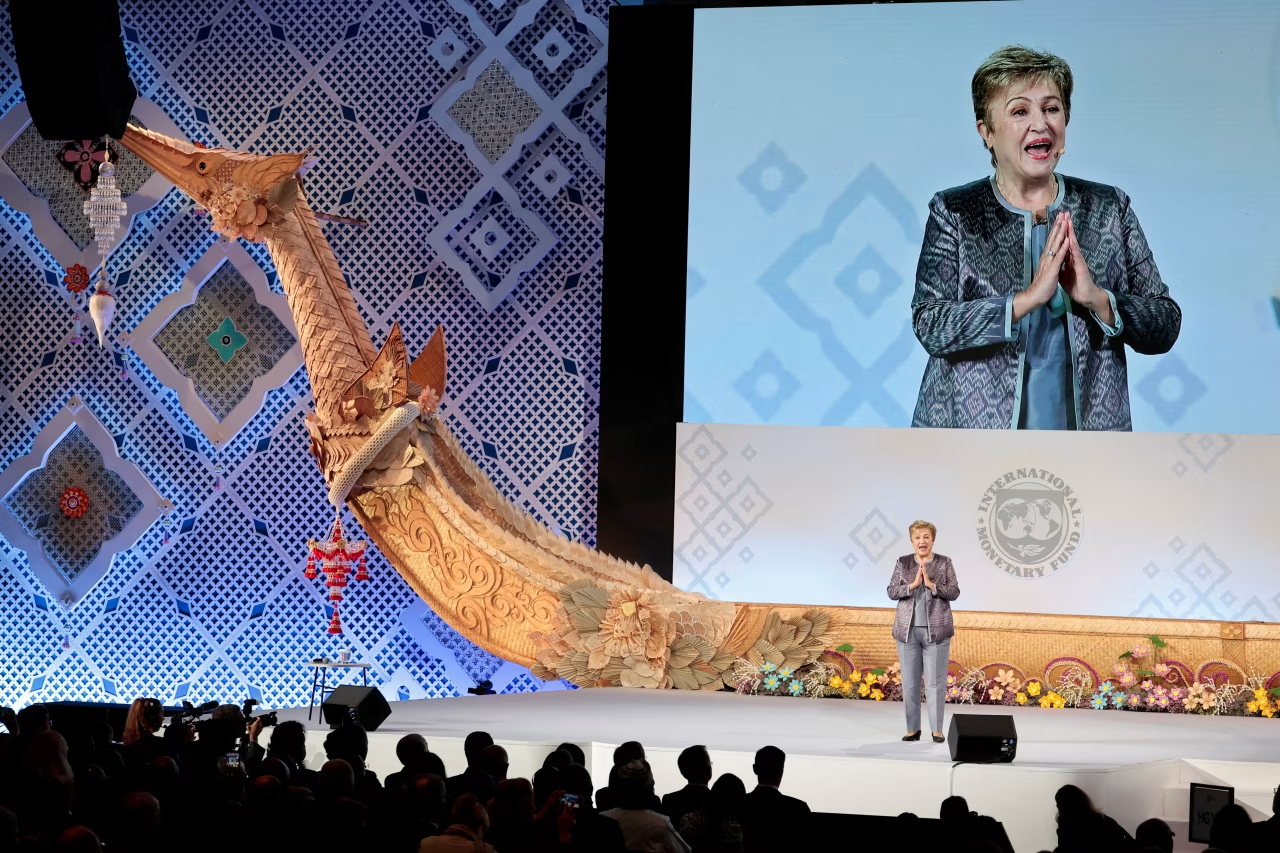
本周在亚洲聚集的金融领袖向世界发出了紧急信息:全球经济正在把所有筹码押在人工智能上。
Financial leaders gathering in Asia this week had an urgent message for the world: The global economy is betting the house on artificial intelligence.
到目前为止,这一押注收获了丰厚回报。对人工智能及其运行基础设施的激增投资正在推动美国的增长。生产人工智能数据中心建设所需的计算机芯片、服务器和其他设备的亚洲经济体出口蓬勃发展。搭乘人工智能浪潮的国家在伊朗战争引发的能源危机中表现得比那些置身事外的国家更好。
That bet has paid off handsomely so far. Surging investment in AI and the infrastructure to run it is powering growth in the U.S. Exports are booming in Asian economies that make computer chips, servers and other equipment needed for the data center build-out. Countries riding the AI wave have weathered the energy crunch caused by the Iran war better than those stuck on the sidelines.
但这一繁荣的规模——以及其向更多经济体的扩张——正在埋下新的隐忧:如果人工智能狂热结束,将对全球造成什么后果。
But the scale of the boom—and its expanding reach into more economies—is seeding new worries about the global consequences if the AI mania ends.
国际货币基金组织表示,如果繁荣转为衰退,受影响的恐怕不仅仅是股票投资者。根据基金会秋季预测中包含的一种情景,世界可能面临增长的急剧回落,这一回落将同样冲击富国和穷国。
It probably won’t just be stock investors that get burned if boom turns to bust, the International Monetary Fund said. The world could be looking at a sharp pullback in growth that hits both rich and poor countries alike, according to one scenario included in the fund’s fall projections.
该情景并非预测。基金会还对其他、乐观程度更高的情景进行了数值分析,包括一种人工智能为全球经济注入强劲动力的情景,但并未表明哪种结果更可能发生。
The scenario wasn’t a forecast. The fund also ran the numbers on other, less-pessimistic scenarios, including one in which AI gives the global economy a major shot in the arm, without signaling which outcome it thinks is more likely.
新技术的经济前景——以及潜在风险——在曼谷举行的国际货币基金组织和世界银行年会期间,成为财政部长和央行行长们讨论的主题。
The economic possibilities—and potential perils—of the new technology dominated discussions among finance ministers and central bankers gathered for the annual meetings of the IMF and World Bank in Bangkok.
此次聚会正值投资者因借贷成本上升和人工智能实验室盈利能力担忧而神经紧绷的一周,这一情绪冲击了半导体股票以及人工智能基础设施提供商如CoreWeave的债券。两家澳大利亚数据中心公司因市场波动,叫停了向公众发行股票的计划。
The gathering came during a week when investor nerves over rising borrowing costs and AI labs’ profitability hit semiconductor stocks and the bonds of AI infrastructure providers such as CoreWeave. Two Australian data-center companies put the brakes on plans to issue shares to the public, citing market volatility.
即使事故可以避免或得到管理,国际货币基金组织警告称,对银行和其他金融机构的强大人工智能辅助网络攻击代表了对全球金融体系稳定性的新威胁。本月早些时候,黑客使用中国人工智能程序攻击了韩国最大的银行,窃取了68,000人的个人信息。
Even if a crash can be avoided or managed, powerful AI-assisted cyberattacks on banks and other financial institutions represent a new threat to the stability of the global financial system, the IMF warned. Earlier this month, hackers used a Chinese AI program to attack South Korea’s biggest banks and steal the personal information of 68,000 people.
加拿大央行行长蒂夫·麦克莱姆周三在曼谷表示,人工智能将具有变革性,但“它可能是一次颠覆性的转变”。
AI will be transformative, but “it could be a disruptive transition,” Bank of Canada Gov. Tiff Macklem said in Bangkok on Wednesday.
世界金融政策精英之间的讨论凸显了人工智能及其背后的公司如何与几乎整个全球经济深度交织。
The buzz among the world’s financial-policy elite underscores how AI and the companies behind it have become deeply entwined with almost the entire global economy.
人工智能正在从全球吸收资本、劳动力、设备和原材料,将主要经济体的命运与一种日益融入工作场所和日常生活的技术紧密联系在一起。
AI is sucking in capital, workers, equipment and raw materials from around the world, yoking the fortunes of major economies to a technology that is becoming more enmeshed in workplaces and daily life.
根据经济学家斯蒂恩·范·纽韦尔伯赫的估计,在美国,用于数据中心及相关基础设施的支出预计将在2032年前的七年内超过10万亿美元,年均约占国内生产总值的3.6%。如此规模的繁荣将超过历史上的类比,如铁路、电网或互联网的建设。
In the U.S., the money spent on data centers and related infrastructure is expected to top more than $10 trillion in the seven years through 2032, averaging around 3.6% of annual gross domestic product a year, according to estimates by economist Stijn van Nieuwerburgh. A boom on that scale would eclipse historical parallels such as the construction of the railroads, the electricity grid or the internet.
“我认为,这项新技术的出现可能是我有生之年对美国和全球经济最具影响力的变化,”美联储主席凯文·沃什周五表示。
“I’d say the advent of this new technology is probably the most consequential change to the U.S. and the global economy in my lifetime at this point,” Federal Reserve Chairman Kevin Warsh said Friday.
沃什表示,近期未来可能会动荡不安。但从长远来看,这项技术将是一种积极的供给冲击,他表示,这将提高经济生产更多商品和服务的能力,而不一定会推高通胀。
The immediate future may be bumpy, Warsh said. But in the longer run, the technology would be a positive supply shock, he said, raising the economy’s capacity to produce more goods and services without necessarily boosting inflation.
亚洲经济正处于一场史诗级出口热潮之中,这掩盖了消费及其他增长引擎的疲弱。数据提供商CEIC的数据显示,韩国9月出口同比增长超过80%。台湾出口增长超过60%。中国出口增长超过三分之一。日本出口增长五分之一。
Asian economies are in the midst of an epic export boom, which is masking weakness in consumption and other engines of growth. South Korea’s exports rose more than 80% year-over-year in September, figures from data provider CEIC show. Taiwan’s exports were up more than 60%. China’s exports rose by more than a third. Japanese exports are up by a fifth.
该技术的支持者表示,人工智能将彻底改变各行各业,并推动一场生产力繁荣,为未来多年增长提供动力。一些人表示,对为AI热潮融资的不断增长的债务堆积所产生的财务不安是不必要的,因为谷歌和微软等大型公司拥有更大的现金储备。
The technology’s supporters say AI will revolutionize industries and drive a productivity boom that will power growth for years. Some say financial unease over the growing debt pile financing the AI boom is misplaced, thanks to the even bigger cash piles at major firms such as Google and Microsoft.
“这些大型超大规模云服务商进入这个经济体时现金储备相当充裕,”穆迪评级首席信贷官Atsi Sheth表示。
“The big hyperscalers entered this economy quite cash-rich,” said Atsi Sheth, chief credit officer of Moody’s Ratings.
国际货币基金组织勾勒的乐观情景中,广泛采用人工智能带来的生产力提升将推动一段强劲经济增长和受控通胀的“金发姑娘”时期。
In the optimistic scenario sketched out by the IMF, productivity gains from widespread AI adoption fuel a goldilocks period of robust economic growth and contained inflation.
另一种情景假设,人工智能兑现了其承诺,但芯片制造商等企业在努力跟上失控需求的过程中,扩建遭遇供应混乱。这将在短期内推高通胀和利率,抑制增长,但最终人工智能带来的生产力提升将显现出来。
Another scenario assumes AI lives up to its promises but the build-out runs into supply snafus as chip makers and others struggle to keep up with runaway demand. That pushes up inflation and interest rates in the near term, pinching growth, but ultimately the productivity gains from AI come through.
在最悲观的情景中,投资者在人工智能未能达到高远预期,或人工智能公司的利润远低于预期后对其失去信心。美国投资下降,亚洲出口受损。股市暴跌,美元走弱。
In the most downbeat scenario, investors sour on AI after it fails to live up to its lofty expectations or AI firms’ profits turn out much weaker than anticipated. Investment falls in the U.S. and Asian exports suffer. Stocks plunge and the dollar weakens.
在该基金的模型中,崩盘可能使2028年全球增长下降多达1.3个百分点。该基金表示,如果复杂的人工智能程序失控或被用于毁灭性网络攻击,人们对该技术的信心也可能消失。
In the fund’s modeling, the bust could knock as much as 1.3 percentage points off global growth in 2028. The fund said confidence in the technology could also evaporate if sophisticated AI programs run amok or are used in devastating cyberattacks.
国际货币基金组织总裁克里斯塔琳娜·格奥尔基耶娃周五表示,即使人工智能的收益最终实现,某种程度的动荡似乎也是不可避免的。她说,人们在短期内高估了新技术的收益,而在长期内低估了其收益。
IMF Managing Director Kristalina Georgieva said Friday that some level of upset seems inevitable, even if the gains from AI ultimately pan out. People overestimate the benefits of new technology in the short term, while underestimating the gains over the long term, she said.
“我们的期望非常高。由于扩散需要时间,这些期望不太可能实现,”她在谈及新技术在经济中传播的过程时说。
“We have very high expectations. They are not going to be met because it takes time for diffusion,” she said, referring to the process by which new technologies spread through an economy.
“风险在于:我们感到兴奋,但它并未立刻提升生产率。我们感到失望,于是撤出。随后这就成了我们的问题。”
“The risk is: We’re excited, it doesn’t lift productivity immediately. We’re disappointed, we pull out. And then it becomes our problem.”
请写信至Jason Douglas(jason.douglas@wsj.com)和Peter Landers(Peter.Landers@wsj.com)。
Write to Jason Douglas at jason.douglas@wsj.com and Peter Landers at Peter. Landers@wsj.com