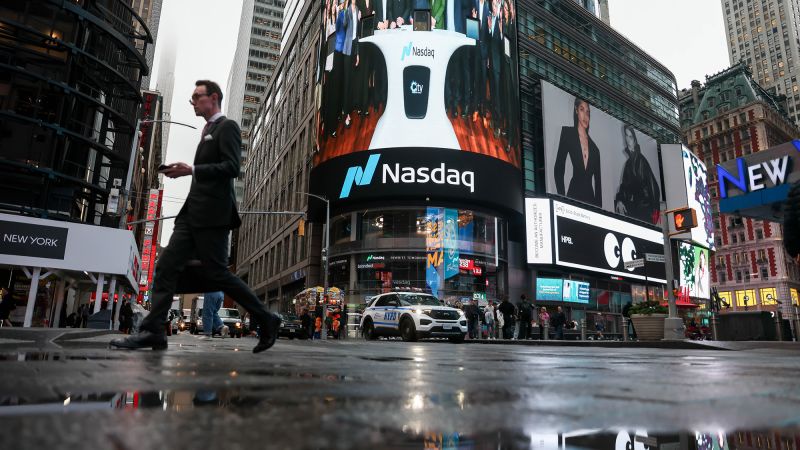
科技股本周动荡不安,包括高利率和不断累积的人工智能债务在内的担忧持续拖累投资者情绪。
Tech stocks are having a tumultuous week as concerns, including higher interest rates and mounting AI debt, continue to weigh on investor sentiment.
纳斯达克综合指数周五下跌约2.5%,使其周跌幅接近5%,该科技股权重指数有望录得自6月以来的最差一周。标普500指数下跌1.4%,使其周跌幅超过2%,同样创下自6月以来的最差一周。
The Nasdaq Composite fell roughly 2.5% on Friday, bringing its weekly losses to almost 5% and putting the tech-heavy index on track for its worst week since June. The S&P 500 fell 1.4%, putting its weekly losses at more than 2%, also its worst week since June.
纳斯达克和标普500指数仅在10天前刚刚创下历史新高。但此后,随着市场对借款成本上升是否会给依赖债务的人工智能繁荣中风险较高的领域带来压力的担忧蔓延,市场出现动荡。
The Nasdaq and S&P clinched record highs just 10 days ago. But since then, the market has stumbled as jitters spread about whether rising borrowing costs will put pressure on risky corners of the AI boom that are reliant on debt.
担忧的核心是一个名为“新云”的小众群体,它们向人工智能繁荣中的公司出租算力。CoreWeave(CRWV)是一家于2025年上市并由英伟达支持的新云公司,已成为市场焦虑的特别来源。
At the center of concerns is a niche group called neoclouds, which rent computing power to companies in the AI boom. CoreWeave (CRWV), a neocloud that went public in 2025 and is backed by Nvidia, has emerged as a particular source of market anxiety.
CoreWeave资产负债表上有数十亿美元的债务,因为它借钱来资助其增长。最近,其债券收益率飙升至显示出困境或更高违约风险的水平。
CoreWeave has tens of billions of dollars of debt on its balance sheet as it borrows money to fund its growth. Recently, its bond yields surged to levels that signal distress, or a higher risk of default.
“尚不清楚(CoreWeave)是否能获得足够好的回报来偿还其借入的债务,”D.A. Davidson科技研究主管吉尔·卢里亚对CNN表示。“随着人们对建设轨迹感到担忧,它们是人工智能交易中的次级债券层,这就是为什么它们首先被抛售。”卢里亚表示,他认为人工智能需求是真实且增长的,但对于CoreWeave这样的公司来说,这与对不可持续融资和高利率的担忧存在张力。
“It’s unclear that (CoreWeave is) going to get a sufficiently good return to pay down the debt that they borrowed,” Gil Luria, head of technology research at D.A. Davidson, told CNN. “As people get concerned about the trajectory of the buildout, they are the subprime tranche of the AI trade, and that’s why they’re selling off first.”Luria said he thinks demand for AI is real and growing, but for companies like CoreWeave, that’s in tension with concerns about unsustainable financing and steep interest rates.
英伟达首席执行官黄仁勋周四介入以缓解担忧,他告诉彭博社,他对CoreWeave持乐观态度,这一背书帮助该公司股价周四反弹。但这只是短暂的:该股周五下跌14%。
Nvidia CEO Jensen Huang stepped in to assuage concerns on Thursday, telling Bloomberg that he’s optimistic about CoreWeave, an endorsement that helped the company’s stock rally on Thursday. But it was short-lived: The stock dropped 14% on Friday.
CoreWeave股价本周下跌了四分之一。自2025年3月IPO后不久的峰值以来,股价已下跌超过60%。
CoreWeave shares have lost one-quarter of their value this week. The stock is down more than 60% since a peak shortly after its IPO in March 2025.
本周市场焦虑加剧:半导体芯片制造商股价大幅下跌,这些公司被称为AI热潮中的“铲子和镐”。
Adding to market anxiety this week: A sharp drop in semiconductor chipmakers, the so-called “picks and shovels” of the AI boom.
备受关注的半导体芯片股指数周五下跌3.9%,连续第八个交易日下跌。
A closely watched index of semiconductor chip stocks dropped 3.9% on Friday, falling for the eighth day in a row.
投资者今年因预期AI将迎来大规模建设以及芯片短缺将使公司获得巨额利润而推动芯片股飙升。但随着华尔街开始权衡成本上升以及数据中心政治化可能削弱建设预测的担忧,这些股票正在失去光彩。
Investors sent chip stocks soaring this year on expectations for a massive AI buildout and a shortage of chips that would allow the companies to reap enormous profits. But those stocks are losing their luster as Wall Street reckons with concerns about rising costs and the politicization of data centers that could hamper forecasts for the buildout.
与此同时,自中国内存芯片制造商CXMT本周早些时候宣布在先进内存芯片方面取得进展以来,半导体股票尚未恢复。这一发展正在动摇那些押注美国和韩国芯片制造商将占据主导市场份额和定价权的投资者,他们现在正在争论来自中国的更便宜、更高效的芯片是否会破坏这一前景。
Meanwhile, semiconductor stocks haven’t recovered since Chinese memory chipmaker CXMT announced earlier this week that it made headway on advanced memory chips. The development is roiling investors who were betting US and South Korean chipmakers would have a dominant market share and pricing power, and are now debating whether cheaper, efficient chips from China could spoil that outlook.
“市场先卖出,后提问,”Globalt Investments投资组合经理托马斯·马丁说。“这就是为什么你会看到波动。”尽管该半导体指数仍较今年年初上涨近60%,但自6月峰值以来已下跌超过20%。
“The market sells first, asks questions later,” said Thomas Martin, portfolio manager at Globalt Investments. “That’s why you get the volatility.”The semis index is down more than 20% since a peak in June, although it’s still up almost 60% year-to-date.
韩国股市本周动荡不安。基准Kospi指数高度集中于仅两家公司:芯片巨头SK海力士和三星电子。
South Korea’s stock market had a tumultuous week. The benchmark Kospi index is heavily weighted in just two companies: chipmaker titans SK Hynix and Samsung Electronics.
Kospi本周暴跌14.5%,为2008年以来最差的周表现。Kospi今年一度大幅上涨,6月时年内涨幅曾高达116%。但过去六个月Kospi已抹去所有涨幅,目前年内涨幅为35%。
The Kospi tumbled 14.5% this week, its worst weekly performance since 2008. The Kospi had soared this year, and in June was up as much as 116% year-to-date. But the Kospi has wiped out all of its gains across the past six months and is now up 35% year-to-date.
半导体芯片对人工智能至关重要,已成为股市中日益重要的一部分。半导体行业占标普500指数市值的大约五分之一。进一步的损失可能预示着更广泛市场的麻烦。
Semiconductor chips, critical for AI, have become an increasingly important part of the stock market. The semis industry accounts for roughly one-fifth of the S&P 500’s market value. Further losses could spell trouble for the broader market.
华尔街的恐慌指数VIX在周五飙升30%,升至20点以上 — — 这一水平表明市场波动性加剧。
Wall Street’s fear gauge, the VIX, surged 30% on Friday and rose above 20 points — a level that signals elevated volatility in markets.