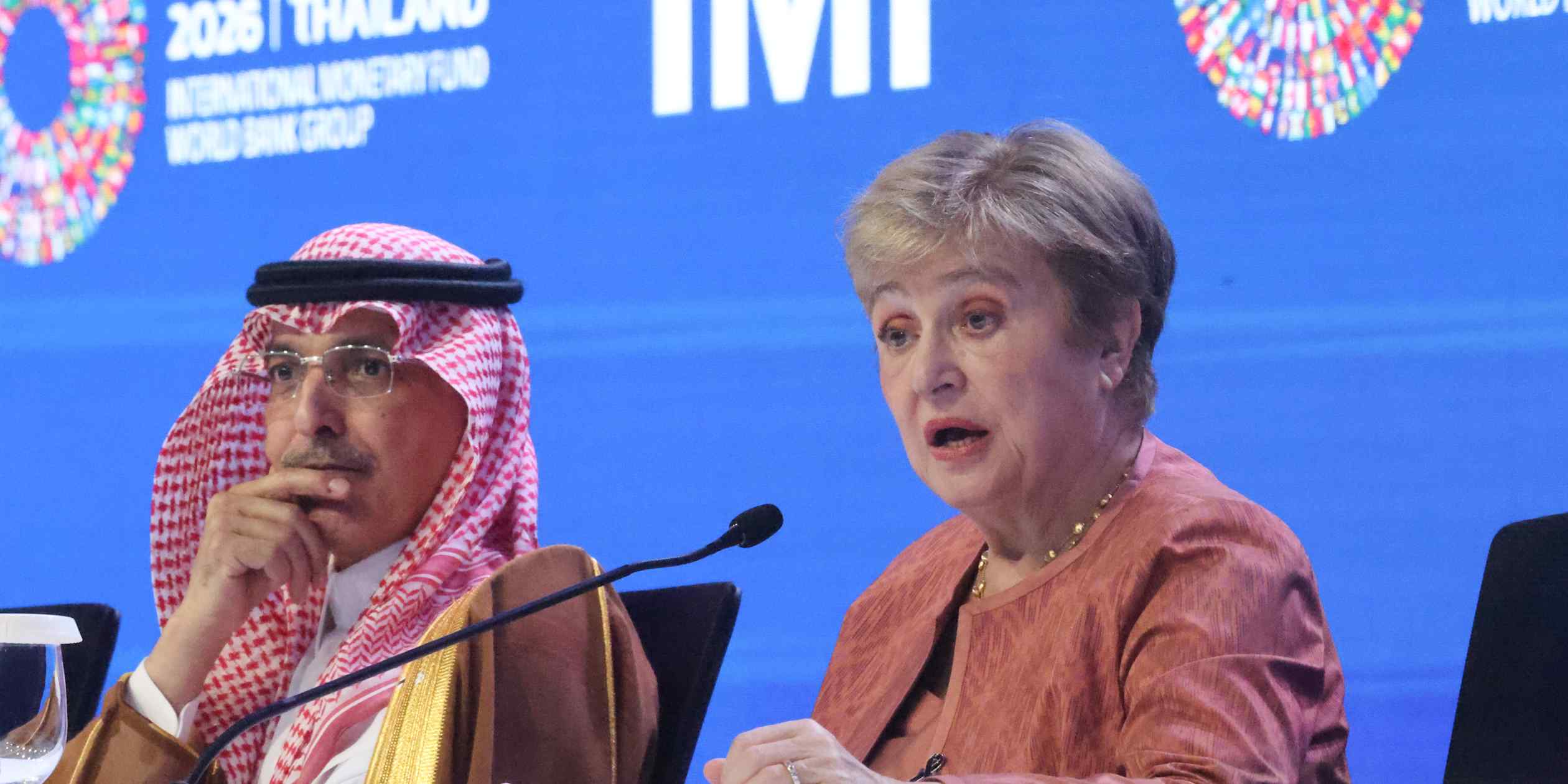
曼谷——沙特阿拉伯财政大臣周六表示,中东地区持续的危机凸显了该地区脆弱经济体与那些更有准备经受动荡的经济体之间的分化。
BANGKOK -- The ongoing crisis in the Middle East has highlighted a divide between the region's vulnerable economies and those better prepared to withstand the turmoil, Saudi Arabia's finance minister said on Saturday.
穆罕默德·贾丹在曼谷举行的一场新闻发布会上发表了上述讲话,当时他是国际货币与金融委员会的主席,该委员会是国际货币基金组织的一个25成员咨询机构。国际货币基金组织和世界银行本周在泰国首都举行年会,各项活动将于周日闭幕。贾丹表示,中东和北非地区“大体上分为两组,未必毗邻”。
Mohammed Al-Jadaan was speaking at a news conference in Bangkok as chair of the International Monetary and Financial Committee, a 25-member advisory body to the International Monetary Fund. The IMF and the World Bank are holding their annual meetings in the Thai capital this week, with events wrapping up on Sunday. The Middle East and North Africa (MENA) region "largely [has] two groups, not necessarily beside each other," Al-Jadaan said.
他表示,其中一组的特点是各国带着“做了大量功课”的准备迎接最近的冲击,并补充说,海湾阿拉伯国家合作委员会的大多数成员国——包括巴林、科威特、阿曼、卡塔尔、沙特阿拉伯和阿拉伯联合酋长国——都属于这一类。“他们进行了结构性改革。他们建立了缓冲。因此他们更有能力应对冲击。”
One group features countries that came to the recent shock "prepared with a lot of homework," he said, adding that most member states of the Gulf Cooperation Council -- comprising Bahrain, Kuwait, Oman, Qatar, Saudi Arabia and the United Arab Emirates -- fall into this category. "They did structural reform. They built buffers. So they are way more able to deal with the shock."
另一方面,“有些国家进入这一阶段时已经很疲惫了,”这位大臣继续说道。“它们确实正在经历艰难时期,没有能力或缓冲。”他补充说,这些国家需要国际社会的援助。
On the other hand, "there are countries who entered this phase already tired," the minister continued. "They are really going through tough times and do not have the capacity or the buffers." He added that these nations need a helping hand from the international community.
“国际货币基金组织和世界银行等机构正在努力协调工作以提供帮助,希望中东和北非地区其他较强的部分能够找到办法来缓局势、结束战争,并重新专注于他们多年前开始的改革,”他说。
"Institutions like the IMF and the World Bank are trying to coordinate their efforts to help, and hopefully the other parts of the MENA who are stronger will find a way to de-escalate, end the wars, and refocus on their reforms that they have started years ago," he said.
贾丹在同日发表的主席声明中表示:“战争和冲突继续造成沉重的声誉与人道主义代价,带来巨大的经济成本和显著的负面溢出效应。”国际货币基金组织预计,中东的经济前景仍存在高度不确定性,并取决于伊朗战争的持续时间和激烈程度,这可能会维持高企的能源价格并加深贸易中断。
In the chair's statement issued the same day, Al-Jadaan said, "Wars and conflicts continue to impose a heavy humanitarian toll, with large economic costs and significant negative spillovers." The IMF expects the economic outlook of the Middle East to remain highly uncertain and dependent on the duration and intensity of the Iran war, which could sustain elevated energy prices and deepen trade disruptions.
在其本周发布的最新《世界经济展望》报告中,国际货币基金组织将中东和北非地区2026年的增长预期下调了1.5个百分点,至负2%,7月时的预测为正。该地区经济在2025年增长了3.3%。
In its latest World Economic Outlook report, released this week, the IMF downgraded 2026's growth outlook for the MENA region by 1.5 percentage points to minus 2%, from its July projection. The region's economy grew 3.3% in 2025.
同样出席此次新闻发布会的国际货币基金组织总裁克里斯塔利娜·格奥尔基耶娃表示,该组织一直与该地区的脆弱经济体紧密合作,提供量身定制的项目和符合各国外交与发展需求的贷款条件,以帮助缓冲冲击。
IMF Managing Director Kristalina Georgieva, who was also present at the news conference, said her organization has been working closely with vulnerable economies in the region, providing tailor-made programs and lending terms that match each country's needs to help cushion the shock.
g奥尔基耶娃列举了伊拉克和黎巴嫩这两个脆弱国家。“就伊拉克而言,当局请求了一个项目,我们将坚定地支持伊拉克。我们将向伊拉克提供资金和政策支持,”克里斯塔利娜说,并补充说国际货币基金组织也一直在与黎巴嫩当局开展密集合作,预计将在那里取得重大进展。
Georgieva cited Iraq and Lebanon as two vulnerable nations. "In the case of Iraq, the authorities requested a program, and we will support Iraq very firmly. We would get to Iraq both money and policy support," Kristalina said, adding that the IMF has also been working intensively with authorities in Lebanon, where it expects to make significant progress.