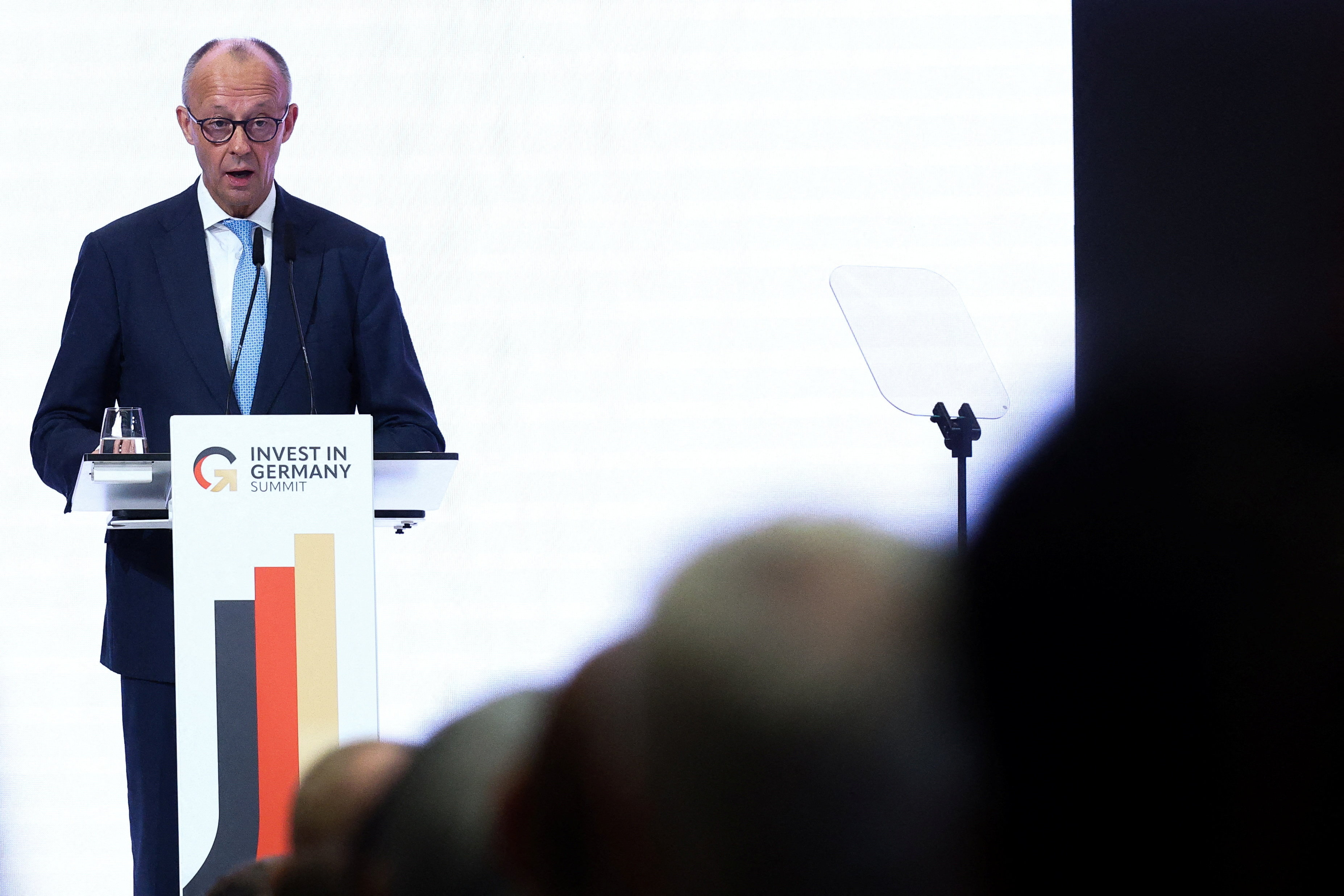
德国总理弗里德里希·默茨于周二在柏林向投资者推介欧洲最大经济体时表示,德国正在对防务、半导体和人工智能等领域进行大量投资,以提高其长期生产力和经济主权。
Germany is investing heavily in sectors including defence, semiconductors and AI to boost its long-term productivity and economic sovereignty, Chancellor Friedrich Merz said on Tuesday as he pitched Europe's largest economy to investors in Berlin.
默茨在与能源企业“瓦尔肯能源”和防务公司赫尔辛等企业代表共同出席的活动上表示:“我们的目标是为你们创造最佳的参数。”
"Our goal is to create the best possible parameters for you," said Merz at the event with representatives from companies including energy firm Vulcan Energy and defence company Helsing.
由于高昂的价格、官僚主义繁文缛节以及迟缓的经济复苏拖累了德国的传统工业基础,默茨正试图吸引新兴产业的投资。
Merz is seeking to attract investment from emerging industries as high prices, red tape and a sluggish recovery weigh on Germany's traditional industrial base.
默茨指出,得益于增长增强、外国直接投资上升以及初创企业创建增加,德国已经从其政策中看到了积极的经济效应。
Germany is already seeing positive economic effects from its policies, said Merz, pointing to stronger growth, rising foreign direct investment and increased startup creation.
他重点介绍了“为德国制造”倡议,根据该倡议,德国企业已承诺到2028年投资超过8000亿欧元(约合8984.0亿美元)。
He highlighted the Made for Germany initiative, under which German companies have pledged to invest over €800 billion euros ($898.40 billion) by 2028.
默茨表示,更深层次的欧洲经济一体化将帮助企业开拓欧盟单一市场,并承诺尽快推出欧盟公司(EU Inc.)这一统一的欧洲企业框架。
Merz said deeper European economic integration would help companies tap the European Union's single market and pledged to introduce EU Inc., a harmonised European corporate framework, as soon as possible.
作为加强技术竞争力更广泛努力的一部分,他补充说,德国的目标是到2030年将其人工智能计算能力提高到四倍。
Germany aims to quadruple its artificial intelligence computing capacity by 2030 as part of a broader push to strengthen technological competitiveness, he added.
为了支持这一目标,默茨表示他正亲自在“欧洲层面参与”,以确保人工智能监管“是敞开大门,而不是在事情发生之前就把门关上。”
To support that goal, Merz said he was personally "engaged on the European level" to ensure AI regulation "is opening the door and not closing the door before it happens."