中国的高速经济增长——它提高了国内收入并重塑了海外市场——曾经看起来像自然规律一样不可避免。
China’s breakneck economic growth – which lifted incomes at home and reshaped markets abroad – once seemed as inevitable as a law of nature.
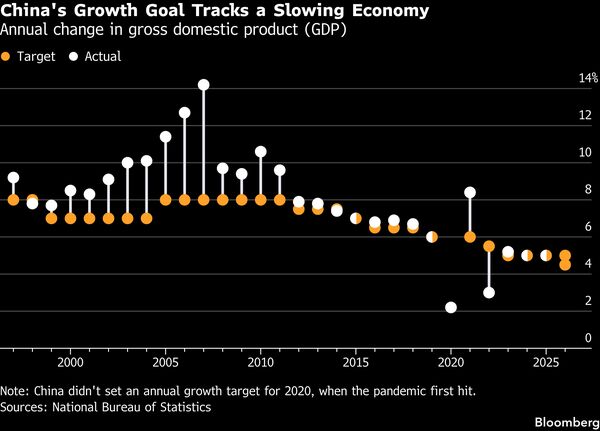
这一假设如今正在接受考验。3月,中国政府将2026年的官方增长目标下调至4.5%至5%之间——这是自1991年以来最不具雄心的目标,与早期几十年的两位数扩张形成了陡峭的反差。
That presumption is now being tested. In March, China’s government lowered its official 2026 growth target to between 4.5% and 5% — its least ambitious goal since 1991 and a steep comedown from the double-digit expansion of earlier decades.
得益于出口繁荣,中国经济目前有望实现2026年的目标。但这一亮点掩盖了国内深层次的问题,包括消费疲软、房地产长期低迷和劳动力萎缩。其庞大的经济体量也是原因之一:经济体越大,要以超常速度持续扩张就越困难。
Thanks to its export boom, China’s economy is now on track to meet its 2026 target. But this bright spot obscures deep-seated problems at home, including weak consumption, a prolonged property slump and a shrinking workforce. Its sheer size is part of the story too: The bigger the economy, the harder it is to keep expanding at an outsized pace.
几十年来,住房一直是中国最强劲的增长引擎之一,使房地产行业成为家庭财富的关键储藏库。
For decades, housing was one of China’s most powerful growth engines, turning the property sector into a key store of household wealth.
然而,过去几年里,房地产行业陷入了低迷。2020年对开发商过度借贷的监管收紧,随后是疫情封控扼杀了销售并打击了家庭信心,暴露了长期债务驱动繁荣的脆弱性。随之而来的是一个恶性循环:需求下降、融资收紧、烂尾楼增多,该行业至今未能从中复苏。
Over the last few years, however, the property sector has slid into a downturn. A regulatory crackdown on excessive developer borrowing in 2020, followed by pandemic lockdowns that crushed sales and dented household confidence, exposed the fragility of a long, debt-fueled boom. What has followed is a vicious cycle of falling demand, tighter financing and unfinished projects from which the sector has yet to recover.
据经济学家估算,全国房价已从2021年峰值暴跌约30%,侵蚀了家庭财富。潜在买家选择观望,担心价格进一步下跌,不愿为可能持续贬值的资产承担长期债务。现有房主往往无法在不亏损的情况下出售。与此同时,负债累累的开发商背负着大量未售公寓、停工项目和不断攀升的负债,导致许多开发商违约。
Home prices have plummeted about 30% nationwide from their 2021 peak, according to economists’ estimates, eroding household wealth. Prospective buyers have stayed on the sidelines, wary of further price declines and reluctant to take on long-term debt for assets that may keep losing value. Existing homeowners are often unable to sell without taking a loss. Meanwhile, heavily indebted developers are saddled with unsold apartments, stalled projects and mounting liabilities, pushing many to default.
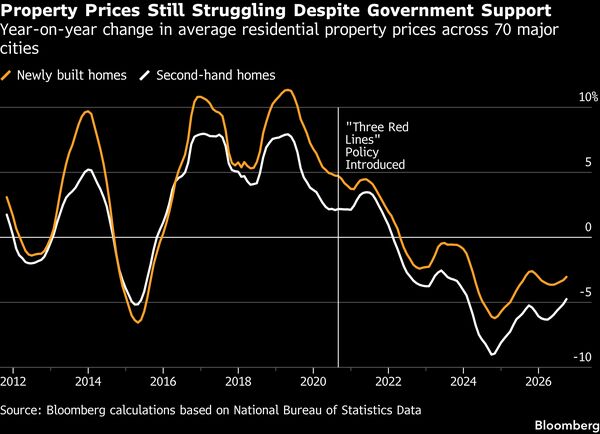
自2024年年中以来,政府一直试图为房地产行业提供救命稻草。它下调了存量房贷利率,放宽了一线城市的购房限制,并降低了交易税费。这些措施带来了短暂的企稳,但尚未扭转下行趋势。
Since mid-2024, the government has tried to throw the property sector a lifeline. It cut mortgage rates on existing loans, eased purchase restrictions in major cities and lowered transaction taxes. The measures offered brief stabilization but have yet to reverse the downturn.
据彭博经济研究估算,在巅峰时期,房地产及相关行业占国内生产总值的比重高达四分之一。随着中国政府转向高技术制造业和绿色产业,这一比重预计将在2030年降至15%以下。然而,这些行业更加资本密集,创造的就业岗位较少,难以取代房地产成为广泛经济增长的驱动力。
At their peak, real estate and related industries accounted for as much as a quarter of gross domestic product, according to Bloomberg Economics. That share is set to fall to well below 15% by 2030 as China’s government pivots toward high-tech manufacturing and green industries. Those sectors, however, are more capital-intensive and generate fewer jobs, making it hard for them to replace property as a driver of broad economic growth.
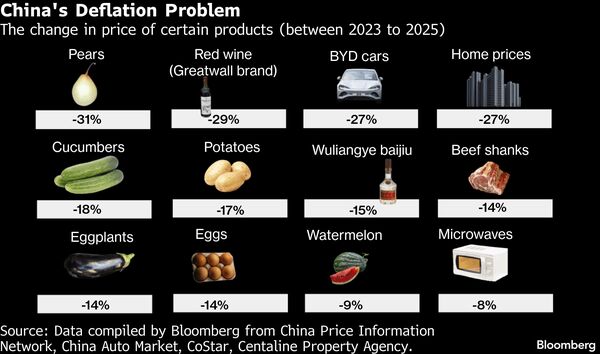
中国持续多年的房地产低迷,让家庭感到财富缩水,在消费上更加谨慎。自2023年以来,各类商品和服务的价格持续疲软,而汽车、建材等大宗商品的销售在过去一年里大幅下滑。
China’s years-long property slump have left households feeling poorer and more cautious about spending. Prices across a wide range of goods and services have remained weak since 2023, while sales of big-ticket items such as cars and building materials fell markedly over the past year.
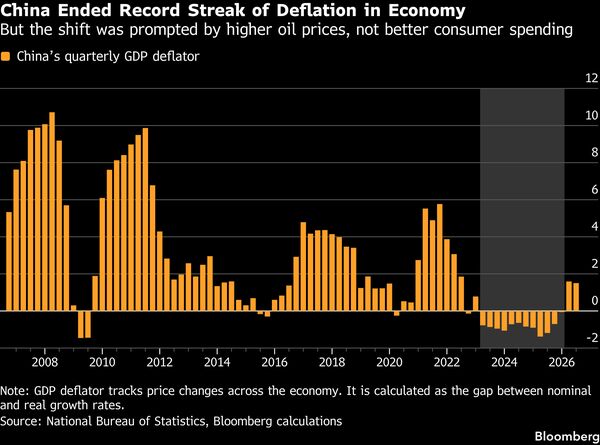
表面上看,中国最新的通胀数据讲述了一个更积极的故事:经济今年早些时候走出了持续三年的通缩。但价格回升很大程度上反映了进口大宗商品成本上升,包括美伊冲突后的石油价格,以及全球人工智能热潮推动下的芯片价格,而非消费需求的广泛复苏。
On the surface, China’s latest inflation figures tell a more positive story: The economy emerged from three years of deflation earlier this year. But much of the pickup in prices reflects higher costs for imported commodities, including oil following the US-Israel war with Iran, and chips amid the global artificial intelligence boom, rather than a broad recovery in consumer demand.
中国企业间的残酷竞争加剧了价格下行压力,政府将这一现象称为“内卷”。官员们试图遏制从电动汽车到外卖等各行业的恶性价格战,希望帮助企业重建利润空间、提高工资,最终支撑消费。但由于消费者信心依然疲弱,这些努力迄今成效有限。
Cutthroat competition among Chinese companies has added to the downward pressure on prices, a phenomenon the government refers to as “involution.”Officials have tried to curb destructive price wars across industries from electric vehicles to food delivery, hoping to help companies rebuild margins, lift wages and ultimately support consumption. But with consumer confidence still weak, those efforts have so far had limited success.
中国人口约为14亿,正以数十年来未见的速度收缩——这对于一个长期以庞大人口规模著称的国家来说,是一个鲜明的逆转。
China’s population, at about 1.4 billion, is shrinking at a pace not seen in decades – a stark reversal for a country long defined by its sheer demographic heft.
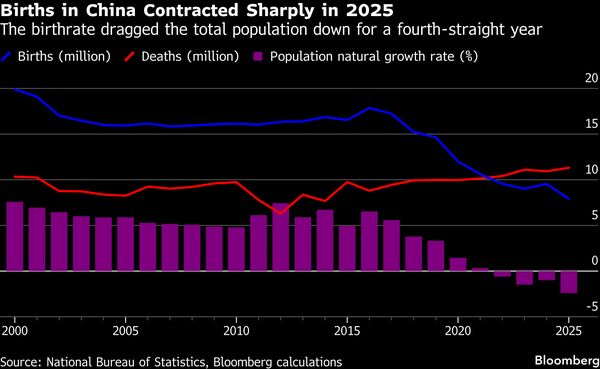
2025年出生人口降至793万,为1949年以来最低水平。除2024年因农历龙年——传统上被视为生育吉年——出现短暂回升外,出生人口自2016年以来连年下降。
Births fell to 7.93 million in 2025, the lowest number since at least 1949. They have dropped every year since 2016, aside from a brief uptick in 2024 that may have reflected the Year of the Dragon in the Chinese calendar, which is traditionally viewed as an auspicious time to have a child.
中国劳动年龄人口——即16至59岁人群——也在持续萎缩。2025年,该年龄段占总人口比重约为61%,较十年前的70%以上大幅下降。随着人口快速老龄化,劳动年龄人口与65岁及以上老年人口的比例目前约为4比1,预计将在二十年内减半。
China’s working-age population – those aged 16 to 59 – has also been contracting. In 2025, that age group made up about 61% of the total, down from more than 70% a decade earlier. With the population aging rapidly, the ratio of working-age people to those over 65 – currently about four to one – is projected to halve within two decades.
劳动力规模缩小与人口快速老龄化,对从消费需求、制造业产出到技术创新等各方面均产生影响,拖累中国长期增长潜力。
A smaller workforce and a rapidly aging population have implications for everything from consumer demand to manufacturing output and technological innovation, weighing on China’s long-term growth potential.
北京押注通过自动化实现的生产率提升可抵消劳动力减少。国家主席习近平强调,对科技——特别是生物技术、人工智能、半导体和机器人技术——的投资,是推动中国经济增长的核心。
Beijing is betting that productivity gains through automation can offset the loss of workers. President Xi Jinping has emphasized that investment in science and technology – particularly biotech, AI, semiconductors and robotics – is central to driving China’s economic growth.
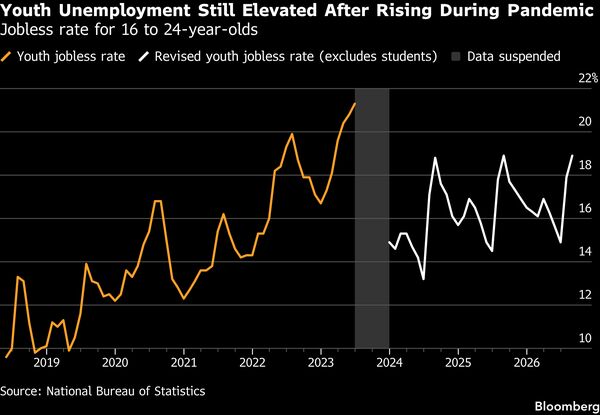
尽管总体失业率大体保持稳定,但随着数百万新毕业生进入低迷的就业市场,青年失业率飙升。这些毕业生主要寻求白领工作,导致其技能与仍以制造业为主导的经济所需之间出现结构性错位。
While overall unemployment has remained broadly stable, youth unemployment has surged as millions of new graduates enter a softer job market. These graduates primarily seek white-collar jobs, resulting in a structural mismatch between their skills and what’s needed in an economy still dominated by manufacturing.
就业不安全感与疲弱的工资增长,增加了提振消费的难度。对收入前景感到不确定的家庭更倾向于储蓄而非消费,强化了更广泛的经济放缓趋势。
Job insecurity and weak wage growth are complicating efforts to revive consumption. Households uncertain about their income prospects are more likely to save than spend, reinforcing the broader slowdown.
自动化的快速普及增添了另一层压力。机器人技术和人工智能在制造业和服务业的应用,已在重塑劳动力需求。
The rapid adoption of automation adds another layer of pressure. Already, the use of robotics and AI in manufacturing and services is reshaping labor demand.
出口一直是中国经济的一大亮点。2018年至2025年间,中国对外出货激增近52%,而今年前九个月的出货量已比2025年同期高出21%。即使美国对中国商品的关税不断攀升——2025年初一度高达145%,削减了出口商来自美国的收入——发往欧洲和新兴市场(尤其是东南亚)的出货量在很大程度上填补了这一缺口。
Exports have been a bright spot in China’s economy. Between 2018 and 2025, Chinese shipments overseas surged almost 52%, and in the first nine months of this year they were already 21% higher than in the same period of 2025. Even as US tariffs on Chinese goods climbed – reaching as high as 145% at one point in early 2025 and denting exporters’ revenue from the US – shipments to Europe and emerging markets, particularly in Southeast Asia, absorbed much of the slack.
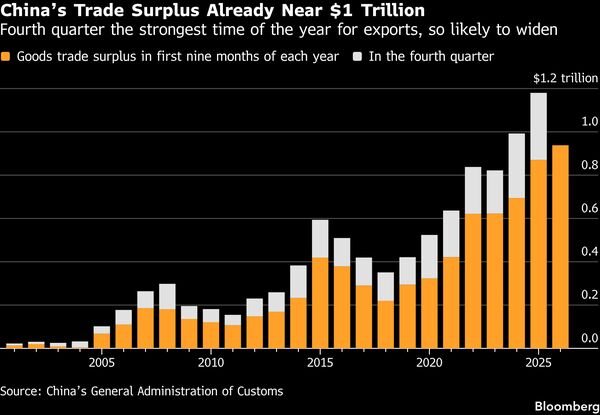
中国制造商也已向价值链上游迈进,销售更多高端产品,如电动汽车、太阳能电池板和工业机械。这帮助将中国的贸易顺差推至2025年创纪录的1.2万亿美元,且今年顺差进一步扩大。
Chinese manufacturers have also moved up the value chain, selling more higher-end products such as electric vehicles, solar panels and industrial machinery. That helped push China’s trade surplus to a record $1.2 trillion in 2025, and it has widened even further this year.
全球人工智能热潮提供了另一股顺风,因为对人工智能和数据中心的投资激增,推动了对技术和工业设备的需求。中国的高技术制造业随之迅速扩张:2026年前九个月,3D打印设备、锂离子电池和工业机器人的产量分别同比增长62.5%、39.5%和29.1%。
The global artificial intelligence boom has provided another tailwind, as surging investment in AI and data centers fuels demand for technology and industrial equipment. China’s high-tech manufacturing sector has expanded rapidly alongside that boom: Production of 3D printing devices, lithium-ion batteries and industrial robots rose 62.5%, 39.5% and 29.1%, respectively, in the first nine months of 2026 from a year earlier.
但依赖出口支撑经济增长也伴随风险。随着越来越多除美国以外的国家对激增的中国进口商品进行反制,贸易紧张局势正在升级。最近,欧盟就混合动力汽车谈判达成进口配额,并正考虑推出新的贸易措施,如果紧张局势升级,这些措施将允许欧盟切断中国通往欧洲市场的渠道。这引发了一个问题:中国的出口还能支撑其经济重担多久。
But relying on exports to sustain economic growth carries risks. Trade tensions are mounting as a growing number of countries beyond the US push back against surging Chinese imports. Most recently, the European Union negotiated import quotas on hybrid cars and is also considering introducing new trade measures that would allow it to cut China off from the European market if tensions escalate. This raises questions about how long China’s exports will be able to shoulder its economic load.