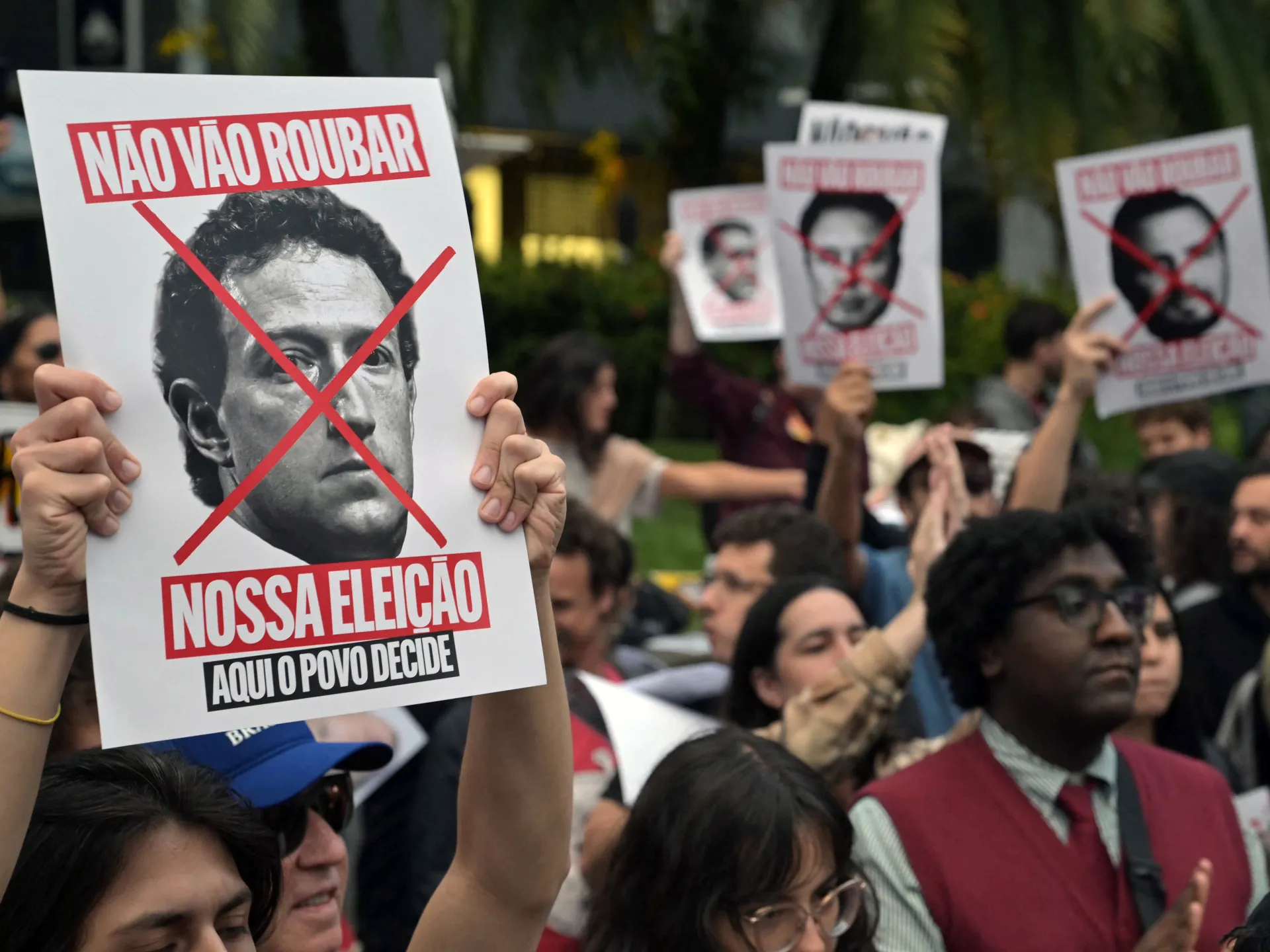
在角逐巴西下一任总统的竞选中,最后两名候选人不仅在集会上,还在网上争取选民。
In the race to be Brazil’s next president, the final two candidates are appealing to voters not only at rallies but online as well.
周日,现任总统路易斯·伊纳西奥·卢拉·达席尔瓦将与右翼参议员弗拉维奥·博尔索纳罗在选举最后一轮投票中交锋。
On Sunday, incumbent President Luiz Inacio Lula da Silva will face right-wing Senator Flavio Bolsonaro in the final round of the election.
这场竞选预计将十分胶着。但在最后几天,关于数字竞技场是否为两名候选人提供了公平竞争环境的问题一直存在。
The race is expected to be tight. But in its final days, questions have festered over whether the digital arena has been a level playing field for the two candidates.
拥有Facebook、WhatsApp和Instagram的社交媒体巨头Meta,此前曾面临巴西最高选举机构——选举高等法院(TSE)的指控,称其压制了卢拉的内容,并偏向宣传博尔索纳罗的材料。
The social media giant Meta, which owns Facebook, WhatsApp and Instagram, has faced accusations before Brazil’s top election authority, the Superior Electoral Court (TSE), that it suppressed Lula’s content and favoured material promoting Bolsonaro.
Meta的产品在巴西最受欢迎的社交媒体平台中名列前茅,其网站上的政治广告支出正以惊人的速度增长。
Meta’s products rank among the most popular social media platforms in Brazil, and political ad spending on its sites has grown at a breakneck pace.
巴西新闻媒体G1的分析发现,Meta在2026年直接竞选支出中至少获得了2.88亿巴西雷亚尔(5700万美元),是2022年总统选举期间的两倍。
alysis from the Brazilian news outlet G1 found that Meta received at least 288m Brazilian reais ($57m) in direct campaign spending in 2026, double what it received during the 2022 presidential race.
这一增长标志着巴西选举方式的转变。据南丹麦大学数字民主中心研究员安德烈·K·罗达尔特表示,目前超过76%的巴西选民在线上获取新闻。
That increase marks a shift in how Brazil runs elections. More than 76 percent of Brazilian voters now get their news online, said Andre K Rodarte, a researcher at the Digital Democracy Centre at the University of Southern Denmark.
随着社交媒体超越传统广告,罗达尔特解释说,越来越多的政客正在使用挑衅性的病毒式信息与选民建立联系。
With social media eclipsing traditional advertising, Rodarte explained that a growing class of politicians is using provocative, viral messaging to connect with voters.
他指出,右翼人物尼科拉斯·费雷拉和左翼活动家埃里卡·希尔顿等网络红人的成功,他们今年各自以创纪录的选票连任巴西众议院议员。
He pointed to the success of online influencers like right-wing personality Nikolas Ferreira and left-wing activist Erika Hilton, who each were reelected this year to Brazil’s Chamber of Deputies with record numbers of votes.
“你看到的是那些从信息生产者角色转向政治领域的人,他们正逐渐获得更多的权力和选票,”罗达特(Rodarte)对半岛电视台(Al Jazeera)表示。“如果他们所面对的媒体环境就是这样,那么他们就不太可能改变自己的竞选方式或政治风格。”不过,批评者警告称,这种向在线竞选方式的转变使得政治候选人完全受制于大型科技公司的控制及其偏见。
“You are seeing people transitioning from information-producer roles to politics, and they are just getting more and more power, more and more votes,” Rodarte told Al Jazeera. “If this is the media landscape they are dealing with, it’s unlikely they will adopt a different campaign style, or different style of politics.”But critics warn that this shift to online campaigning has put political hopefuls at the mercy of Big Tech corporations and their biases.
据研究巴西极右翼政治的圣卡塔琳娜联邦大学(Federal University of Santa Catarina)的人类学家莱蒂西亚·塞萨里诺(Leticia Cesarino)介绍,巴西对在线竞选的依赖始于2018年,当时杰尔·博索纳罗(Jair Bolsonaro)当选总统。杰尔·博索纳罗是一位极右翼领导人,也是今年总统大选的热门候选人弗拉维奥·博索纳罗(Flavio Bolsonaro)的父亲。
Effort to regulate In Brazil, the reliance on online campaigning first took off in 2018, with the election of President Jair Bolsonaro, according to Leticia Cesarino, an anthropologist at the Federal University of Santa Catarina who studies far-right politics online. Jair, a far-right leader, is the father of this year’s presidential frontrunner, Flavio Bolsonaro.
八年前杰尔首次参选总统时,他的竞选纲领承诺采取严厉的打击犯罪措施,并倡导回归传统的基督教家庭价值观;他通过简短的社交媒体帖子来传播这些理念。在2019年的就职典礼上,他的支持者们齐声高呼“Facebook!”和“WhatsApp!”,以表达对他在社交媒体上影响力的支持。
When Jair first ran for president eight years ago, his platform promised tough-on-crime tactics and a return to traditional Christian family values, which he spread through bite-sized social media posts. At his 2019 inauguration supporters chanted “Facebook!” and “WhatsApp!” in unison to show their support for his online presence. “Since then, the left and pro-democracy actors have slowly come to recognise the importance of such media for elections and learned how to deploy it strategically,” Cesarino told Al Jazeera.
“从那以后,左翼和民主派逐渐认识到这些媒体工具在选举中的重要性,并学会了如何战略性地利用它们,”塞萨里诺告诉半岛电视台。“然而,在数字传播方面,他们仍然远远落后于极右翼势力——因为‘注意力经济’的运作逻辑本质上有利于那些充满恐慌情绪、观点简单化且带有情感色彩的极右翼言论。”不过,在任期间,杰尔·博索纳罗却利用自己的社交媒体平台质疑巴西选举制度的公正性。
“They still lag significantly behind the far right when it comes to digital communication, though, especially since the kind of logic that underlies the attention economy is structurally beneficial to the kind of alarmistic, simplistic, affect-laden far-right discourse.”But during his presidential term, Jair used his social media platforms to cast doubt on the accuracy of Brazil’s election system.
2022年大选落败后,雅伊尔持续散布选举舞弊的虚假言论。其支持者最终于2023年1月8日,在卢拉就职后,冲击首都巴西利亚的三座建筑——国会、最高法院和总统府。
After losing the 2022 election, Jair continued to spread false claims that the vote had been rigged. His supporters ultimately stormed three buildings – Congress, the Supreme Court and the presidential palace – in the capital, Brasilia, on January 8, 2023, after Lula was sworn in.
事后,巴西最高选举法院(TSE)裁定雅伊尔滥用职权破坏选举,禁止其担任公职八年。
In the aftermath, the TSE ruled that Jair had abused his position to undermine the election and prohibited him from holding public office for eight years.
他目前因策划政变另被判处27年监禁。他同时也被禁止使用社交媒体。
He is currently serving a separate 27-year sentence for plotting a coup. He is also barred from using social media.
“这一丑闻‘确实让许多决策者和政治精英震惊并采取行动’”,倡导科技公司承担更多问责的联盟组织Eko的竞选总监维基·怀亚特表示。
The scandal “really shocked a lot of policymakers and political elites to act”, said Vicky Wyatt, a campaign director at Eko, a coalition advocating for more accountability from tech companies.
尽管巴西早已通过部分数据隐私和数据保护法律,但在雅伊尔执政后,领导人又增设了一系列新法规。
Although Brazil had already passed some data privacy and data protection laws, leaders added a slew of new regulations after Jair’s presidency.
巴西法律如今禁止生成选举候选人的人工智能(AI)形象,同时也要求任何使用AI的政治广告必须附带免责声明。宣扬暴力、仇恨言论或基于性别的歧视内容也被视为违法。
Brazilian law now bans depictions of electoral candidates generated by artificial intelligence (AI), and it also requires any political ads using AI to carry a disclaimer. Content that advocates violence, hate speech or gender-based discrimination is also considered illegal.
只有获得官方竞选授权者,方可在Instagram、Facebook和WhatsApp等平台投放广告。
Only those with official campaign backing are supposed to be able to run ads on platforms like Instagram, Facebook and WhatsApp.
怀亚特表示,该国现在拥有“全球最严格的一些法律,用于规范科技平台上AI使用的护栏”。
The country, said Wyatt, now has “some of the strictest laws in the world when it comes to guardrails around the use of AI on tech platforms”.
但这些法律也引发了抵制。Meta公司一位发言人在给半岛电视台的声明中,将这些限制描述为对言论自由的潜在威胁。
But those laws have been the source of pushback. In a statement to Al Jazeera, a Meta spokesperson framed the restrictions as a potential threat to free speech.
“Meta早已警告,巴西严格的数字内容规则增加了过度执法的风险,并威胁言论自由,”该公司表示。
“Meta has long warned that Brazil’s strict digital-content rules increase the risk of over-enforcement and threaten free expression,” the company said.
Meta被指无视法规 科技公司如Meta本应向监管机构说明其遵守巴西法律的计划。然而,证据表明Meta并未履行其义务。
Meta accused of flouting regulations Tech companies like Meta are supposed to walk regulators through their plans to comply with Brazil’s laws. However, evidence suggests Meta has not met its obligations.
CTRL+Z执行董事丹妮埃拉·达席尔瓦表示,一些竞选协调员发现,他们的帖子没有像预期那样被广泛分享。
Daniela da Silva, executive director of CTRL+Z, a nonprofit digital rights group, said some campaign coordinators have found their posts are not being shared as widely as they expected.
“他们发现,自选举开始以来,自然触达率有所下降,需要付费推广帖子,”达席尔瓦告诉半岛电视台。她补充说,一些协调员报告称,在Meta上进行此类推广的预算中,有超过70%用于此。
“They find their organic reach has decreased since the beginning of the elections, and they need to boost their posts,” da Silva told Al Jazeera. She added that some coordinators reported spending more than 70 percent of their budgets for such boosts on Meta.
截至10月,CTRL+Z表示,今年已收到1100起账号被封禁或触达受限的报告。
As of October, CTRL+Z says it has collected 1,100 reports this year of accounts being taken down or having their reach restricted.
它认定,“这些案例主要与支持卢拉的个人资料有关”,卢拉本人上个月的广告账号也曾被短暂暂停。
It determined that “the cases are mainly related to profiles supporting Lula”, who saw his own advertising account briefly suspended last month.
卢拉竞选团队引用了Eko、CTRL+Z及其他团体的研究,向选举法院请愿,要求其干预并执行要求对政治竞选一视同仁的规则。
Lula’s campaign has cited studies by Eko, CTRL+Z and other groups to petition the TSE to intervene and enforce rules that require equal treatment for political campaigns.
监督团体也质疑,社交媒体平台是否遵守要求其删除虚假信息并限制AI生成内容的法规。
Watchdog groups have also questioned whether social media platforms are complying with regulations that require them to remove false information and restrict AI-generated content.
Eko进行的一项测试要求Meta批准15条包含AI生成内容的选举季广告,这些内容宣扬暴力和虚假信息。在13个案例中,该社交媒体平台批准了这些广告。
One test, conducted by Eko, asked Meta to approve 15 election-season ads that included AI-generated content promoting violence and disinformation. In 13 cases, the social media platform approved them.
在另一项研究中,里约热内卢联邦大学的研究小组NetLab发现,Meta允许超过1600条政治广告在其服务上投放,尽管这些广告是由境外公司付费的。
In another study, NetLab, a research group at the Federal University of Rio de Janeiro, found that Meta had allowed more than 1,600 political ads to run on its services, even though they were paid for by companies outside the country.
NetLab研究主管德博拉·戈梅斯·萨莱斯表示,该组织得出结论,恶意行为者似乎能够提交广告并将其标记为非政治广告,从而使这些广告在Meta的服务上几乎不受审查地投放。
The group concluded that malicious actors appeared able to submit ads and tag them as non-political, allowing them to run on Meta’s services with little scrutiny, said Debora Gomes Salles, NetLab’s research head.
Meta从这些广告中获得了200万巴西雷亚尔(约合40万美元),据萨莱斯所知,这些广告旨在该国散布虚假信息。
Meta made 2 million Brazilian reais ($400,000) from those ads, which, as far as Salles could tell, were meant to sow disinformation in the country.
例如,有些人告诉选民可以通过一个会收集他们个人信息的网站进行在线投票。但萨莱斯指出,在巴西,完全不允许在线投票。
Some told voters, for instance, that they could cast ballots online through a website that collected their private data. Voting online is not allowed at all in Brazil, Salles pointed out.
“Meta实际上无法阻止这类行为的发生;即便该公司采取了措施并对相关内容进行了审核,这些广告仍然为公司带来了收入,而且这些广告已经传播给了数百万巴西人,”萨莱斯说。“损害已经造成了。”Meta多次否认在其平台上偏袒任何一位今年的总统候选人。
“Meta wasn’t really able to prevent these operations from happening, and even when it did do something and moderated this content, these ads were still a source of revenue for the company, and they already reached millions of Brazilians,” Salles said. “The damage was already done.”Meta has repeatedly denied favouring any of this year’s presidential candidates on its platforms.
在给半岛电视台的声明中,该公司的一位发言人表示,卢拉的竞选广告被暂时下架是由于技术故障所致。
In a statement to Al Jazeera, a spokesperson said that technical errors were to blame for incidents like Lula’s campaign ads being taken offline temporarily.
该公司还反驳了《Eko》杂志的报道,该报道指出了Meta在审核竞选广告方面的不足。发言人称,Meta的系统已经正确识别出了那些涉及社会问题、选举或政治内容的广告。
The company also disputed the Eko report that suggested shortcomings in how it moderates campaign s. The spokesperson said Meta’s system had correctly identified “content about social issues, elections or politics”.
“我们删除了违反我们政策的广告,”发言人说。“该报告仅选取了我们广告库中极少的一部分样本,无法反映我们实际工作的规模。”
“We removed ads that violated our policies,” the spokesperson said. The report’s small sample size, “out of millions in our Ad Library, does not reflect the scale of this work”.
研究极右翼网络现象的人类学家塞萨里诺表示,数字平台很可能会继续传播有问题的内容。她补充说,这类内容的流行助长了全球极右翼势力的崛起。
Cesarino, the anthropologist who studies the far right online, said digital platforms will likely continue to spread problematic content. The popularity of such content, she added, has contributed to the rise of far-right figures across the globe.
“极右翼‘民粹主义者’的崛起并非偶然——比如巴西的贾伊尔·博索纳罗、美国的唐纳德·特朗普以及印度的纳伦德拉·莫迪,他们的崛起几乎都发生在同一时期,”塞萨里诺对半岛电视台说道。
“It is not by chance that other far-right ‘populists’ rose at around the same time as Jair Bolsonaro in Brazil, such as Donald Trump in the US or Narendra Modi in India,” Cesarino told Al Jazeera.