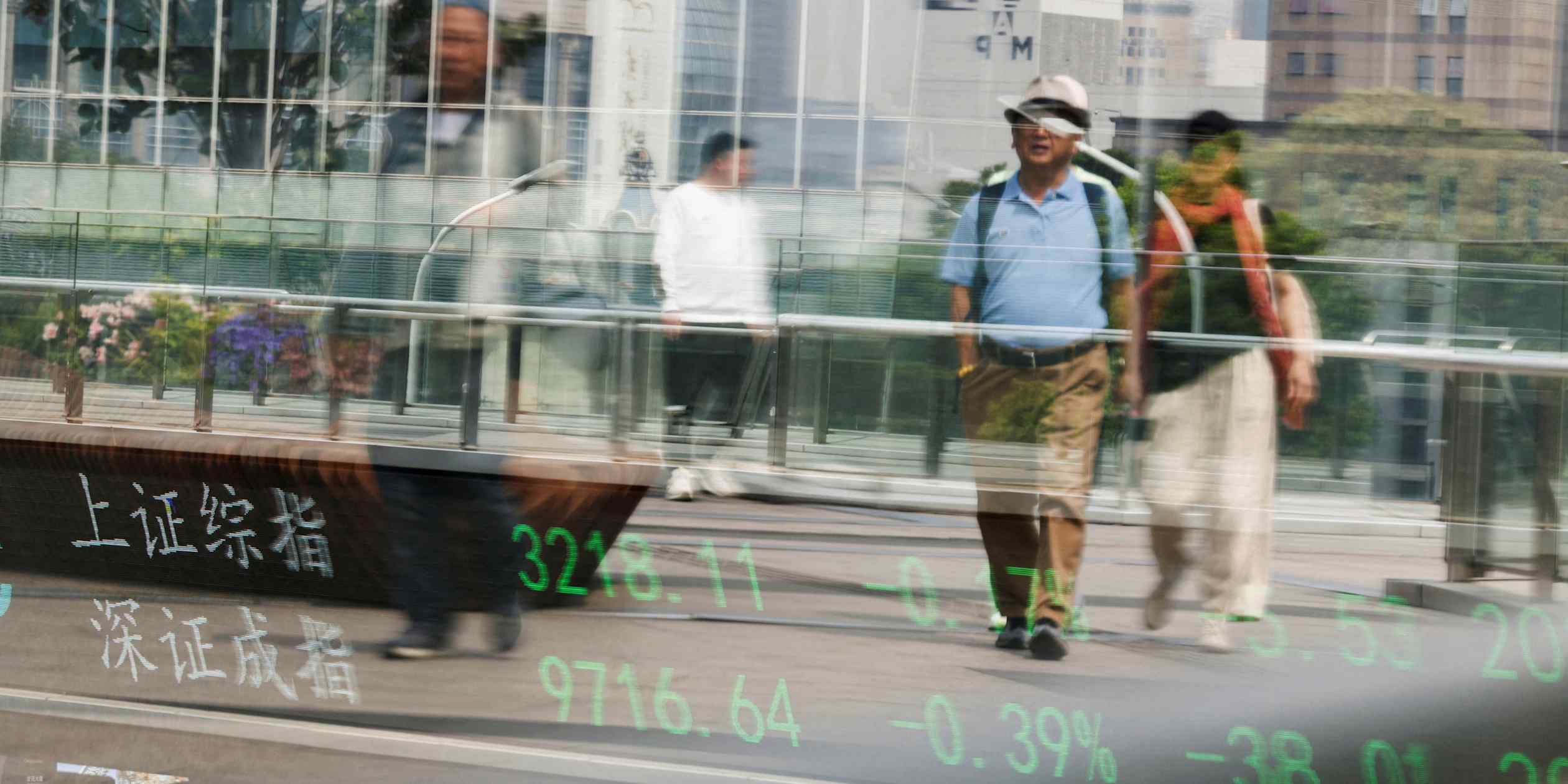
香港/上海——分析人士称,中国国有投资基金周五干预股市,此前股价跌入熊市区间,投资者越来越质疑,中国备受炒作的人工智能产业是否能支撑高估值,并抵消更广泛的经济困境。
HONG KONG/SHANGHAI -- China's state-owned investment funds intervened in the stock market on Friday, analysts said, after shares slid into bear territory as investors increasingly question whether the country's much-hyped artificial intelligence sector can justify lofty valuations and offset broader economic troubles.
周五早盘遭遇广泛抛售后,内地上市股票周五下午强劲反弹。追踪沪深两市权重股的基准沪深300指数早盘创下15个月新低,收盘上涨1.7%。追踪科创板上市股票的上海科创板综合指数一度下跌4.5%,但收盘时转为上涨3.7%。
Mainland-listed stocks rebounded strongly Friday afternoon after they were hit with a broad selloff earlier in the day. The benchmark CSI 300 Index, which tracks heavyweight listings in Shanghai and Shenzhen, closed 1.7% higher after hitting a fresh 15-month low in the morning. Shanghai's STAR Composite Index, which tracks stocks listed on the tech-focused STAR market, fell 4.5% at one point but swung to a 3.7% gain at the close.
包括沪深300指数在内的多个指数在下午转为上涨,此前追踪深圳创业板指数的交易所交易基金出现异常强劲的买盘。中国“国家队”国有投资者经常购买此类基金以稳定市场。本月早些时候沪深300交易所交易基金出现异常资金流入,引发了关于国家购买的猜测。
Several indexes, including the CSI 300, swung into positive territory in the afternoon after unusually strong purchases of an exchange-traded fund tracking Shenzhen's ChiNext index. China's "national team" of state investors often buys such funds to stabilize the market Unusual inflow into a CSI 300 ETF earlier this month had sparked speculation about state buying.
法国巴黎银行亚太股票衍生品策略师刘思琦表示,交易所交易基金资金流入量居高不下,表明“国家队抄底买盘重新加速”,此前7月出现了一波买入活动。
Scarlett Liu, Asia Pacific equity derivatives strategist at BNP Paribas, said the elevated ETF inflows indicated a "reacceleration in dip-buying by the national team", following a wave of buying activity in July.
周四,沪深300指数从6月的近期高点下跌超过20%,进入技术性熊市区间,表明投资者情绪恶化,可能面临长期下行。中国主要股票指数近几天的急剧下跌与一场全球抛售潮同时发生,这场抛售潮已从美国科技股蔓延至亚洲芯片制造商,原因是人们对人工智能泡沫和过度借贷的新担忧。
On Thursday, the CSI 300 entered technical bear territory after dropping over 20% from its recent high in June, signaling deteriorating investor sentiment and a possible prolonged downturn. The sharp decline in China's major stock indexes in recent days coincided with a global sell-off that has spread from U.S. tech stocks to Asia's chipmakers, sparked by fresh worries about an AI bubble and excessive borrowing.
与人工智能(AI)相关的公司受到了最严重的冲击。Eoptolink Technology和Suzhou TFC Optical Communication这两家为AI数据中心提供光收发器的供应商,在周五上午的交易中股价跌幅均超过了5%;国有芯片制造商SMIC的股价也下跌了3%。由于基准原油价格达到了一个月以来的最高水平,整个化工板块的股价普遍下跌,Hengyi Petrochemical的股价同样下跌了5%。
AI-related companies were among the hardest hit. Eoptolink Technology and Suzhou TFC Optical Communication, suppliers of optical transceivers used in AI data centers, fell over 5% during Friday morning trading. State-owned chipmaker SMIC fell 3%. Hengyi Petrochemical was down 5% amid broader selling of chemical stocks as benchmark crude prices reached their highest level in a month.
在午休期间的股票交易所文件中,Eoptolink和Suzhou TFC均表示自己拥有“充足的”订单积压。Eoptolink还宣布了一项高达10亿元人民币(1.5亿美元)的股票回购计划。周五,香港恒生指数在周四跌至三个月低点后反弹了1.5%;SMIC在香港上市的股票在下午的交易中股价上涨了1%,此前一天曾下跌了4.6%,这得益于大陆市场的积极情绪传导效应。全球最大的光收发器制造商Zhongji Innolight的股价也扭转了下跌趋势,上涨了2.7%。
In stock exchange filings during the midday lunch break, Eoptolink and Suzhou TFC stressed that they have "strong" order backlogs. Eoptolink announced a share buyback plan of up to 1 billion yuan ($150 million) Hong Kong's Hang Seng index gained 1.5% on Friday after it fell to a three-month low on Thursday. SMIC's Hong Kong-listed shares rose 1% in afternoon trading after dropping 4.6% earlier in the day, as more positive mood spilled over from the mainland markets. Zhongji Innolight, the world's largest optical transceiver maker, also reversed course and rose 2.7%.
在中国股市出现这次暴跌之前,其上涨势头就已经开始减弱。尽管有几家备受期待的芯片制造商和机器人公司的上市提振了市场情绪,但自8月以来,该指数已累计下跌超过15%;以科技股为主的STAR指数自今年年初以来已经下跌了超过40%。
China's stock market had already lost steam before the latest global rout. Despite a few highly anticipated listings of chipmakers and robotics companies boosting sentiment, the benchmark index has lost over 15% since August. The tech-heavy STAR index has shed over 40% since the beginning of this year.
RBC财富管理公司的投资组合策略师Nicholas Gwee在周五的报告中指出,股市的低迷主要是由于“财政刺激措施不足以及企业盈利表现令人失望”。他写道:“如果没有大规模的刺激计划,那些因早期对AI技术的乐观预期以及政府支持而上涨的股票价格,现在很可能会继续面临调整。”Gwee认为市场波动可能会持续到2027年初,而且仅靠政府的扶持措施可能不足以推动股市复苏。
The slump is due to "insufficient fiscal stimulus and disappointing earnings," Nicholas Gwee, a portfolio strategist at RBC Wealth Management, wrote in a Friday note. Without major stimulus packages, "valuations that surged on early AI optimism and state support now appear vulnerable to further corrections." Gwee said the volatility could persist into early 2027 and state-backed stabilization may not be enough to sustain a market recovery.
周一,中国证券监督管理委员会宣布批准了首批18只主动管理的交易所交易基金(ETF),这一举措被广泛视为提振投资者信心、吸引长期资金进入股市的重要举措。
On Monday, the China Securities and Regulatory Commission announced the approval of the country's first batch of 18 actively managed exchange-traded funds, widely seen as a move to shore up investor confidence and attract long-term capital into the equity market.
BNP的刘女士也对政府干预支撑市场的措施能否长期持续表示怀疑。她说,这是一个“中期利好信号”,但仅凭这一点可能不足以扭转短期走势,因为全球投资者情绪依然疲弱。对中国经济及其背后公司的更深层担忧依然存在。
BNP's Liu also expressed skepticism on if the state intervention to prop up the market could be sustainable in the long run. It is a "medium-term bullish signal", she said, though this alone may not be enough to reverse the short-term momentum amid weak investor sentiment globally. There are deeper concerns about China's economy and the companies behind the market declines.
“中国公司的关键问题仍然是盈利能力,”摩根士丹利首席中国经济学家邢自强说,“净资产收益率(ROE)等指标依然相对疲弱,这就是为什么我们强调中国升级产业链、向高端工业生产转型的重要性。”邢自强将股价疲软归咎于利润率被压缩,但表示这可能会逐步改善。
"The key issue for Chinese companies is still profitability," said Robin Xing, chief China economist at Morgan Stanley. "Metrics such as return on equity (ROE) remain relatively weak, which is why we emphasize the importance of China moving up the value chain and shifting toward higher-end industrial production." Xing blamed compressed margins for the weak shares but suggested this could gradually improve.
中国工业领域(包括电动汽车及其供应链)的激烈竞争,严重拖累了企业盈利和投资者回报。电池制造商宁德时代(CATL)本周股价大跌,原因是业绩不及预期,以及市场担忧陷入价格战的电动汽车公司会转向更便宜的替代品。
Intense competition in China's industrial sectors, including electric vehicles and the EV supply chain, has weighed heavily on corporate earnings and investor returns. EV battery group CATL's shares plunged this week on worse-than-expected earnings and concerns that EV companies, mired in a price war, are turning to cheaper alternatives.
然而,邢自强表示,“更大的估值压制”仍然是中国国内需求疲弱。“企业收入很大一部分仍与消费活动挂钩,因此当定价能力薄弱、消费者降级消费时,这不可避免地会拖累盈利预期和市场情绪。”中国经济在第三季度获得了一些适度动力,GDP同比增长4.5%。但反映家庭支出的零售额增长,与去年同期相比大幅放缓。
"The bigger valuation overhang," however, remains China's weak domestic demand, Xing said. "A substantial portion of corporate revenue remains tied to consumer activity, so when pricing power is weak and consumers are trading down, that inevitably weighs on earnings expectations and market sentiment." China's economy gained some modest momentum in the third quarter, with GDP growth expanding 4.5% year-on-year. But retail sales growth, a gauge of household spending, slowed sharply compared to the same period last year.
这一现实体现在阿里巴巴和腾讯的股价上。这两家科技集团的股价今年已蒸发超过30%的价值,尽管它们是该国人工智能热潮的直接受益者,但其核心业务仍与国内消费和企业活动紧密相关。
That reality is reflected in Alibaba and Tencent stock. The two technology groups' shares have shed over 30% of their value this year despite being direct beneficiaries of the country's AI boom, as their core businesses remain closely tied to domestic consumption and corporate activity.