
能源冲击正开始在美国经济中蔓延,因为企业将上升的成本转嫁给消费者,这使得美联储稳定通胀的任务变得更加复杂。
The energy shock is starting to spill across the US economy as businesses pass along rising costs, complicating the Federal Reserve’s task of stabilizing inflation.
本周发布的两份报告显示,上个月在包括机票、快递服务和货运卡车在内的类别中出现了显著的价格上涨,因为海外战争推高了油价。目前,杂货货架基本未受影响,但经济学家认为,未来食品价格仍存在上行风险。
Two reports this week showed sharp price increases last month in categories including airfares, delivery services and trucking as wars overseas pushed oil prices higher. The grocery aisle has so far largely been spared, but economists see upside risks to food prices down the line as well.
投资者预计美联储将采取观望态度,等待通胀力量的发展情况,在10月27日至28日的会议上维持利率不变,此前美联储在9月时隔三年多首次上调了借贷成本。但本周的通胀数据有助于强化12月及明年进一步加息的预期。
Investors expect the Fed to wait and see how inflationary forces develop, keeping interest rates on hold at their Oct. 27-28 meeting after raising borrowing costs in September for the first time in more than three years. But this week’s inflation data helped reinforce the outlook for more rate hikes in December and next year.
“所有企业通胀类别都在升温,即使不计入能源因素也是如此。企业在未来几个月将这些成本转嫁给消费者在所难免,”海军联邦信用合作社首席经济学家希瑟·朗(Heather Long)周四在一份备忘录中表示。
“Every category of business inflation was hot, even excluding energy. It’s inevitable that businesses will pass some of these costs along to consumers in the months to come,” Heather Long, chief economist at Navy Federal Credit Union, said Thursday in a note.
劳工统计局周三和周四发布的数据显示,美国9月份消费者物价指数(CPI)涨幅达到五个月来最高,生产者价格涨幅超过四年来最大。
The US consumer price index advanced in September at the fastest pace in five months and producer prices rose by the most in more than four years, Bureau of Labor Statistics data out Wednesday and Thursday showed.
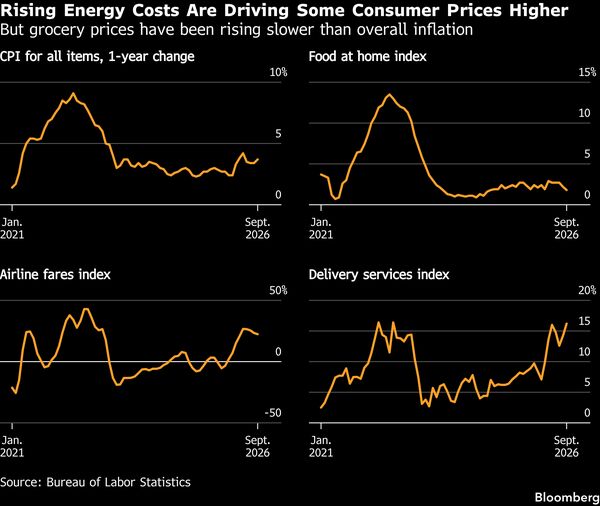
在CPI报告中,更高的燃油成本体现在机票价格等方面,机票价格较去年同期上涨约22%;快递服务价格涨幅达到自2022年9月以来的最高年度增速。
In the CPI report, higher fuel costs were visible in areas such as airline fares, which were up about 22% from a year earlier, and delivery services, which climbed at the fastest annual pace since September 2022.
能源相关成本向更广泛的消费品和服务篮子的传递往往滞后于燃油价格上涨,或者根本不会发生。企业有时会尝试吸收这些上升成本、对冲风险,或在其他地方寻找节约。
Energy-related pass-through to a broader basket of consumer goods and services often lags behind rising fuel prices or doesn’t materialize at all. Businesses sometimes try to absorb the rising costs, hedge against them or find savings elsewhere.
然而,目前这种成本转嫁既体现在数据中,也体现在轶事中。劳工统计局的生产者价格数据显示,货运卡车运输指数在9月较去年同期飙升超过19%,这是四年多来的最大涨幅。
At the moment, however, such pass-through is evident both in the numbers and the anecdotes. BLS data on producer prices showed an index for truck transportation of freight soared more than 19% from a year earlier in September, the most in more than four years.
美联储周三发布的《褐皮书》报告,汇总了央行与企业联络人的轶事,进一步印证了这一主题。
And the Fed’s Beige Book report of anecdotes from the central bank’s business contacts, published Wednesday, reinforced the theme.
《褐皮书》称:“更高的油价渗透至所有地区报告。”报告指出:“企业反映柴油价格上涨,并表示燃油附加费正在将成本增加传递至整个供应链。”经济学家们也一直密切关注食品价格,以寻找燃油和运输成本上升影响消费品的证据。迄今为止,这一情况仍较少见:CPI中的杂货价格在9月实际上略有下降,这得益于牛肉、猪肉和鸡蛋价格的下跌。
“Higher oil prices permeated all district reports,” the Beige Book said. “Firms reported elevated diesel prices and noted that fuel surcharges were passing on increased costs throughout the supply chain.”Economists have also been watching food prices closely for evidence that rising fuel and shipping costs are affecting consumer goods. So far, that’s been more scarce: Grocery prices in the CPI actually edged lower in September, aided by declines in beef, pork and eggs.
然而,生产者价格指数却传递出不同的信号。该指数显示,上月食品价格上涨了1.2%,这可能暗示管道压力仍在积累,尚未完全传导至货架。动物饲料价格较上月增长2.3%,为2022年初以来的最大涨幅,且较2025年9月上涨了6.6%。
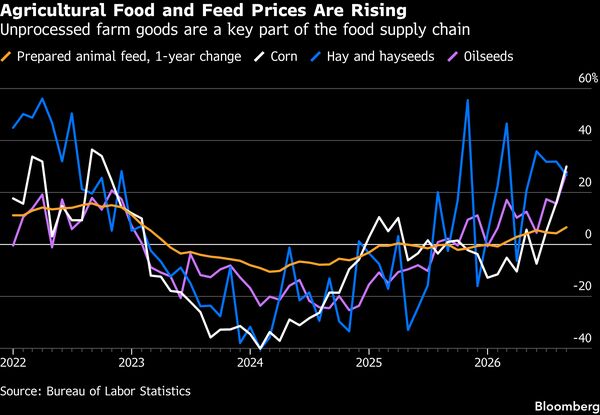
The producer price index, however, sent a different signal. There, food prices were up 1.2% last month, possibly indicative of pipeline pressures that could yet make their way to store shelves. Prepared animal feed prices jumped 2.3% from a month earlier, the most since early 2022, and 6.6% from September 2025.
桑坦德美国资本市场首席经济学家斯蒂芬·斯坦利表示:“如果你看CPI中的食品类别,事实上,近几个月来其涨幅一直低于趋势水平。”他补充道:“涨幅没有我预想的那么快,但我认为它仍在酝酿。我认为这是一只尚未落地的鞋子,但终将落地。”能源并非推高价格的唯一因素。周四的PPI数据显示,衡量批发和零售贸易服务利润率的指标——经济学家常用它作为定价能力的代理——上月跳升1.4%。此外,为建设数据中心所需的计算机芯片和建筑材料需求激增,也在CPI和PPI报告中有所体现。
“If you look at the food category within the CPI, if anything, it’s been rising at a below-trend pace in recent months,” said Stephen Stanley, chief economist at Santander US Capital Markets. “It hasn’t been as quick as I imagined, but I think it’s still coming. I think it is a shoe that has yet to drop, but will at some point.”Energy isn’t the only thing driving up prices. Thursday’s PPI figures showed a measure of wholesale and retail trade services margins — which economists use as a proxy for pricing power — jumped 1.4% last month. And a boom in demand for the computer chips and construction materials needed to build data centers is showing up in both the CPI and PPI reports as well.
尽管如此,并非所有经济学家都担心能源价格会通过传导机制影响消费品。那些理论上可能受更高运输成本冲击的类别,如家庭家具和电器,其价格实际上一直在下降或保持平稳。
Still, not all economists are concerned that energy prices are passing through to consumer goods. Prices in categories that might be expected to take a hit from higher freight costs, like household furniture and appliances, have been falling or flat.
“能源并未明显推高商品价格的证据并不明显,”花旗集团经济学家Veronica Clark表示。其他因素,例如与人工智能相关的需求,在通胀数据中更为明显。
“There’s really not obvious evidence that energy is broadly pushing up goods prices,” said Veronica Clark, an economist at Citigroup Inc. Other forces, such as AI-related demand, have been more apparent in the inflation data.
即便如此,花旗预计接下来几份CPI报告将显示相对温和的环比读数。在工资增长疲软和劳动力市场降温的背景下,这应能促使美联储忽视最新的能源价格上涨,Clark表示。“如今因供给冲击而提升价格并不像五年前那样容易,”她说。
Even so, Citi expects the next couple CPI reports to show fairly benign month-over-month readings. Alongside muted wage growth and a cooler labor market, that should encourage the Fed to look through the latest energy-price surge, Clark said. “It’s not as easy to raise prices because of a supply shock now as it was five years ago,” she said.