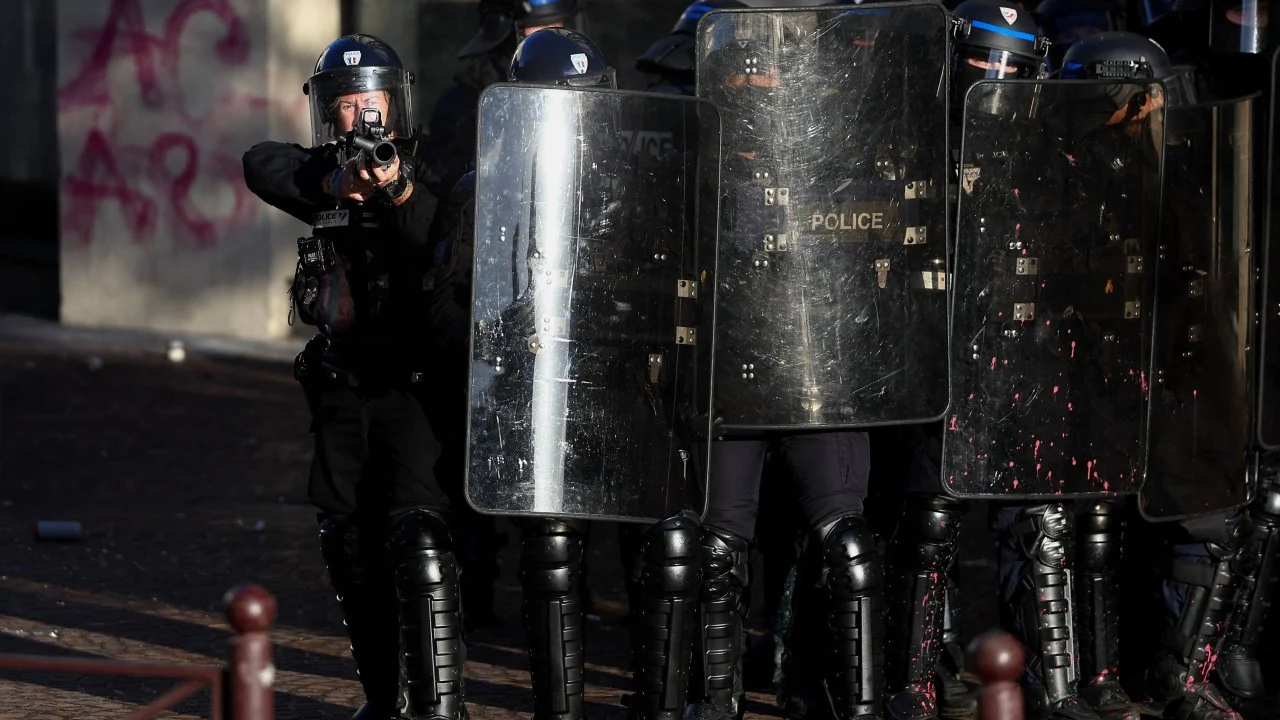
法国警方面临压力,需在预计部分城市将爆发的进一步抗议活动中维持治安,同时因在之前骚乱中使用的防暴战术导致部分青少年重伤而接受审查。
Police across France are under pressure to maintain security during further protests expected in some cities, while facing scrutiny over their riot-control tactics used during previous unrest that left some teenagers seriously injured.
上周末针对生活成本上涨和学校条件恶劣的抗议活动中,警力显得捉襟见肘、不堪重负。
Officers appeared outnumbered and overwhelmed during last weekend’s protests against rising living costs and poor conditions in schools.
作为回应,法国内政部表示,将在本周六部署比上周末多 20% 的警力,与此同时,在发生大规模抢劫和骚乱后,地方当局在包括里昂和马赛在内的几个主要城市全面禁止示威活动。
In response, France’s Interior Ministry said it would deploy 20 per cent more police this Saturday than last weekend, even as regional authorities imposed blanket bans on demonstrations in several major cities, including Lyon and Marseille, following widespread looting and unrest.
在巴黎,警方将周六计划举行的游行限制在首都东部边缘,并封锁了市中心通道,导致包括卢浮宫和奥赛博物馆在内的主要文化地标预防性关闭。活动人士团体警告称,他们将无视这些命令。
In Paris, police restricted Saturday’s planned march to the eastern fringes of the capital and barred access to the city centre, prompting the precautionary closure of major cultural landmarks, including the Louvre and Musee d’Orsay. Activist groups have warned they would defy the orders.
愤怒的根源在于年轻示威者遭受的严重伤害。上周六,一名 17 岁少女在米卢斯参加抗议活动时失去一只眼睛,一名 17 岁少年在圣埃蒂安失去一只手。在持续数周的高中封锁和街头示威中,其他青少年也遭受了致残性伤害。
Underpinning the anger are severe injuries suffered by young demonstrators. A 17-year-old girl lost an eye while taking part in a protest in Mulhouse last Saturday, while a 17-year-old boy lost a hand in Saint-Etienne. Other teenagers have suffered disabling injuries during weeks of high school blockades and street demonstrations.
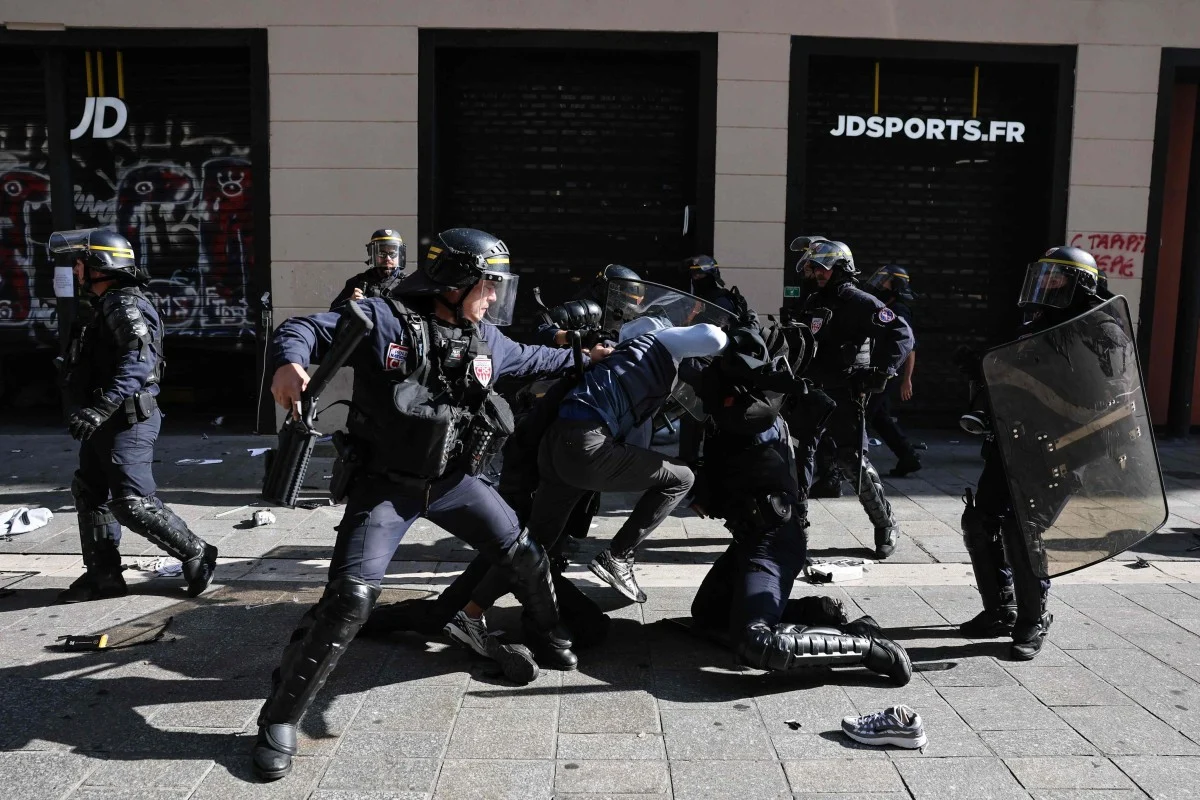
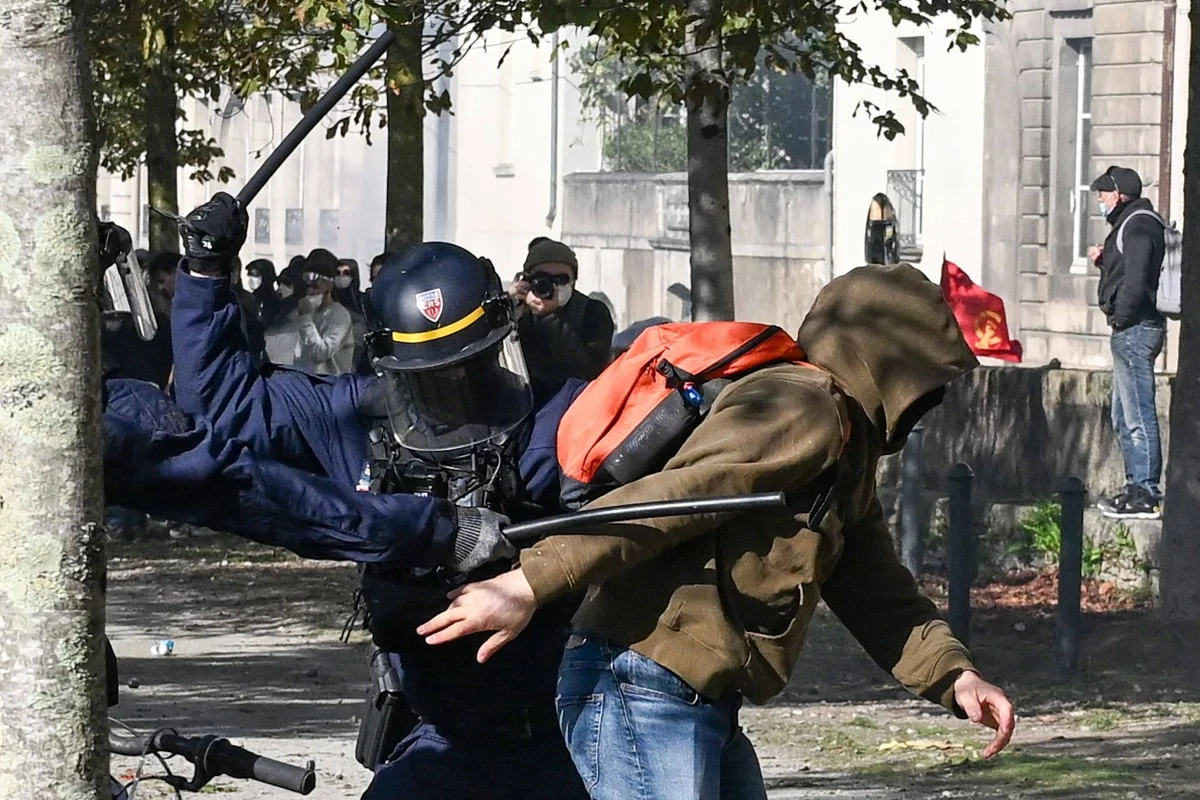
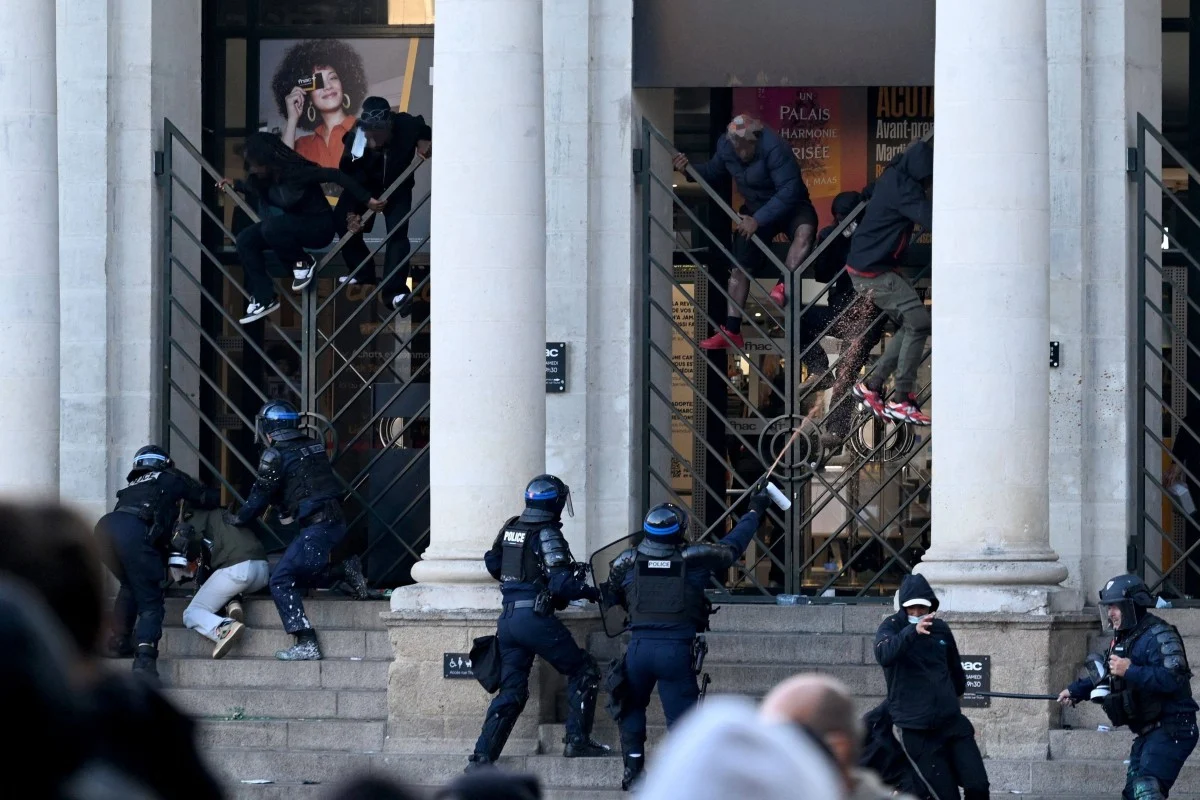
法国警方装备有警棍、催泪瓦斯、闪光弹和泡沫弹发射器,以及配备强力频闪灯、旨在使示威者失去方向感的防暴盾牌。电击枪在人群控制行动中被禁止使用。
French police forces are equipped with batons, tear gas, sound grenades and foam-round launchers, as well as riot shields equipped with powerful strobe lights designed to disorient protesters. Electric stun guns are prohibited in crowd-control operations.
法国国家警察在给美联社的一份声明中表示:“中间武力武器是防御性应对工具,使执法人员能够以渐进且相称的方式应对威胁。”但批评人士,包括受伤青少年的家属,表示警方过于重手。
“Intermediate-force weapons are defensive response tools that allow law enforcement officers to respond to a threat in a graduated and proportionate manner,” French National Police said in a statement to Associated Press. But critics, including families of injured teenagers, say the police have been too heavy-handed.
一些人呼吁禁止使用泡沫弹发射器、催泪瓦斯和闪光弹,这与自2018年暴力“黄背心”抗议以来人权组织提出的要求相呼应。
Some have called for bans on foam-round launchers, tear gas and stun grenades, echoing demands made by human rights groups since the violent 2018 “yellow vest” protests.
本月早些时候,国际特赦组织呼吁永久禁止所有闪光弹,称其设计目的是制造震惊、迷失方向和散播恐慌,有些闪光弹可能造成永久性听力损伤,以及由爆炸和弹片带来的改变人生的伤害。
Earlier this month, Amnesty International called for a permanent ban on all stun grenades, saying they are designed to shock, disorient and sow panic, and that some can cause permanent hearing loss and life-changing injuries from blasts and shrapnel.
联合国关于其所称“低致命性武器”的指导意见指出,动能冲击弹只应在面临迫在眉睫的威胁时使用,瞄准腹部,绝不能瞄准头部、面部或颈部。从高处或近距离发射,或让弹丸从地面弹跳,都可能增加严重伤害的风险。
United Nations guidance on what it calls “less-lethal weapons” says kinetic impact projectiles should be used only against an imminent threat, targeting the abdomen and never the head, face or neck. Firing from elevated positions or at close range, or bouncing rounds off the ground, can increase the risk of serious injury.
总部位于英国的欧米茄研究基金会武器研究员、曾协助起草联合国上述指导意见的尼尔·科尼表示,泡沫弹发射器虽然被认为比橡皮子弹霰弹枪更安全,但“在某些情况下可能致命”。
Foam-round launchers, though considered safer than rubber-bullet shotguns, “in certain circumstances, can kill,” said Neil Corney, an arms researcher at the UK-based Omega Research Foundation who helped draft the UN guidance.
他说,适当的培训和指导方针可以减少伤害,并指出西班牙在2017年加泰罗尼亚独立公投期间警方暴力镇压引发批评后,当局用泡沫弹发射器取代了受到批评的橡皮子弹霰弹枪。他说,那里的伤害有所下降。
Proper training and guidelines can reduce injuries, he said, pointing to Spain, where authorities replaced criticised rubber-bullet shotguns with foam-round launchers following a violent police crackdown on Catalonia’s 2017 independence referendum. Injuries have declined there, he said.
国际特赦组织武器研究员帕特里克·威尔金表示,泡沫弹发射器最初是为军事训练开发的,后来被改造用于“高风险、人质类 situations”和反恐行动。他说:“它们从来就不是真正为抗议活动的治安管理而设计的。”
Foam-round launchers were initially developed for military training and later adapted for “high-risk, hostage-type situations” and anti-terrorism operations, said Patrick Wilckin, an arms researcher at Amnesty International. “They were never really meant for policing of protests,” he said.
问责是另一个令人担忧的问题。与子弹不同,泡沫弹通常不会留下可追踪的证据。活动人士提议在弹体上打上识别编号,以帮助确认涉及造成严重伤害事件的警员身份。科尼表示,这项措施将以很小的成本大幅改善问责。
Accountability is another concern. Unlike bullets, foam rounds generally leave no traceable evidence. Activists have proposed stamping identification numbers on the rounds to help identify officers involved in incidents that cause serious injuries. Corney said the measure would greatly improve accountability at little cost.
法国内部安全问题专家让-玛丽·戈达尔表示,此类武器的使用反映出法国警务向更广泛的转变,即让警察与抗议者保持距离。
The use of such weapons reflects a broader shift in French policing towards keeping officers at a distance from protesters, said Jean-Marie Godard, an author specialising in France’s internal security.
2000年代初,法国保守派政府放弃了强调步行巡逻和与居民互动的社区警务,转而采用专门的骚乱控制部门。戈达尔表示,法国政坛各派人士都对放弃社区警务模式感到遗憾。
In the early 2000s, France’s conservative government moved away from community policing, which emphasised foot patrols and engagement with residents, towards specialised riot-control units. People across France’s political spectrum regret abandoning the community policing model, Godard said.
安特卫普大学社会学家劳拉·基斯曼表示,当今法国警务与许多其他欧洲国家不同。她主持了一项关于法国、英国、荷兰和瑞典警务方法的广泛比较研究。她说,在其他研究国家,警察通常直接与示威者接触,有时会混入人群以缓解紧张局势。
French policing today differs from that in many other European countries, according to Laura Keesmann, a sociologist at the University of Antwerp who led a wide-ranging comparative study of policing methods in France, the UK, the Netherlands and Sweden. In the other countries studied, police often engage directly with demonstrators, sometimes mingling with crowds to defuse tensions, she said.
“法国完全不是这种情况,”她说。“法国的警务方式更加专制。”不过,基斯曼强调,法国警察面临着异常激进、有时甚至暴力的抗议者。
“That is just really, really not the case in France,” she said. “There’s much more of an authoritarian way of policing.”Keesmann stressed, however, that French police face unusually militant and sometimes violent protesters.
在上周六抗议活动前夕,内政部长洛朗·努涅斯表示,他的指示“非常明确:警察和宪兵应当能够使用其所有中等武器”。
On the eve of last Saturday’s protests, Interior Minister Laurent Nunez said his instructions were “very clear: the police and gendarmes should be able to use the entirety of the intermediate weapons at their disposal”.
法国拥有超过25万名国家警察和宪兵。警察通常在城市执勤,而宪兵通常负责农村地区和较小城镇。两支部队均隶属于内政部。内政部表示,周六骚乱期间,有997名警察和宪兵受伤,其中7人重伤。
France has more than 250,000 national police officers and gendarmes. Police generally operate in cities, while gendarmes usually cover rural areas and smaller towns. Both forces fall under the Interior Ministry, which said 997 officers and gendarmes were injured during Saturday’s unrest, seven of them seriously.
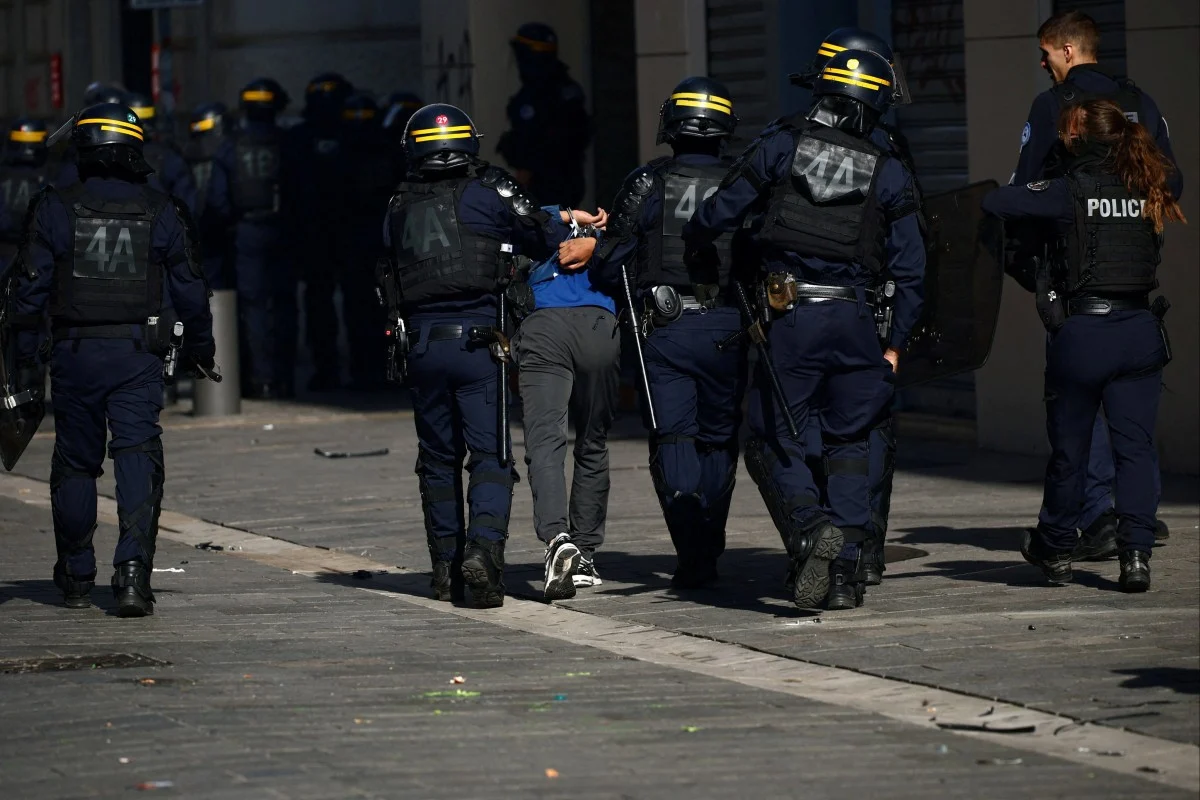
警方表示,周六在巴黎,超过100名抗议者和居民受伤。当局尚未公布全国范围内的受伤人数统计。当天,法国各地约有2400人被捕。
Police said more than 100 protesters and residents were injured in Paris on Saturday. Authorities have not released a nationwide injury tally. About 2,400 people were arrested across France that day.
戈达尔表示,随着工会对示威活动的影响力下降,抗议运动日益分散,参与者范围更广,包括激进团体。
Godard said protest movements have become increasingly decentralised as labour unions have lost influence over demonstrations, drawing a wider range of participants, including radical groups.
法国当局将近期的大部分暴力事件归咎于极左翼激进分子,指责他们策划与警方的冲突并针对公共建筑。当局表示,其他人趁骚乱之机抢劫商家。
French authorities have blamed much of the recent violence on far-left radicals, accusing them of orchestrating clashes with police and targeting public buildings. Others took advantage of the unrest to loot businesses, authorities said.