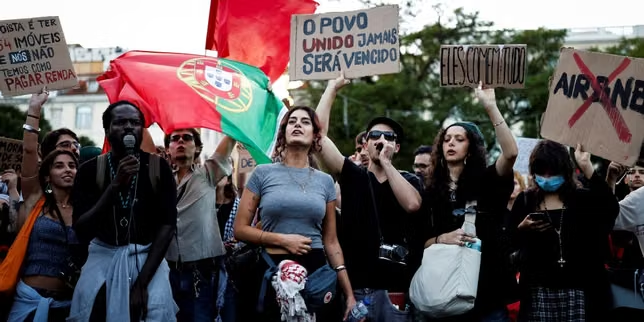
2026年10月17日,在里斯本的罗西奥广场,人们举行抗议,反对住房短缺、租金飙升,并要求提高工资。
Protest against the housing shortage, soaring rents, and for higher wages, at Rossio Square in Lisbon, on October 17th, 2026.
在布鲁塞尔,罕见的是,欧盟委员会——通常对欧盟成员国的国内政策保持沉默——于10月19日星期一发表评论,谈及法国在周六发生的抗议活动,尤其是伴随这些抗议出现的暴力行为。
In Brussels, in a rare move, the European Commission – which is usually silent on the domestic policies of EU member states – commented on Monday, October 19, on the protests that took place in France on Saturday, and especially on the violence that accompanied them.
通过其发言人,欧盟委员会谴责了抢劫行为,称其“不可接受”,并提醒巴黎,和平抗议的权利“必须得到保护”。在欧洲议会中,中右翼的欧洲人民党(EPP)和极右翼力量迅速试图通过在斯特拉斯堡周一晚上组织一场辩论来政治化这一议题,辩论标题在议会内引发争议:“法国、意大利、比利时:极左团体实施的反民主暴力和破坏”。
Through its spokesperson, the European Commission condemned the looting, calling it "unacceptable," and reminded Paris that the right to peaceful protest "must be protected." In the European Parliament, the center-right European People's Party (EPP) and the far right quickly sought to politicize the issue by organizing a debate on Monday evening in Strasbourg, whose title sparked controversy within the chamber: "France, Italy, Belgium: Anti-democratic violence and destruction perpetrated by far-left groups."
法国远非唯一一个因生活成本上升而爆发抗议、公众对能源价格上涨后果感到担忧的国家。在未来几个月,高风险选举——在极右翼运动日益增长的背景下进行——将在西班牙、法国、意大利、波兰和希腊举行。
France is far from alone in seeing protests over the cost of living and public concern about theconsequences of rising energy prices. In the coming months, high-stakes elections – set against a backdrop of growing far-right movements – are scheduled to take place in Spain, France, Italy, Poland, and Greece.
10月15日,欧洲国家元首和政府首脑在布鲁塞尔会晤期间,就如何降低公民能源账单进行了长时间的讨论,所有参与者都牢记着2018年秋天让法国陷入动荡的“黄背心”运动。
During their meeting in Brussels on October 15, European heads of state and government held lengthy discussions on how to lower their citizens' energy bills, with all of them mindful of the Yellow Vest movement, which set France ablaze in the fall of 2018.